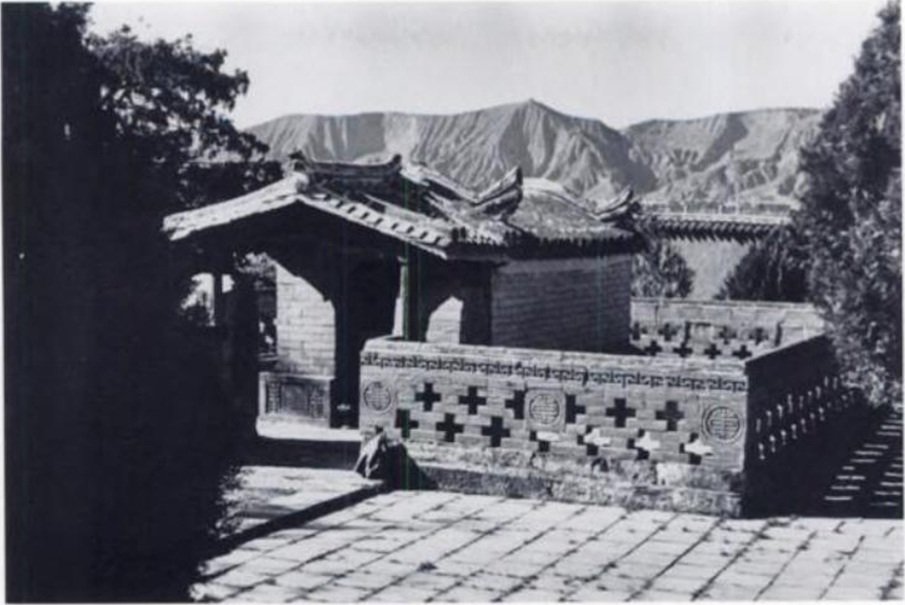
Pingliang sits in the eastern corner of Gansu, at the point where the Loess Plateau meets the mountains, and its main significance for travellers is as the base for Kongtong Mountain — Kongtongshan — one of the most sacred sites in Chinese Taoism. According to legend, the Yellow Emperor himself climbed to Kongtong to receive instruction from the immortal Guangchengzi, and the mountain has been a Taoist centre of pilgrimage ever since. The temple complex spread across its slopes and summit dates to the Tang Dynasty in its earliest layers, though most of what stands today is Ming and Qing reconstruction.
Kongtong Mountain's landscape is dramatic even by the standards of Chinese sacred mountains: steep forested ridges, temple buildings perched on impossible outcroppings, the smell of incense drifting across narrow paths. The Tongtian Gorge on the western flank adds a more purely scenic element. The mountain is less visited than Hua Shan or Wudang, which gives it a more authentic atmosphere — genuine pilgrims rather than tourists, monks who seem unconcerned by the presence of foreigners.
The Pingliang Museum, housed inside the Longyin Temple Park, holds around 14,500 artefacts ranging from the Stone Age to the modern period, with particular strength in painted pottery and bronzeware. The park itself is one of the better civic green spaces in the region.
Pingliang is about five hours by bus from both Lanzhou and Xi'an, or reachable by train — the line is slower than the high-speed routes further north. It is rarely visited by independent travellers, partly because the Hexi Corridor draws visitors westward and partly because Kongtong Mountain sits in the opposite direction from most Gansu itineraries, but it rewards those who make the detour.