Guazhou — formerly known as Anxi — is a small oasis town in the far west of Gansu, positioned on the Silk Road roughly halfway between Jiayuguan and Dunhuang. It is not a destination in the conventional sense; it is a repository of Silk Road archaeology that takes serious effort to access and rewards that effort proportionately.
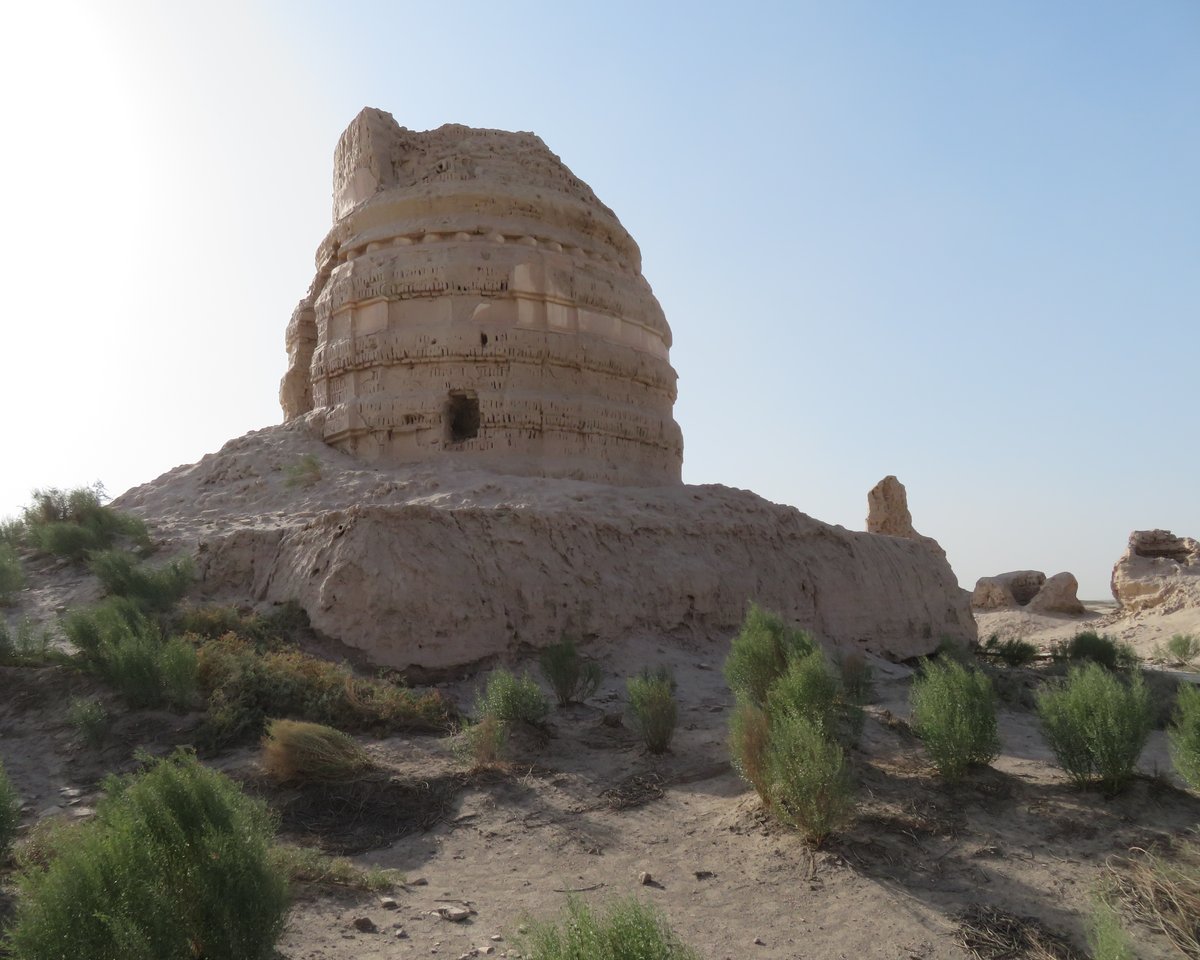
The main draw is the Yulin Caves, fifty kilometres south of town up a gorge in the Mazong Mountains. Forty-two of the caves are open, containing 250 polychrome sculptures and 4,200 square metres of wall paintings that date from the Tang through the Ming dynasties — a range of 700 years. The paintings are less famous than Mogao but comparable in quality, and the site is far less visited, which means you can stand in caves that still feel genuinely discovered rather than managed. The Suoyang City Ruins, a few kilometres east of town, are the remains of a walled settlement founded in 111 BC; the Ta'er Temple within the ruins is where the Buddhist monk Xuanzang is said to have spent time before his journey to India. Both the ruins and the temple are inscribed as part of the UNESCO Silk Road World Heritage designation.
The Qiaowan Fort, a Qing Dynasty fort built in 1732, has a small archaeological museum attached. None of these sites are easy to get to without a car or the daily tourist bus that departs from Guazhou at 9:30 in the morning; the distances between them make a private vehicle the more practical option.
Guazhou has a railway station on the Lanzhou–Xinjiang line. The town itself offers little beyond functional accommodation and the region's famous melons, grown in the desert irrigation and sold from every roadside stall in summer.