Shijiazhuang is one of the youngest provincial capitals in China, a city that barely existed before the railways arrived and then grew very fast. The Beijing–Wuhan and Shijiazhuang–Taiyuan lines crossed here in the early twentieth century, and the junction created the city. Before that there was almost nothing. This origin story gives Shijiazhuang an unusually thin historical centre by Chinese standards, and most visitors treat it as a base rather than a destination — which is honest, and works perfectly well.
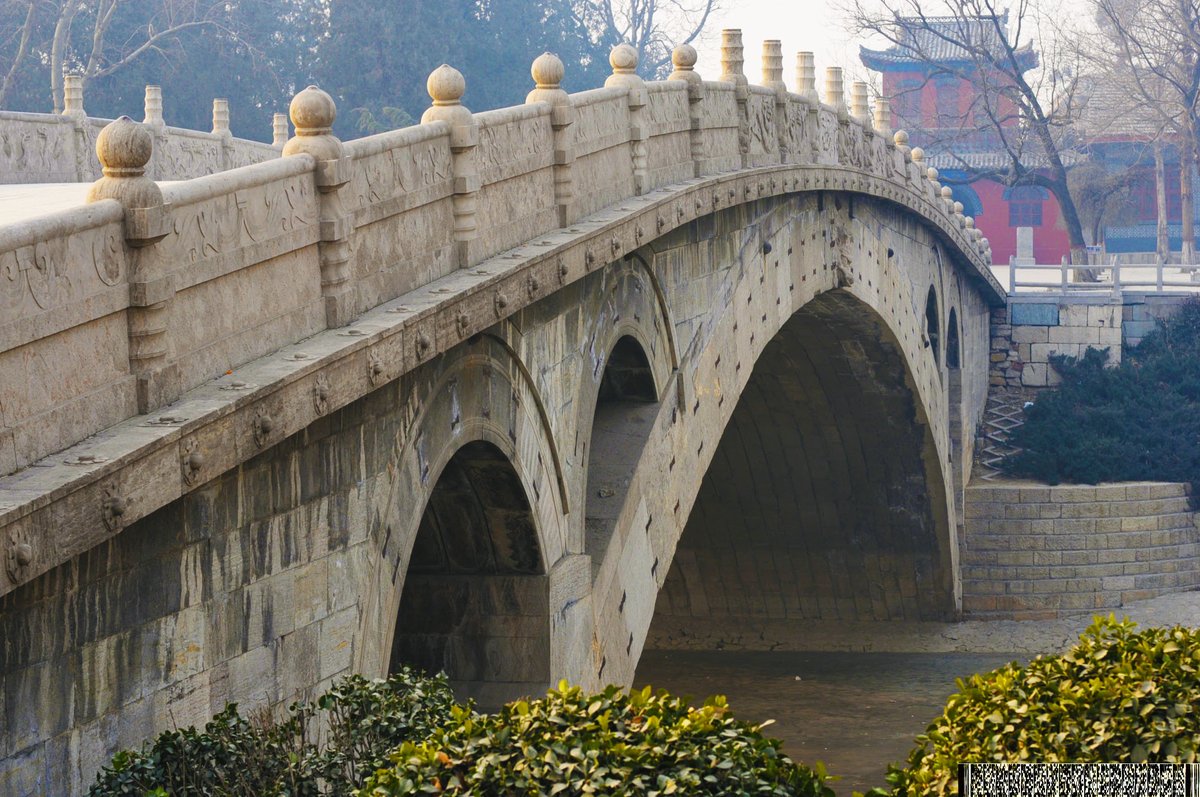
The reason to linger is the Hebei Museum, one of the better provincial museums in northern China. Its collection of bronzes from the ancient Zhongshan Kingdom and Han-era jade burial suits ranks with anything in the country. From here, half-day trips reach the Zhaozhou Bridge, built around 600 CE during the Sui dynasty and still considered one of the greatest stone arch bridges in the world — a segmented arch design so advanced that Western engineers did not produce anything comparable for another millennium. The bridge sits in flat farmland south of the city in a setting that is entirely unassuming, which makes the engineering feel stranger and more impressive.
Out toward the Taihang Mountains, Mount Cangyan offers something different: temples cantilevered from cliff faces, including the Rainbow Bridge that connects two rock pinnacles above a forested ravine. The site was used as a filming location for Crouching Tiger, Hidden Dragon, and arriving on a weekday, before the tour coaches, it is easy to see why the filmmakers chose it. Bailin Monastery in Zhao County holds a different appeal — a functioning Chan Buddhist monastery with striking Tang and Song dynasty structures and a calmer atmosphere than most temple complexes in the region.
Shijiazhuang has fast rail connections north to Beijing and south toward the rest of China, making it a practical overnight stop in either direction. The city itself is large, flat, and unmemorable in its modern parts, but the surroundings within an hour's drive are worth the time.