Handan is one of the oldest continuously inhabited cities in northern China, capital of the Zhao state for more than 150 years during the Warring States period and a major cultural centre long before the Qin unification. Over 1,500 Chinese idioms are said to have originated here, a claim that sounds like local boosterism until you start checking and find that it is basically true. The city takes this heritage seriously: there are plaques and monuments throughout the centre commemorating the proverbs, and Congtai Park preserves what remains of the old royal platform where the Zhao kings reportedly reviewed their troops.
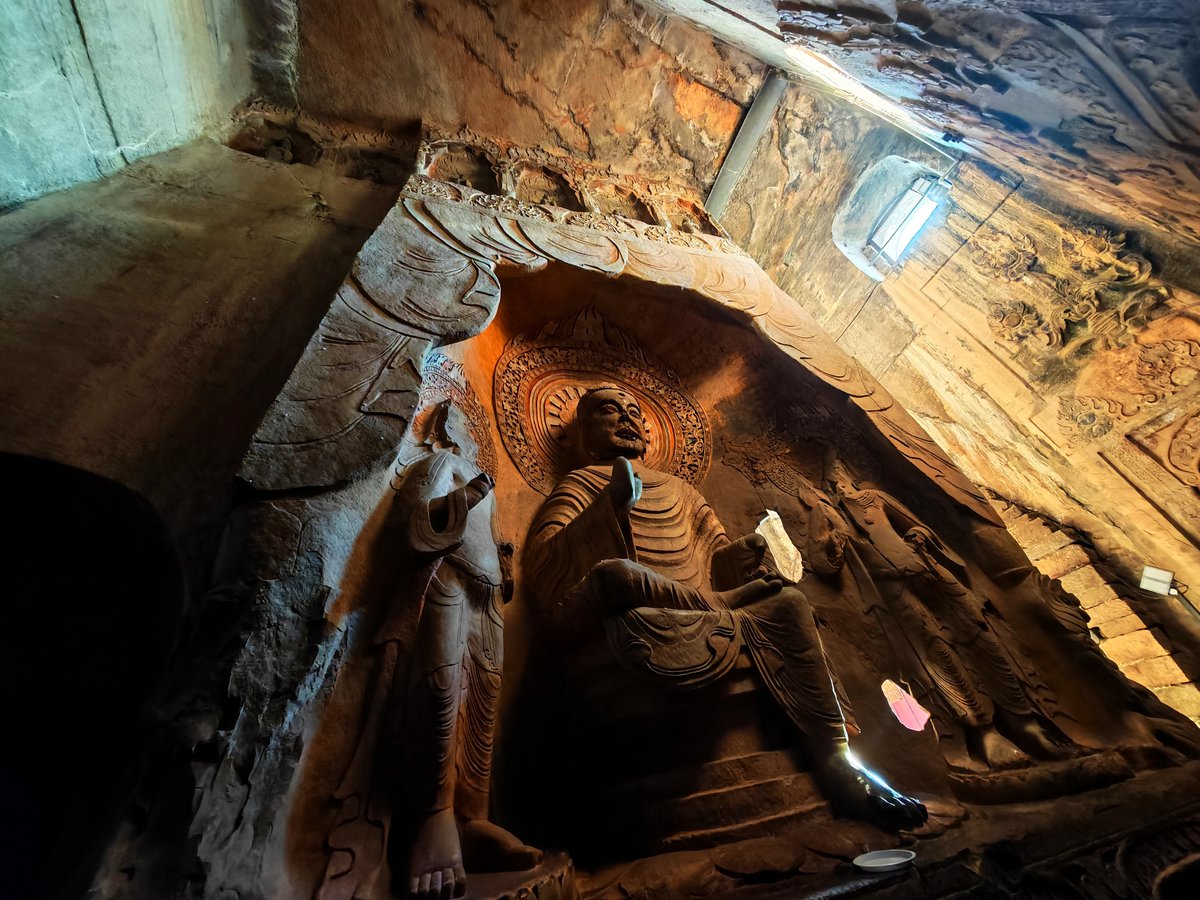
The Xiangtangshan Caves, cut into sandstone cliffs in the hills south of the city during the Northern Qi dynasty in the sixth century, are among the most important Buddhist cave temples in China. The site was systematically looted in the early twentieth century, and significant portions of the carved reliefs ended up in Western museums — the Metropolitan Museum of Art in New York and the Penn Museum in Philadelphia among them. What remains in situ still has considerable power: large seated Buddhas in high relief, flanked by attendants, with enough intact surface to understand what the whole composition must have looked like.
Handan is also tied to the Cizhou kiln tradition, a northern Chinese ceramic style known for its bold black-and-white painted decoration and thick functional character. The kilns operated from the Tang through Qing dynasties and the tradition is still alive. The Cizhou Ceramics Museum in Ci County holds a good collection, and workshops in the surrounding villages still produce work in the traditional manner.
The southernmost large city in Hebei, Handan is accessible by high-speed rail on the Beijing–Guangzhou corridor and makes a logical stop on a journey between the capital and central China.