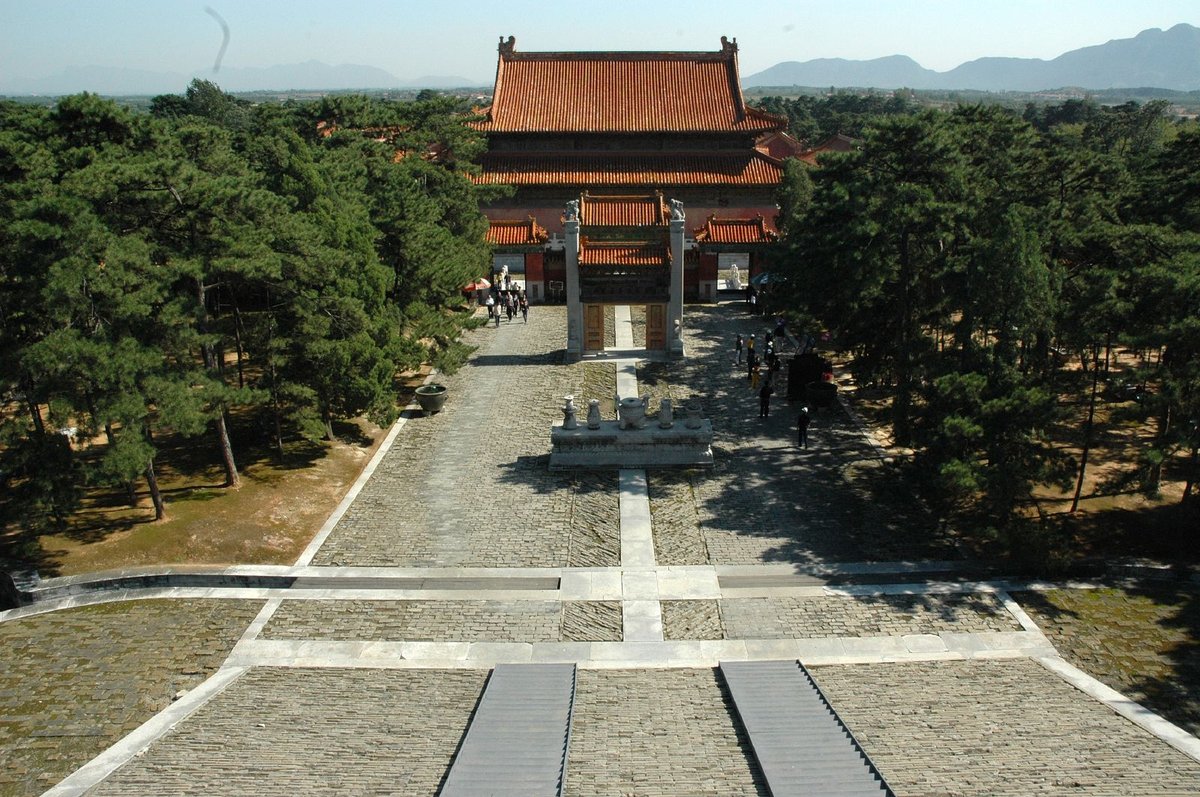
The Eastern Qing Tombs in Zunhua County are the largest and most complete imperial mausoleum complex surviving anywhere in China. Five emperors are buried here — Shunzhi, Kangxi, Qianlong, Xianfeng, and Tongzhi — along with fifteen empresses and over a hundred imperial concubines, the whole ensemble spread across a valley in the hills northeast of Beijing. The site earned UNESCO World Heritage status in 2000, but it receives a fraction of the visitors who queue to see the Ming Tombs, which means you can often walk the spirit ways and courtyards without competing for space.
Each tomb follows the same general template: a long spirit way lined with stone animals and officials, a series of ceremonial courtyards, and a burial mound behind. The differences are in the details, and the details are extraordinary. The tomb of the Qianlong Emperor goes 54 metres underground through four solid marble doors, its burial chambers covered floor to ceiling in Buddhist imagery and more than 30,000 words of Tibetan scripture. The contrast between the austere exterior and the layered symbolism inside is one of the most striking effects in Chinese funerary architecture.
The tomb of Empress Dowager Cixi, at Ding Dongling, is something else again. Cixi spent decades accumulating the resources to build herself a tomb that would make a statement, and the result — all gilded dragons and precious timber and carved phoenixes — reflects an ambition that embarrassed later commentators and delighted her. She had the original structure demolished and rebuilt to her specifications, spending three times the approved budget in the process. The Tongzhi emperor's mother ended up in one of the most lavish mausoleums in the complex.
The tombs are about 125 kilometres northeast of Beijing, reachable by a combination of train to Zunhua and bus or taxi from there. A full visit to the main tombs takes most of a day.