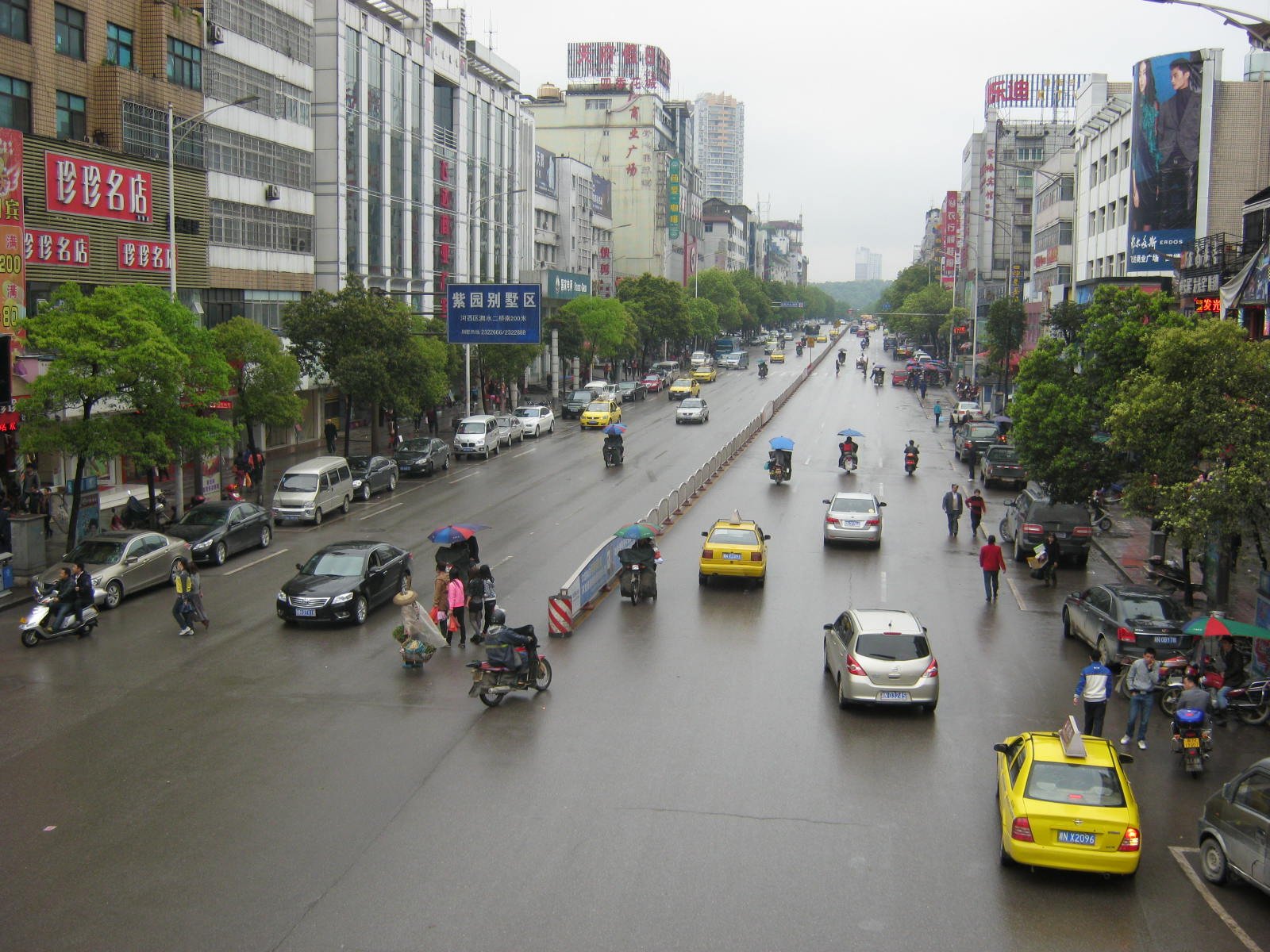
Huaihua is the main city of western Hunan, sitting on the Shanghai-Kunming railway line in a region of mountain valleys inhabited by several ethnic minority groups: Dong, Miao, Tujia, and Yao peoples are all present in significant numbers in the surrounding counties, and the architecture, music, and food of western Hunan reflect this diversity in ways that the more heavily touristed east of the province often does not. The city itself has about 620,000 residents and the character of a regional transport hub — useful, not beautiful, a place to restock and plan the next move.
The Zhijiang Surrender Hall holds a specific historical significance that appears nowhere in the standard tourist material: it was one of the major Allied air bases in China during the Second World War, and it was here that the Japanese in China signed their formal surrender document on 21 August 1945. The airfield is still in use; the surrender hall is preserved as a memorial. Qianyang Ancient City, about 60 kilometres northeast, is a 2,200-year-old settlement with surviving Ming and Qing-dynasty streets and buildings that sees far fewer visitors than its historic counterpart Fenghuang and offers a more genuine experience as a result.
The Tongdao Dong villages south of Huaihua are among the most compelling destinations in the region. The Dong people — known as the Kam in their own language — build drum towers of extraordinary engineering sophistication from wood without nails, structures that can rise fifteen storeys and serve as the social and ceremonial centre of village life. The covered wind-and-rain bridges across the rivers are equally remarkable. Traditional Dong polyphonic singing, a UNESCO-listed intangible heritage, is still performed at festivals and in some villages for everyday communal purposes.
Huaihua is roughly 1.5 hours from Changsha by fast train and a natural base for exploring the Miao and Dong cultures of the mountains. Fenghuang is accessible by bus from here, as are the border areas with Guizhou province to the west.