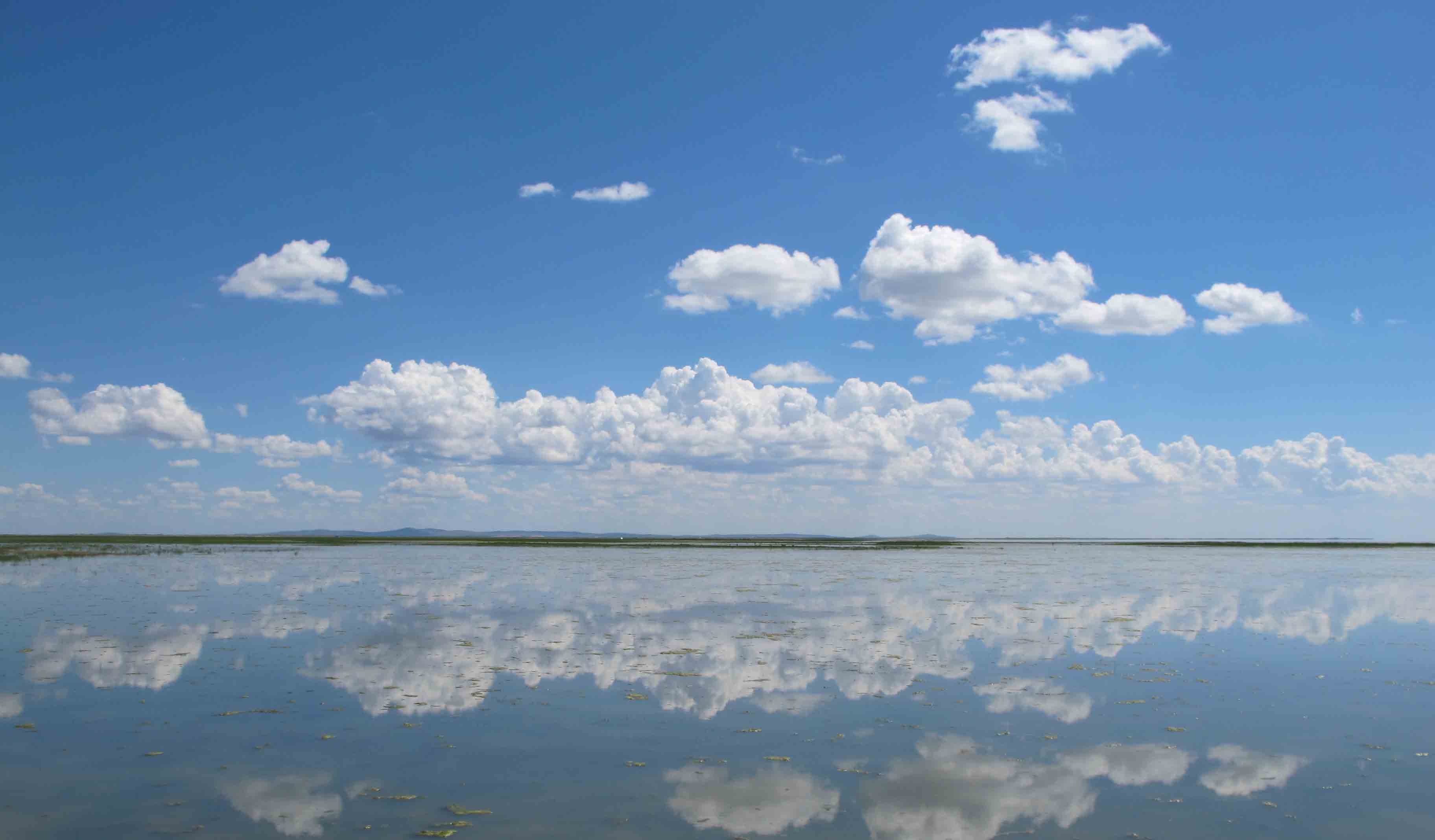
Hulun Lake — also called Dalai Lake, from the Mongolian word for "sea" — is one of the five largest freshwater lakes in China, a vast body of water spread across 2,339 square kilometres of the Hulunbuir steppe in northeastern Inner Mongolia. It lies about 30 kilometres from Manzhouli, making it easily accessible from that city, and the combination of open water, surrounding grassland, and the long light of summer evenings makes it one of the most compelling natural sites in the region.
The Dalai Lake National Nature Reserve is designated both a Biosphere Reserve and a Ramsar site. The reed beds that fringe much of the shoreline are among the most productive in China, and the whole ecosystem supports enormous numbers of waterfowl. Serious birdwatchers can spend days working the lakeshore: pelicans, cranes, swans, and dozens of duck species pass through or breed here in summer. The fishing is equally serious — the lake produces several thousand tonnes annually, and freshwater carp and perch feature prominently on local menus.
The grassland setting is the other half of the appeal. Yurt camps near the lake offer the standard Inner Mongolian experience of horse riding, evening bonfires, and sleeping under felt with the steppe stretching to the horizon. The scale of the landscape here — lake, grassland, and sky all at maximum size — is different from the more hemmed-in grassland parks near Hohhot. The lake itself has an unusual hydrology: it is normally endorheic, with no outflow, but in exceptionally wet years it can overflow northward toward the Argun River and the Russian border.
The practical base for visiting Hulun Lake is Manzhouli, 30 kilometres to the northwest. Taxis and hired cars make the run regularly in summer; fares are negotiable. The lake is best visited from June to September, when the birds are present in largest numbers and the water level is high after the spring melt. Winters are extremely cold and the lake freezes solid, though the winter ice fishing spectacle in January and February draws visitors who can tolerate the conditions.