Baotou is Inner Mongolia's largest city by population and its industrial powerhouse — China's principal producer of rare earth elements, with a steel industry large enough to earn it the nickname "Steel City of the Grassland." This sounds unpromising for tourists, and in truth the city centre is not beautiful. But Baotou rewards visitors who look past the industrial infrastructure: the surrounding countryside is excellent, and the city's position on the Yellow River, backed by the Yinshan Mountains, gives it a dramatic physical setting.
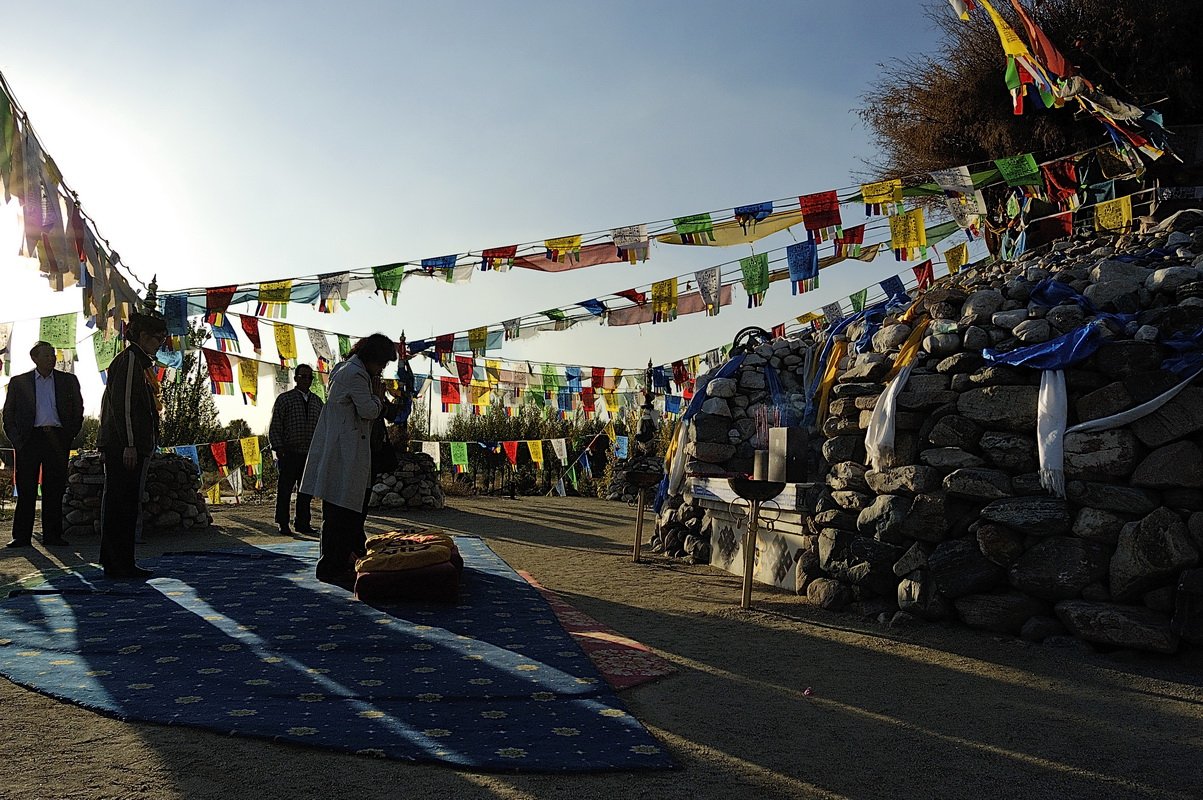
The standout excursion from Baotou is Wudangzhao Lamasery, about 70 kilometres northeast of the city in a narrow valley flanked by yellow cliffs. This is the largest and best-preserved Tibetan Buddhist lamasery in Inner Mongolia, a complex of six main halls and dozens of supporting buildings spread across the hillside. The setting alone justifies the trip: the valley is quiet, the architecture is genuinely impressive, and on festival days the monastery fills with monks and pilgrims from across the region. In the city itself, the Baotou Museum covers regional history adequately, and there is a Rare Earths Museum for those curious about the industrial base.
The Kubuqi Desert begins a short drive south of the city, where the steppe gives way to sand dunes tall enough to satisfy anyone who came to Inner Mongolia expecting dramatic desert scenery. The dune field at Xiangshawan — nicknamed the "Resonant Sand Ravine" — is heavily commercialised with zip lines and sand slides, but the landscape underneath the tourist infrastructure is spectacular and sunset from the higher dunes is genuinely memorable. Less developed alternatives exist nearby for those willing to walk further from the car park.
Baotou is about an hour from Hohhot by high-speed rail, which makes it practical to include as a day trip or an overnight stop rather than a base in itself. The train from Beijing takes about six hours. The city divides into several distinct districts spread across a wide area, so having a plan before arriving helps — taxis are plentiful but distances between sights add up. Mongolian lamb hot pot and air-dried beef are the local specialties worth seeking out.