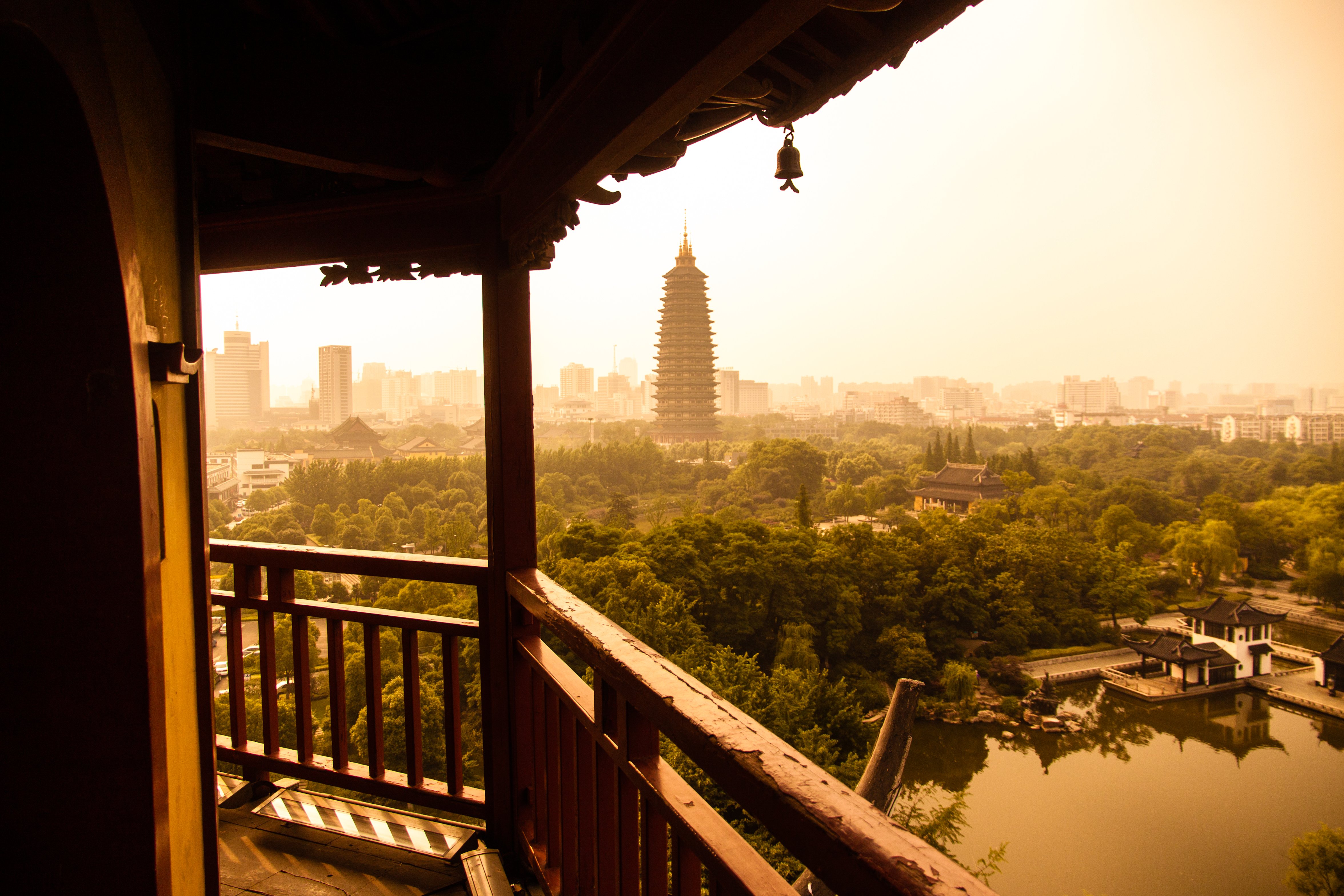
Changzhou (常州) sits between Shanghai and Nanjing on one of China's busiest rail lines, and most travellers pass through without stopping. That is understandable — Changzhou is not a city built for tourism — but it rewards a day's exploration more than its reputation suggests. It is a working Chinese city of about four million people, compact enough to get around on foot or by metro, with a handful of genuinely interesting sites and without the hordes that follow visitors around Suzhou or Hangzhou.
The main sight is Tianning Temple, a large Buddhist complex dominated by a thirteen-storey timber pagoda that is one of the tallest wooden structures in China. It is impressive in scale and less commercialised than many comparable temple complexes; weekday mornings, when monks are going about their practice and the incense smoke drifts across empty courtyards, it is genuinely atmospheric. Dongpo Park, on the Grand Canal, is free to enter and named after the Song dynasty poet Su Dongpo, who was briefly posted here; the canal section at its edge is one of the more pleasant stretches of the waterway accessible from a city centre anywhere in Jiangsu.
Changzhou has a small claim on culinary fame: the sesame bing, a flaky round pastry filled with either sweet or salty fillings, is a local specialty worth seeking out from any streetside vendor. The city is also known historically for handmade combs — an industry that apparently stretches back two thousand years — and Canal 5, a converted textile mill complex near the Grand Canal, hosts studios, galleries, and a decent market at weekends.
If you are moving along the Shanghai–Nanjing corridor and want to break the journey somewhere that functions as an actual city rather than a museum piece, Changzhou is the best option. High-speed trains connect it to both endpoints in under an hour.