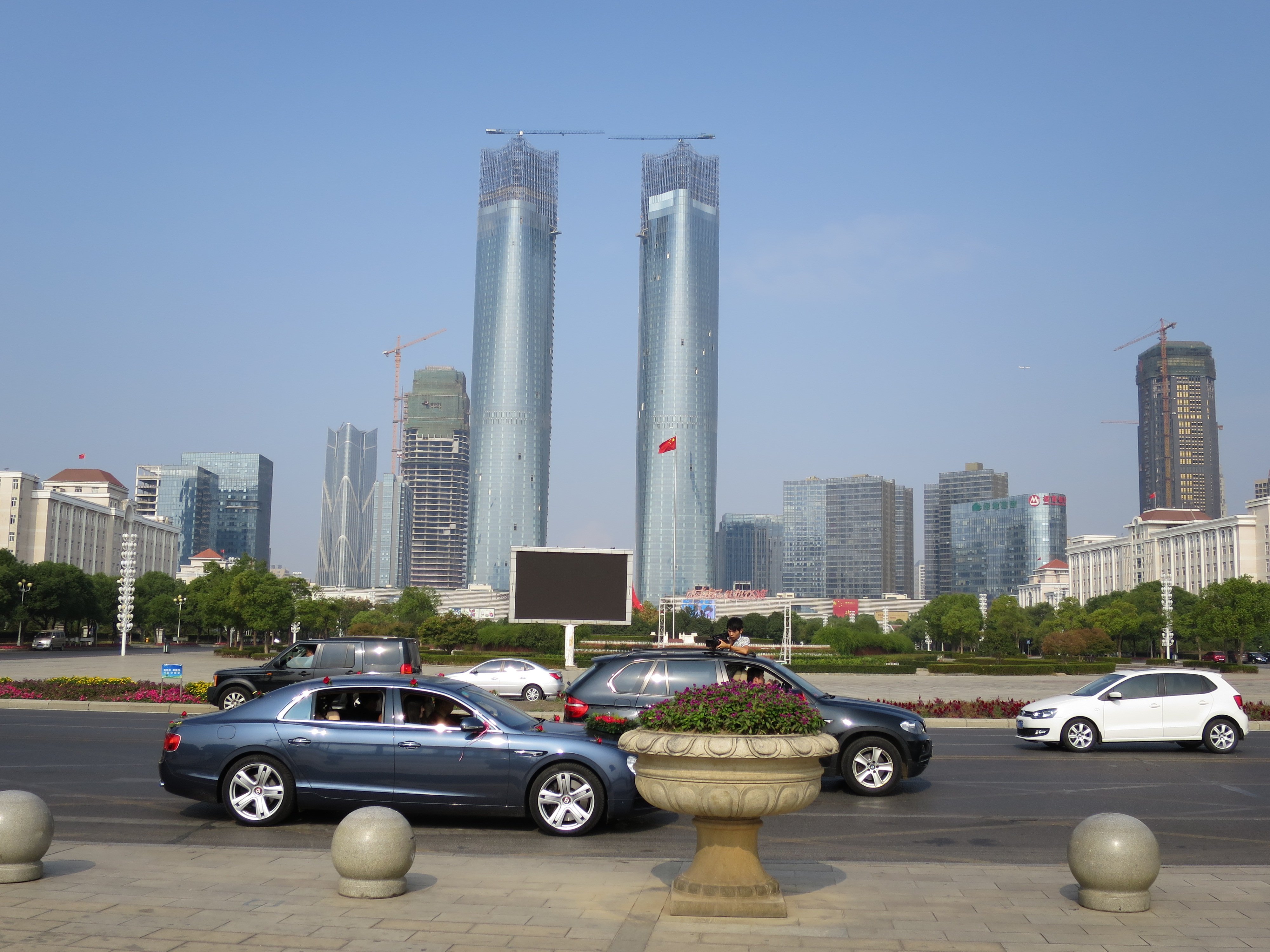
Nanchang (南昌), the provincial capital of Jiangxi, calls itself the "Heroes' City" and means it — on 1 August 1927, Communist forces launched the Nanchang Uprising here, firing what Chinese history books call the first shots of the revolution. The August 1st Uprising Memorial Museum occupies the former headquarters and is genuinely interesting if you want to understand how the People's Republic came to be. Bayi Square, with its towering monument and oversized PLA flag, sits at the city's ceremonial heart.
The old Tang dynasty Pavilion of Prince Teng, rebuilt many times over the centuries, stands on the east bank of the Gan River and inspired one of the most famous poems in classical Chinese literature. The current structure is very much a modern reconstruction, but it's still a striking building and the views from the upper floors over the river are worth the entrance fee. At night, the Honggutan west bank comes alive with a synchronized LED light show projected across riverside skyscrapers — pure spectacle, and free.
The Bada Shanren Memorial Museum in the southern Qingyunpu district preserves the Taoist monastery where the seventeenth-century ink painter Zhu Da — one of the greatest figures in Chinese art history — lived after the fall of the Ming. It's less visited than the revolutionary sites but more rewarding for art lovers.
Nanchang noodles are the reason locals get out of bed in the morning. Banged rice noodles (拌粉, bànfěn) tossed with chilli, sesame paste, peanuts, and pickled radish appear on tables from around 6am and are still going strong at midnight. The city has a functional metro and decent transport connections, making it a reasonable base for day trips to Lushan or Poyang Lake.