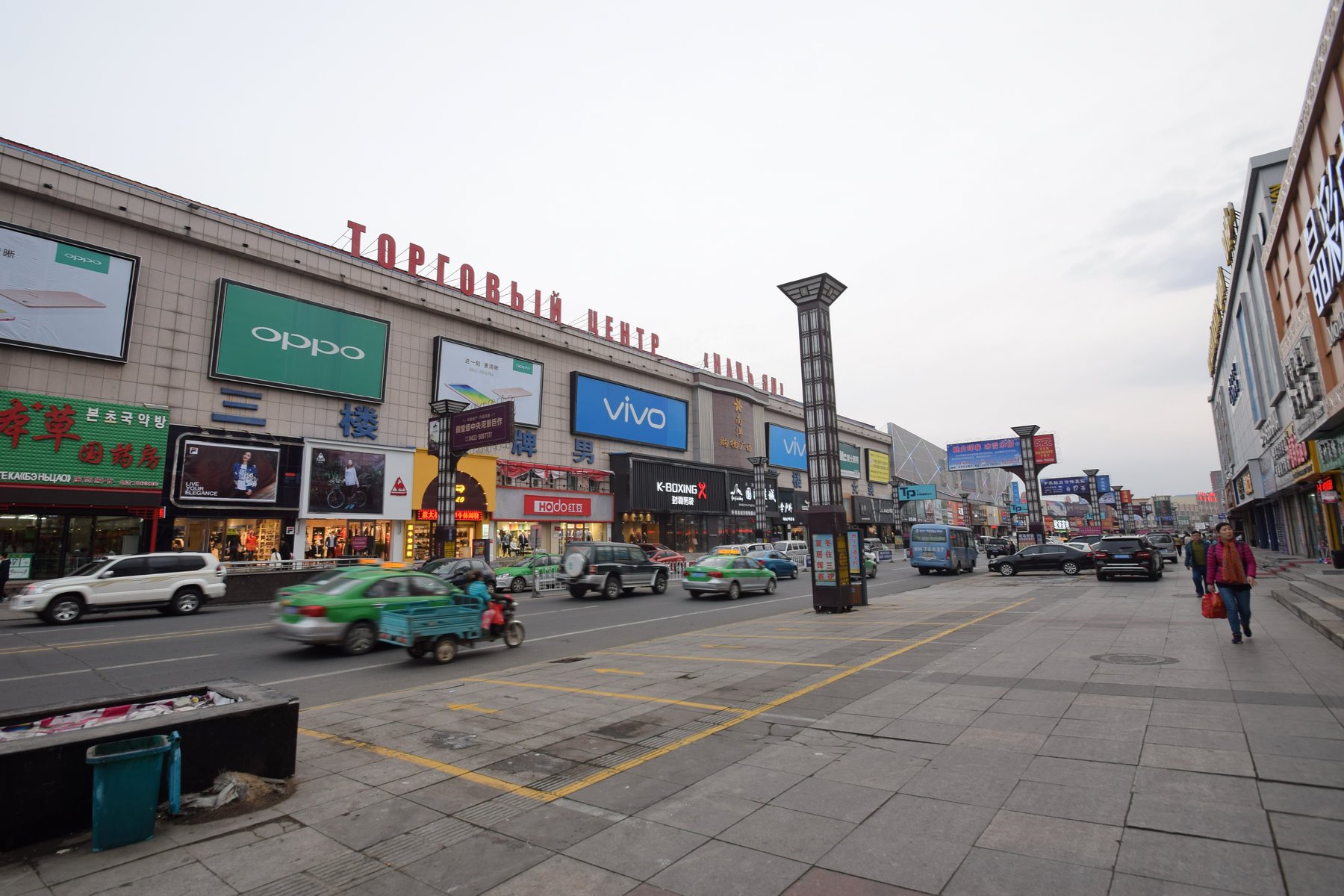
Hunchun occupies one of the more unusual geographic positions of any city in China: it sits at the point where China, Russia, and North Korea converge, with North Korean territory a few kilometres to the southwest and the Russian border close to the east. This trilateral proximity gives the city its primary identity as a border trading hub and its most distinctive feature — signage in three languages, Chinese, Russian, and Korean, which appears throughout the city as a matter of practical necessity rather than symbolic gesture. Russian traders come here to buy Chinese goods, Korean-Chinese traders maintain family connections that complicate simple national narratives, and the whole place has the slightly vertiginous feel of somewhere that doesn't quite map onto any single country's version of normal.
Hunchun is also the ancient site of Dongyang, capital of the Balhae state that flourished between 698 and 926 CE — a mixed Korean-Mohe polity that controlled much of what is now Jilin and the Russian Maritime Province before being destroyed by the Khitan. The Balhae capital ruins survive as earthwork traces near the city. For anyone interested in the pre-Chinese history of the region, knowing it existed here changes how you read the landscape. The city is being positioned as part of a Northeast Asian economic development zone, and new infrastructure reflects that ambition.
The Fangchuan National Scenic Area southeast of the city offers the closest thing to a tourist attraction in the conventional sense: a viewing platform that looks simultaneously into North Korean and Russian territory, with the Tumen River visible below and three different countries within a few hundred metres. The symbolism is considerable. The area also features volcanic hot springs that have been developed into spa facilities. The border trade zone in the city itself, with its Russian and Korean signage, is a fascinating commercial frontier worth exploring.
Hunchun is two hours by road from Yanji, and most visitors arrive as an extension of a Yanbian itinerary. The border crossing procedures and the sensitivity of the area mean that wandering independently near the frontier is inadvisable; organised tours to the scenic area are the standard approach, and they are straightforward to arrange from Yanji or locally.