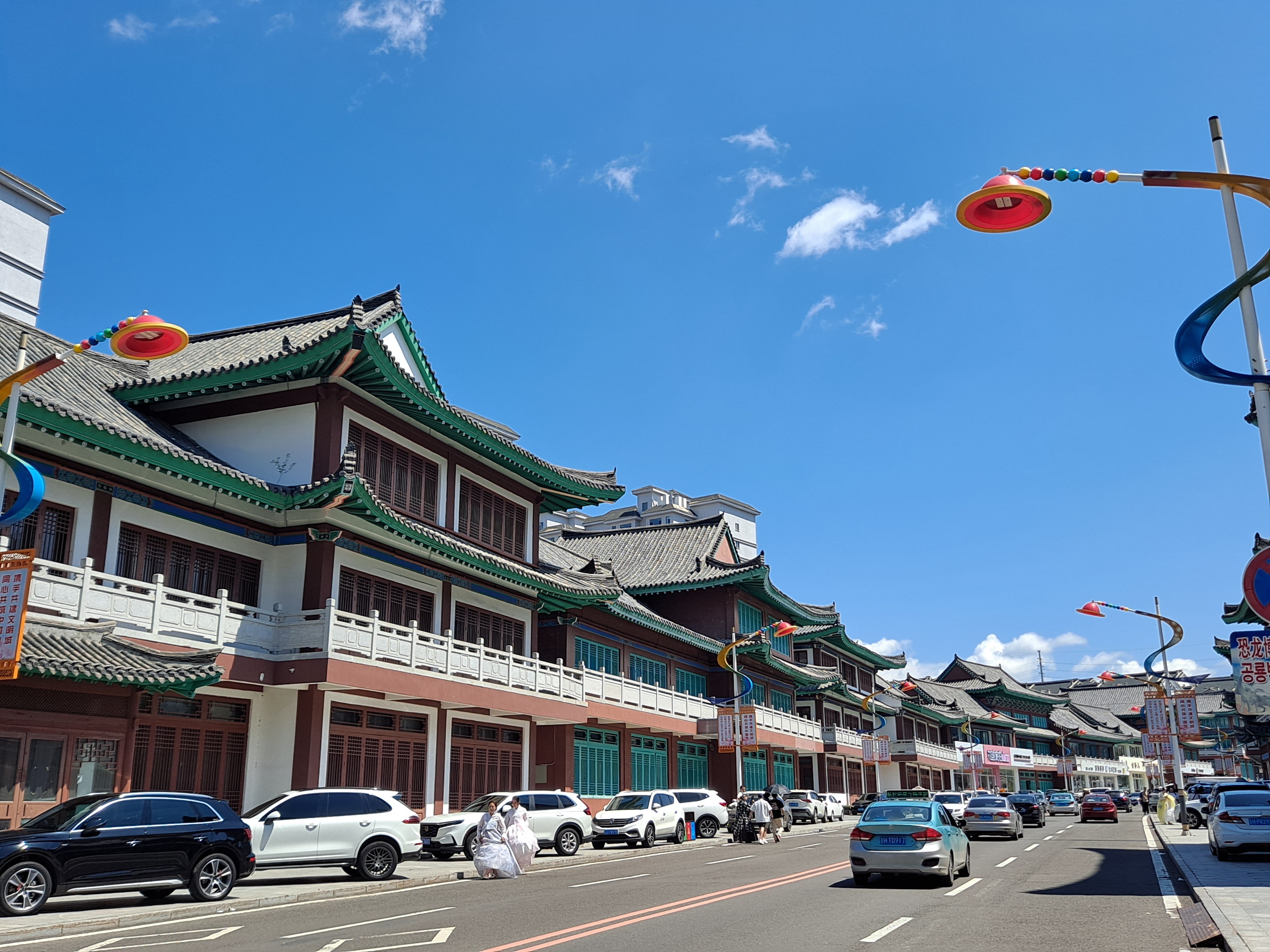
Yanji is the capital of the Yanbian Korean Autonomous Prefecture and sits in a category of its own among cities in northeast China: it is genuinely bicultural in a way that is immediately legible on the street. Shop signs appear in both Chinese characters and Korean hangul. The food running out of the restaurants is Korean — cold buckwheat noodles in icy broth, Korean barbecue, ginseng chicken soup — and the Korean spoken is the Hamgyong dialect, which reflects the origin of most of the community's ancestors in what is now North Korea's northeast. The city has more cafes serving decent coffee than you would expect from a northeastern Chinese city of its size, and a relaxed pace that makes wandering through it genuinely pleasant.
The Yanbian Museum is the place to understand how this community came to be here — mass migration across the Tumen River in the nineteenth and early twentieth centuries, pushed by famine and political collapse in Korea, then shaped by the upheavals of Japanese occupation, the Korean War, and the Cultural Revolution. The museum's 10,000-odd exhibits cover the ethnic Korean experience in China with a care and specificity that national museums rarely give to minority groups. Labelling is in both Korean and Chinese. The Korean Folk Customs Park reconstructs traditional village architecture and feels slightly staged, but the craftsmanship is genuine and the restaurants within it serve food that is hard to find in this form outside the region.
Head Mountain (Maopao Shan) rises at the city's edge and rewards the climb — a boardwalk through forest and a lookout tower at the top give clear views over the city and the surrounding bowl of hills. The Yanji Dinosaur Museum opened in 2021 after fossils were discovered during construction work in 2016; the exhibits are recent and well-presented, a reminder that this corner of Manchuria has deep geological strangeness underneath its surface.
Yanji sits close to the North Korean border and within reach of several points of interest in the wider prefecture: Hunchun and the trilateral border with Russia is two hours east, and Changbaishan is accessible from here as an alternative approach to the mountain. High-speed rail connects Yanji to Changchun in under two hours, making it a straightforward stop on a Jilin itinerary.