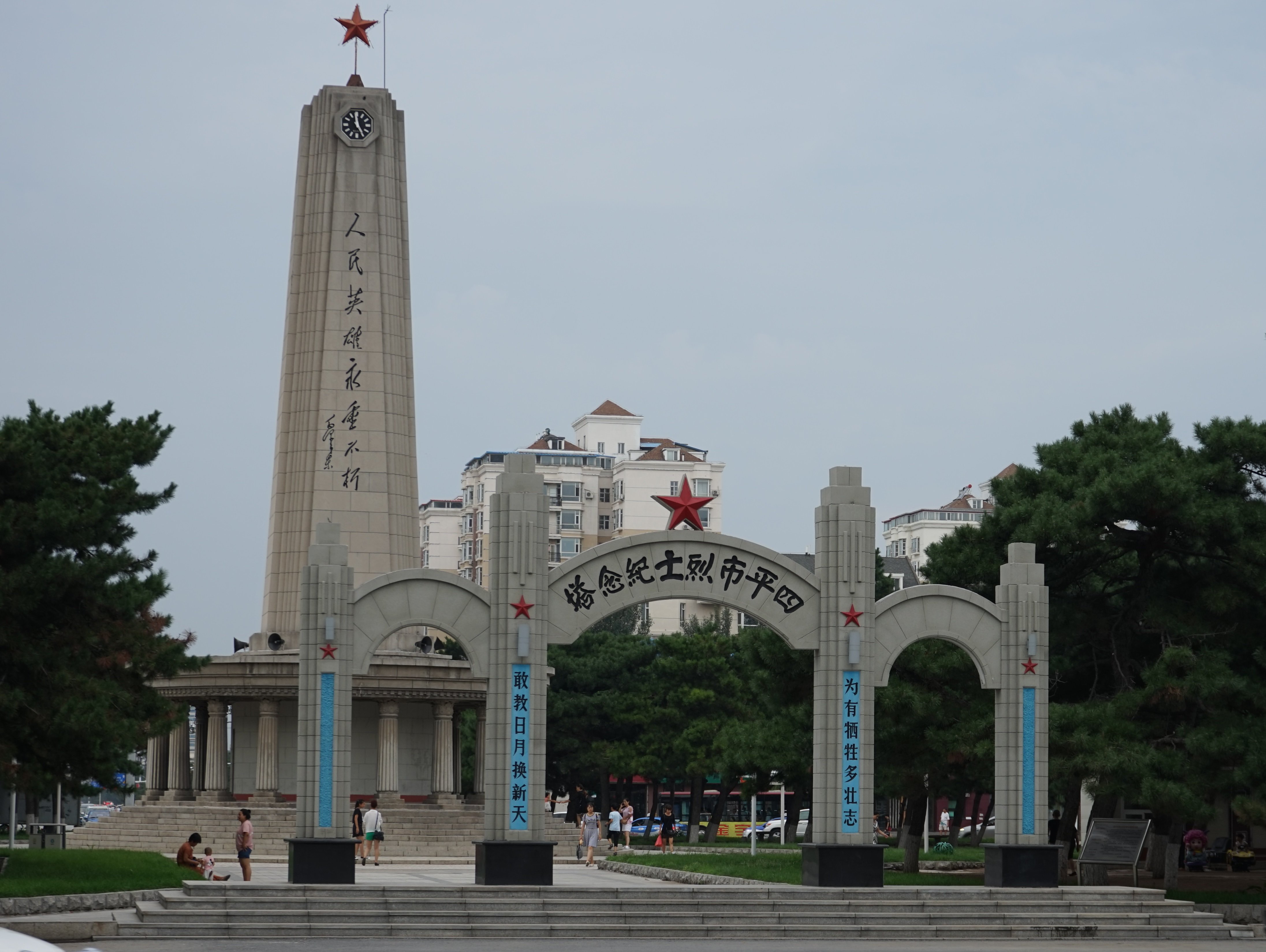
Siping lies on the main rail corridor between Beijing and Harbin, a position that made it strategically valuable in the mid-twentieth century and accounts for the bloodiest chapter in its modern history. In 1946 the city was the site of one of the most brutal battles of the Chinese Civil War, when Nationalist and Communist forces fought for control of the railway junction in engagements that killed tens of thousands and left the city almost entirely destroyed. The Siping Campaign Memorial Museum in the Tiexi District documents this battle with the seriousness it deserves — the exhibits are detailed and the scale of the fighting is made legible in a way that doesn't require prior knowledge of the Civil War to understand. Heroes Square, where the museum sits, has the weighty civic character of a place that knows what happened here.
The city rebuilt after the war with the standard elements of northeastern Chinese urbanism — wide boulevards, Soviet-influenced institutional buildings from the 1950s and 1960s, and the more recent overlay of Chinese commercial architecture. There is not a great deal to see beyond the museum, but Nanhu Park in the city centre offers a lake and greenery and the ordinary pleasures of a provincial Chinese park. The climate is decidedly continental: deep cold from November through March, warm and sometimes humid summers, and a brief but vivid autumn when the leaves turn across the flat plain that surrounds the city.
Siping's main practical value for most visitors is as a stopping point on the Changchun-Shenyang corridor. The train station is the city's hub and trains run frequently in both directions, with Changchun about an hour to the north and Shenyang roughly three hours to the south. The city is compact and the centre navigable on foot once you are out of the station. A Belgian-run restaurant on Yingxiong Avenue is a long-standing oddity, known for stocking Belgian beer in quantities unusual for this part of China.
The Siping area has some agricultural heritage worth noting: the flat land west of the city grades into the grasslands of western Jilin, and the market town character of the surrounding countryside is distinct from the more industrial cities further north in the province. Yehe Town, about forty kilometres north, is the ancestral home of the Manchu Yehe Nara clan and the birthplace of two Qing empresses — a day trip worth making if you are spending more than one night in Siping.