Panjin
©
Panjin

Panjin

Liaoning oil city on the Liaohe delta, famous for autumn crimson marshes at Red Beach

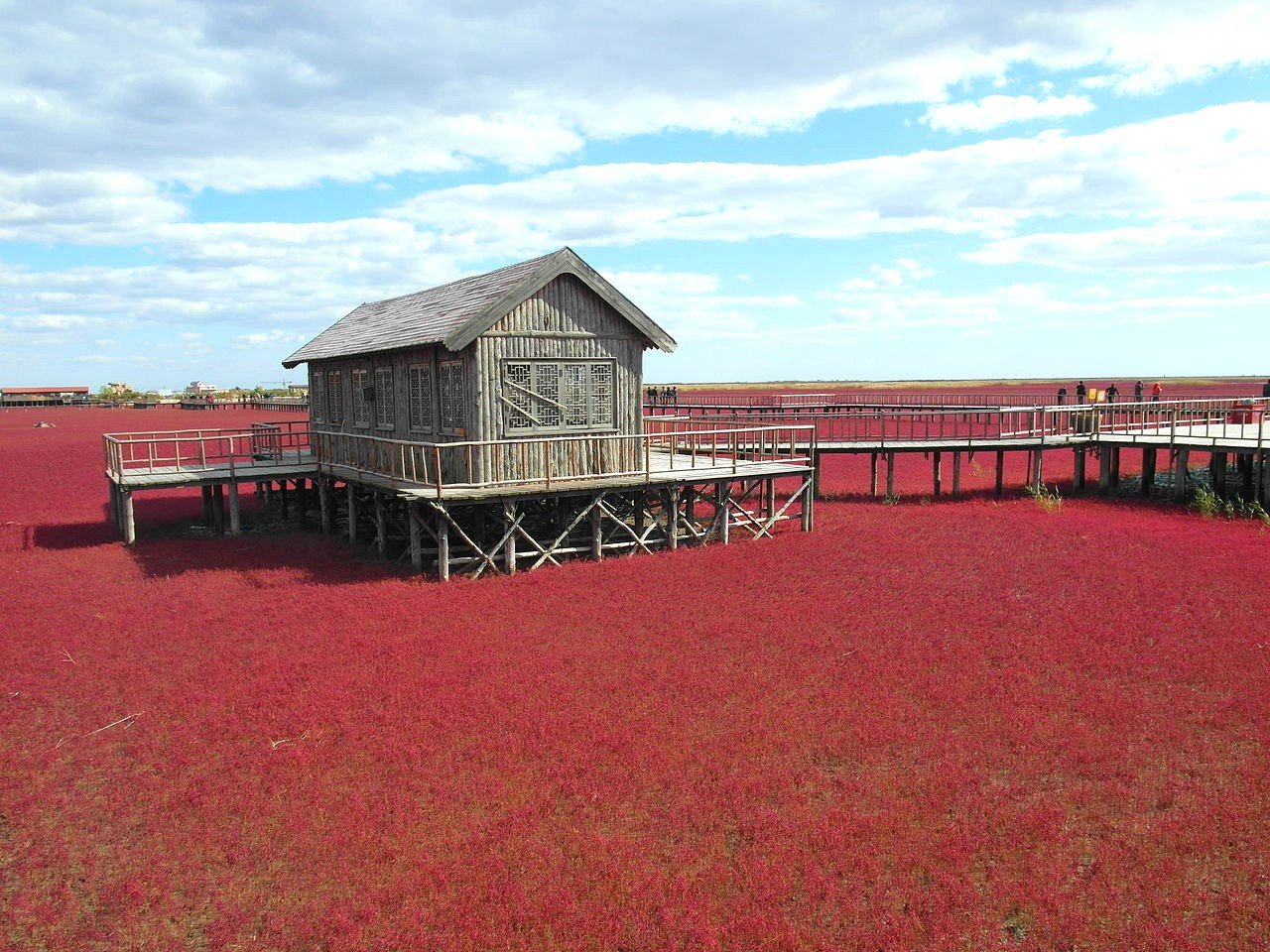
Panjin is an oil city built on a wetland delta, and its defining attraction is a geographic accident: every autumn, the vast reed marshes at the mouth of the Liaohe River turn a saturated crimson red, the colour coming from Suaeda salsa seaweed that stains the mudflats as the season turns. The Red Beach Scenic Area covers twenty square kilometres of this and is unlike anything else in China — a landscape that looks more like a colour-saturated photograph than a real place, set against the grey of the Bohai Sea.

The timing matters enormously. Peak colour runs from late September through October; visit in summer and you will find green reeds and mud. The Shuangtai Estuary Wetland Nature Reserve is also a significant stopover on the East Asian–Australasian Flyway, and during migration season the marshes fill with red-crowned cranes, black-faced spoonbills, and several other globally threatened species. A boardwalk system threads through the reserve, and boat trips are available on the interior waterways.

Away from the Red Beach, Panjin is a working oil-producing city with little to recommend it architecturally, but the local agricultural products are worth seeking out. Panjin rice — grown in the saline marshland soil — has a reputation across China for its particular texture and flavour, and the river crabs fattened in the estuary waters are a seasonal delicacy that locals take seriously. The combination of crab and local rice is the meal to have here.

The city is a straightforward day trip from Shenyang — high-speed trains cover the distance in under an hour — though staying overnight lets you catch the Red Beach at dawn, when the light is right and the tour buses have not yet arrived.

Guide

Eating Out

Panjin is known across China for two agricultural products grown in the saline marshland soils of the delta: Panjin rice and Panjin river crab. The rice, grown in the same waterlogged fields as the seepweed, has a particular glutinous texture and sweetness that locals attribute to the specific mineral composition of the soil. The river crabs, fattened in the estuary waterways, are a seasonal delicacy best in autumn — the same weeks as peak Red Beach colour.

Restaurants in the city centre serve both, often together. The combination of crab and local rice is the standard local meal and is considerably cheaper in Panjin than in Shenyang or Dalian.

Guide

Getting There

Panjin is well connected by high-speed rail to Shenyang — the journey takes under an hour, making it a comfortable day trip. The station is in the city centre; from there, the Red Beach is about forty kilometres south, requiring a taxi or bus. Buses run regularly from Panjin city to the Red Beach Scenic Area during peak season (September to October); outside peak season the service is less reliable and a taxi is the practical option.

From Shenyang by car, Panjin is about ninety minutes on the expressway via Shenyan.

Guide

Things to Do

Panjin's main attraction is seasonal and singular: the Red Beach is genuinely extraordinary in autumn, and genuinely not worth the trip in any other season. The wetland bird life adds a second reason to visit during migration, which conveniently overlaps with peak colour.

Guide

When to Go

Panjin's visit window is determined almost entirely by the Red Beach. Peak colour is late September to mid-October — this is the only time the seepweed is fully crimson, and it is when the bird migration is also at its most active. Spring migration (April to May) offers excellent birding without the colour, and is significantly less crowded.

Outside these windows, Panjin has little to offer visitors. Summer is hot and humid, with the wetland displaying green reeds and limited bird life. Winter closes most of the outdoor facilities. If your schedule allows only one autumn weekend trip from Shenyang, Panjin in October is one of the better options in Liaoning.