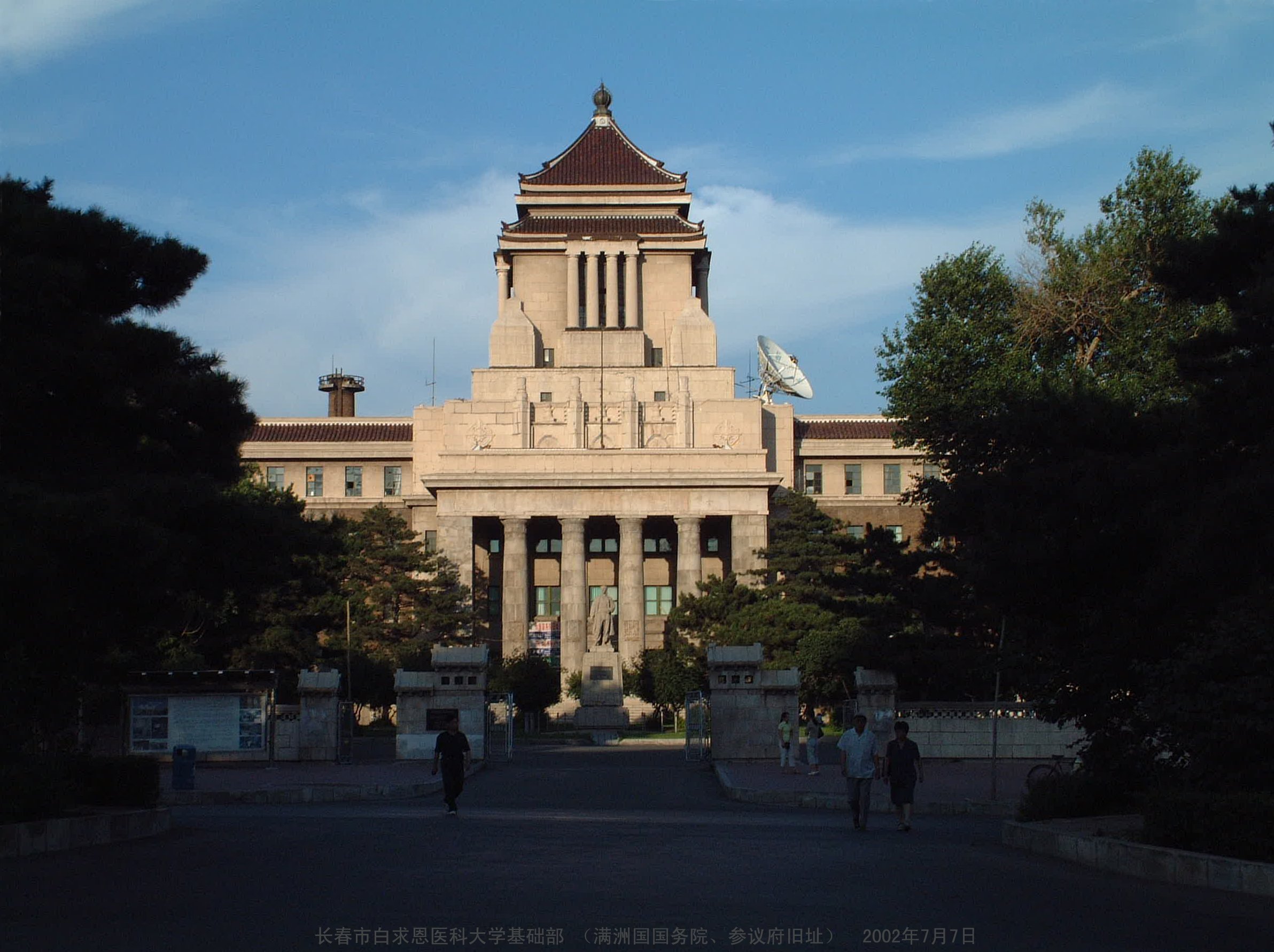
Changchun is Jilin's capital, and its history is stranger and more layered than almost any city in northeast China. From 1932 to 1945 it was Hsinking, the capital of Manchukuo — the Japanese puppet state — and the seat of Puyi, China's last emperor, who nominally ruled under Japanese supervision while having no real power at all. The Museum of the Imperial Palace of Manchukuo sits where Puyi lived and worked, and it is one of the most sobering colonial-era sites in China: the buildings are grand in a peculiar hybrid Japanese-Chinese neoclassical style, and the exhibits document both the theatre of imperial pretension and the brutal reality underneath it. The Eight Former Manchukuo Government Buildings, repurposed as university campuses after 1949, are scattered around the city and easy to stumble across.
Changchun recovered after 1949 to become China's automotive industry capital — the first Red Flag limousines were built here by the First Automobile Works, and the city still carries its manufacturing identity with some pride. The Changchun Film Studio produced the first films of the People's Republic and remains active. The city centre is organised and reasonably navigable, with a metro system that handles the main arteries, and the scale feels manageable compared to the great crushing metropolises further south.
Jingyuetan National Forest Park on the city's southeastern edge is genuinely large — claimed to be the largest artificial forest park in Asia — and it becomes a ski destination in winter when the cold here is serious, regularly touching minus fifteen or colder. The Changchun World Sculpture Park gathers several hundred international sculptures around a central lake and is better than it sounds: a good place to walk for an afternoon without any particular agenda. The Northeast Tiger Park houses Siberian tigers and other animals in conditions that are worth researching before you visit, as opinions on the facilities vary considerably.
Getting to Changchun is straightforward: it is a major stop on the high-speed rail network linking Beijing, Shenyang, and Harbin, with the journey from Beijing taking under four hours. From here, Jilin City is forty minutes by fast train, and Changbaishan is reachable in a day with an early start.