Dandong occupies one of the strangest positions in Asia: a prosperous, unremarkable Chinese city pressed up against the Yalu River, looking directly across at North Korea. The border is the attraction. From the riverfront promenade you can watch Sinuiju through binoculars — the low buildings, the occasional truck on an empty road, the lights that go out at night — and the contrast with the neon and noise on your side of the water is jarring in a way that no museum can replicate.
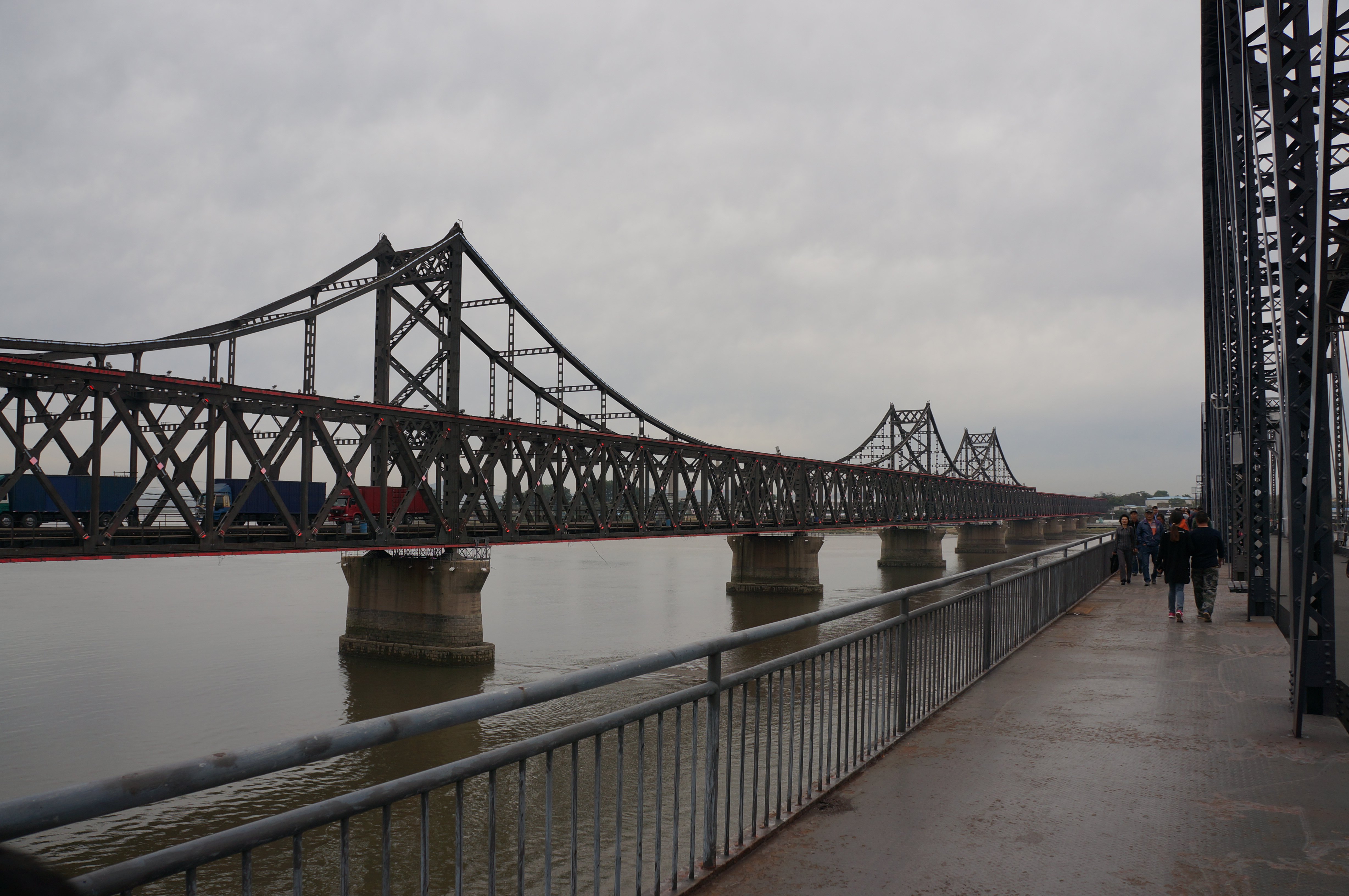
The Yalu River Broken Bridge is the central pilgrimage. American bombers destroyed the North Korean spans in 1950 and the bridge now ends mid-river, its truncated girders pointing toward Sinuiju. You can walk out to the end for thirty yuan and stand above the exact water where the Korean War's air campaign made its mark. A few hundred metres downstream the New Yalu River Bridge — built decades later, never opened because the North Korean road on the far side was never finished — stands as an accidental monument to a different kind of futility.
Twenty-five kilometres northeast of the city, the Hushan Great Wall is a Ming Dynasty fortification that represents the eastern terminus of the entire Great Wall system. It's less visited than the famous sections near Beijing and more interesting for it — you can walk stretches that feel genuinely unrestored, and the North Korean hills are visible the whole time. The Memorial of the War to Resist U.S. Aggression and Aid Korea, back in town, documents the Chinese perspective on the Korean War with considerable directness; the hardware on display outside includes MiG fighters and artillery pieces.
Dandong's seafood is the practical reason to linger. The city sits at the mouth of the Yalu and the docks supply restaurants throughout the centre with yellow croaker, razor clams, and river crab that are considerably fresher and cheaper than in Shenyang or Dalian. Trains connect to Shenyang in around two and a half hours; the rail line south to Dalian is scenic along the coast.