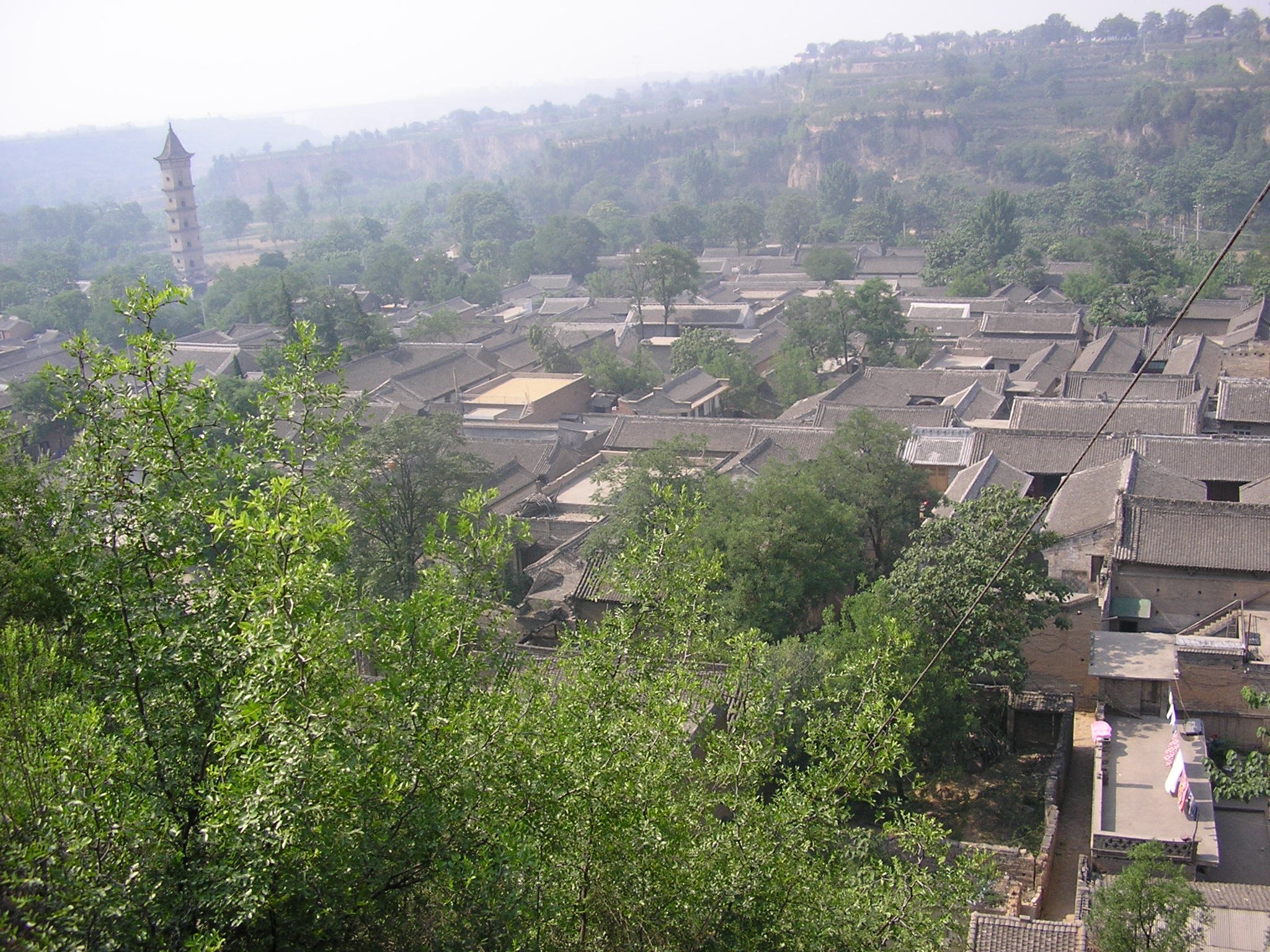
Hancheng is a small city on the Yellow River in eastern Shaanxi with a claim to historical significance disproportionate to its size: this is where Sima Qian was born. Sima Qian, the Han Dynasty historian who completed the Shiji — Records of the Grand Historian — is considered the father of Chinese historiography; his work, covering Chinese history from the Yellow Emperor to his own time, set the template for every dynastic history that followed. The Sima Qian Memorial Temple, in the hills above the city, is a major pilgrimage destination for scholars and students.
The Hancheng Old Town is one of the best-preserved examples of Ming and Qing urban planning in Shaanxi: a grid of lanes lined with courtyard residences, the wooden facades decorated with carved panels, mostly intact and still inhabited. Dangjia Village, a few kilometres outside the city, is an even better preserved example — a Yuan and Ming Dynasty village of extraordinary architectural coherence that sees significant tourist numbers.
The Yellow River here flows through a deep gorge, and the coal deposits on either bank have made this stretch of the river one of the most heavily industrialised in China. This contrast — between the literary and architectural heritage of the old city and the industrial landscape around it — is more interesting than it sounds, a visible record of what different centuries have done to the same river valley.
Hancheng has limited rail connections; most access is by bus from Xi'an in about three to four hours, or from Weinan. The city is a reasonable destination for those interested in Chinese historiography or well-preserved traditional architecture outside the main tourist circuits.