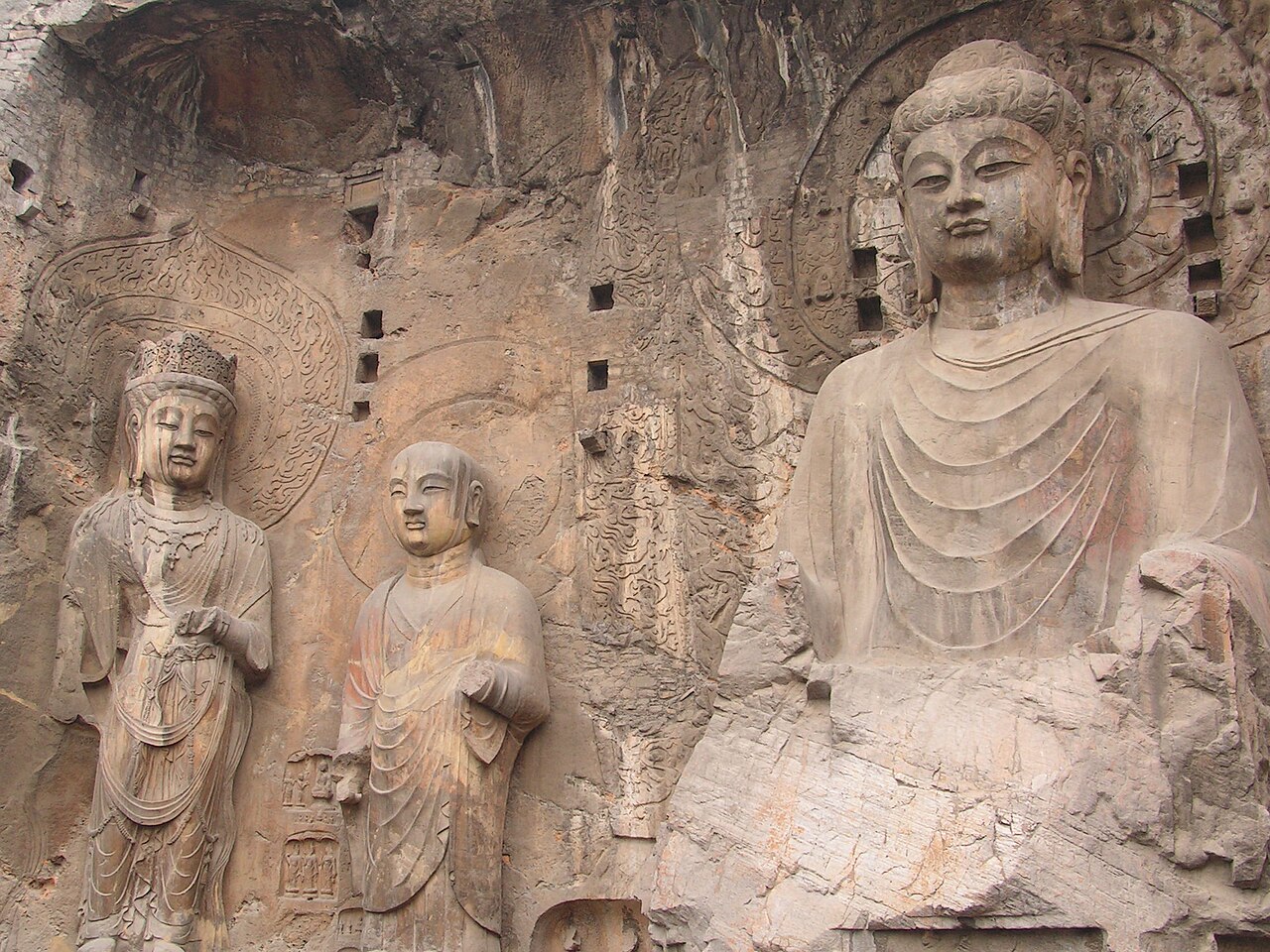
Luoyang is one of China's great ancient capitals, a city where imperial dynasties rose and fell for over a thousand years. Sitting on the banks of the Luo River in western Henan Province, it served as the capital for thirteen dynasties, making it one of the oldest continuously inhabited cities in China.
The star attraction is the Longmen Grottoes, a UNESCO World Heritage Site where tens of thousands of Buddhist statues were carved into limestone cliffs along the Yi River starting in 493 AD. The White Horse Temple, founded in 68 AD, holds the distinction of being the first Buddhist temple built in China. Between these two sites alone, Luoyang tells a story of Buddhism's arrival and flourishing in the Middle Kingdom that you simply cannot get anywhere else.
Every April the city erupts into colour during the Peony Festival. Luoyang has cultivated peonies for over 1,500 years, and the flower has become inseparable from the city's identity. The National Peony Garden and Wangcheng Park overflow with hundreds of varieties in whites, yellows, pinks, and the prized dark purple-black blooms. If you can time your visit for mid-April, you should.
Modern Luoyang is a mid-sized Chinese city without the polish of Beijing or Shanghai, but that is part of its appeal. The old town area around Lijing Gate retains real character, and the Luoyang Museum holds one of China's finest collections of Tang Dynasty ceramics. The water banquet — a multi-course procession of soups and braised dishes dating to the Tang Dynasty — is the local specialty you should not miss. Day trips to the Shaolin Monastery and the Guanlin Temple add further depth to a city that rewards several days of exploration.