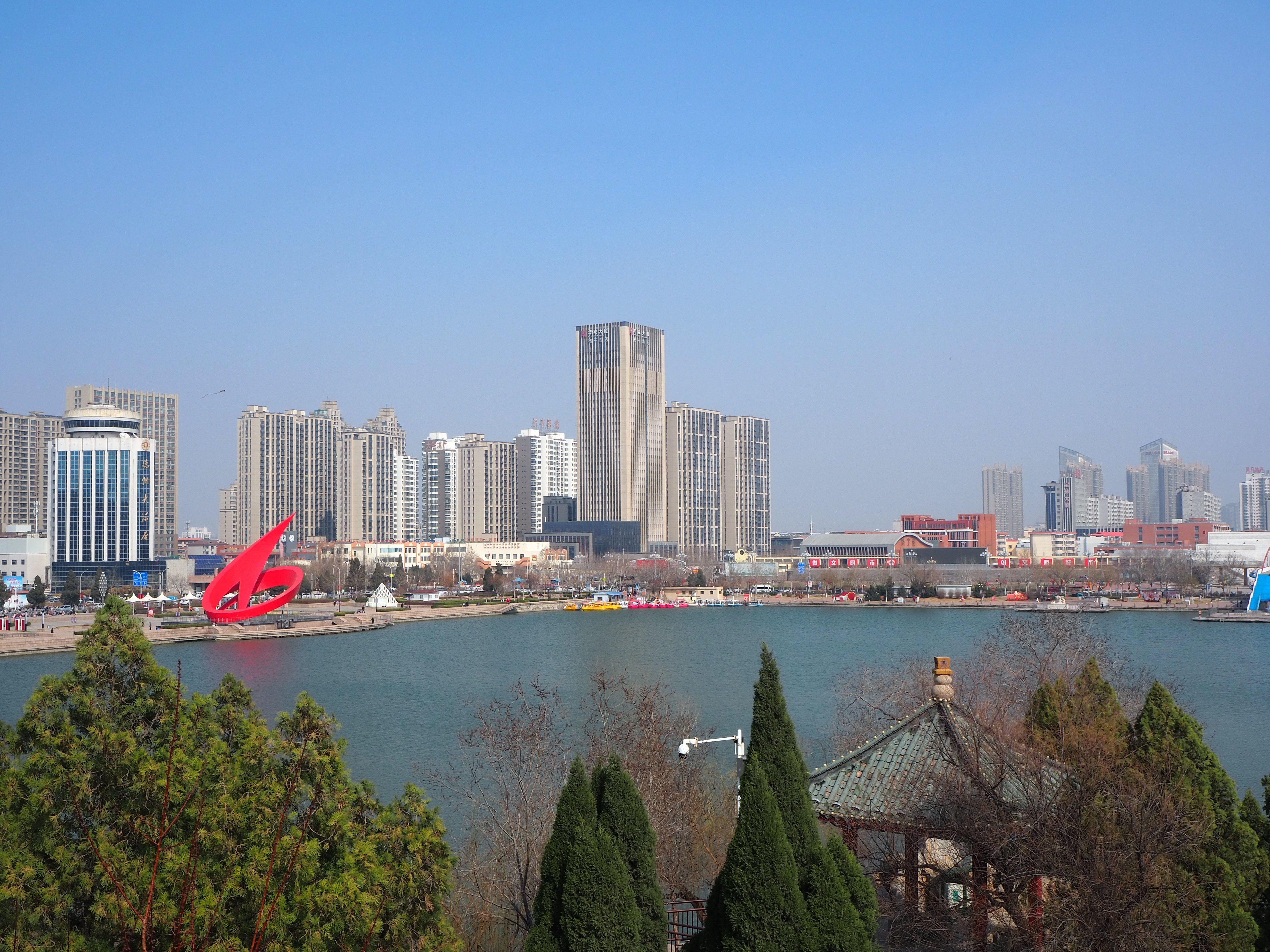
Dezhou guards the northwestern corner of Shandong, where the province meets Hebei on the main rail corridor between Beijing and the south. The city's role as a transit point has defined it for centuries: the Grand Canal passed through here, and later the Beijing-Shanghai railway, and both made Dezhou a place where goods and people changed hands. The name itself comes from an ancient name for the Yellow River, which once flowed through this part of the plain before shifting course.
The most culturally specific thing about Dezhou is its braised chicken. Dezhou Braised Chicken is one of China's recognized regional food products, prepared by a slow-cooking method with spices that is reputedly unchanged since the 18th century, and it is available in every train station and market in the province — but eating it at source, in Dezhou, where the birds are prepared by people who grew up making it, is meaningfully different from the vacuum-packed version you buy at the Beijing station. The recipe was recognized as an intangible cultural heritage item in 2014, which is to say China's government agrees the cooking method matters.
The other notable site is the Tomb of Sultan Paduka Pahala of the Sulu Sultanate in the southern Philippines, who died in Dezhou in 1417 while returning from a diplomatic mission to the Ming court. His tomb and that of his family have been maintained continuously for over 600 years, first by the Chinese state and then by the Philippine government, and it remains an active site of Filipino-Chinese heritage diplomacy — a genuinely unusual monument to find in a provincial Chinese city. Haidao Jinshan Temple, one of northern China's larger Buddhist complexes, is also here, drawing pilgrims rather than tourists.