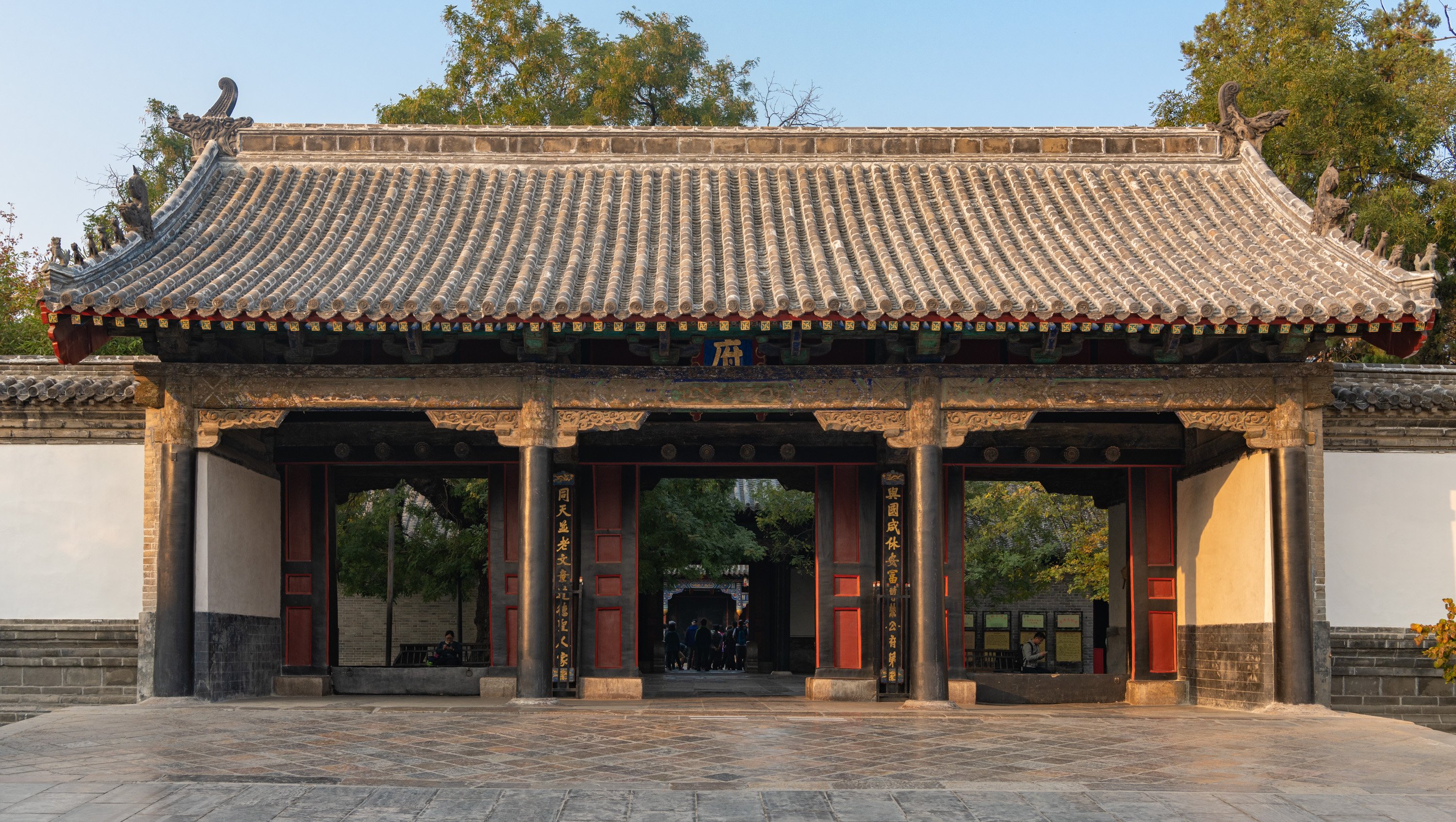
Qufu is the hometown of Confucius, and for twenty-five centuries the Kong family — his direct descendants — have lived here in the same mansion, tending the same temple, and burying their dead in the same forest cemetery. The result is one of the strangest and most moving sites in China: a living aristocratic estate that has outlasted every dynasty, every revolution, and every attempt to bury its founder's ideas. The Three Kong Sites — the Temple of Confucius, the Kong Family Mansion, and the Kong Forest — are UNESCO-listed together and genuinely warrant the designation.
The Temple of Confucius is larger than most people expect, a complex of courtyards and pavilions spread over nine enclosures, with the Dacheng Hall at its center ranking alongside the Forbidden City's main halls as one of the grandest wooden structures in East Asia. The Kong Family Mansion is simply the family home, 450-odd rooms that the Kongs inhabited continuously from the 2nd century BCE until the 1940s — the furniture, account books, and kitchenware are all still there. The Confucius Forest, a kilometer north of town, is a two-square-kilometer cemetery where more than 100,000 members of the Kong line are buried beneath stone turtles and overgrown trees; it is extraordinarily atmospheric in autumn.
The walled Ming city is small enough to walk in an afternoon, and the tourist infrastructure — hotels, restaurants, souvenir stalls shaped like ancient scrolls — is entirely oriented toward Chinese domestic pilgrims rather than foreigners, which gives it an authentic if slightly overwhelming quality during peak seasons. The quieter Temple of Yan Hui and the Mausoleum of Shaohao on the eastern outskirts are worth an afternoon each. September's birthday festival for Confucius draws enormous crowds. High-speed rail from Beijing takes two hours; the station is a few kilometers from the old city walls.