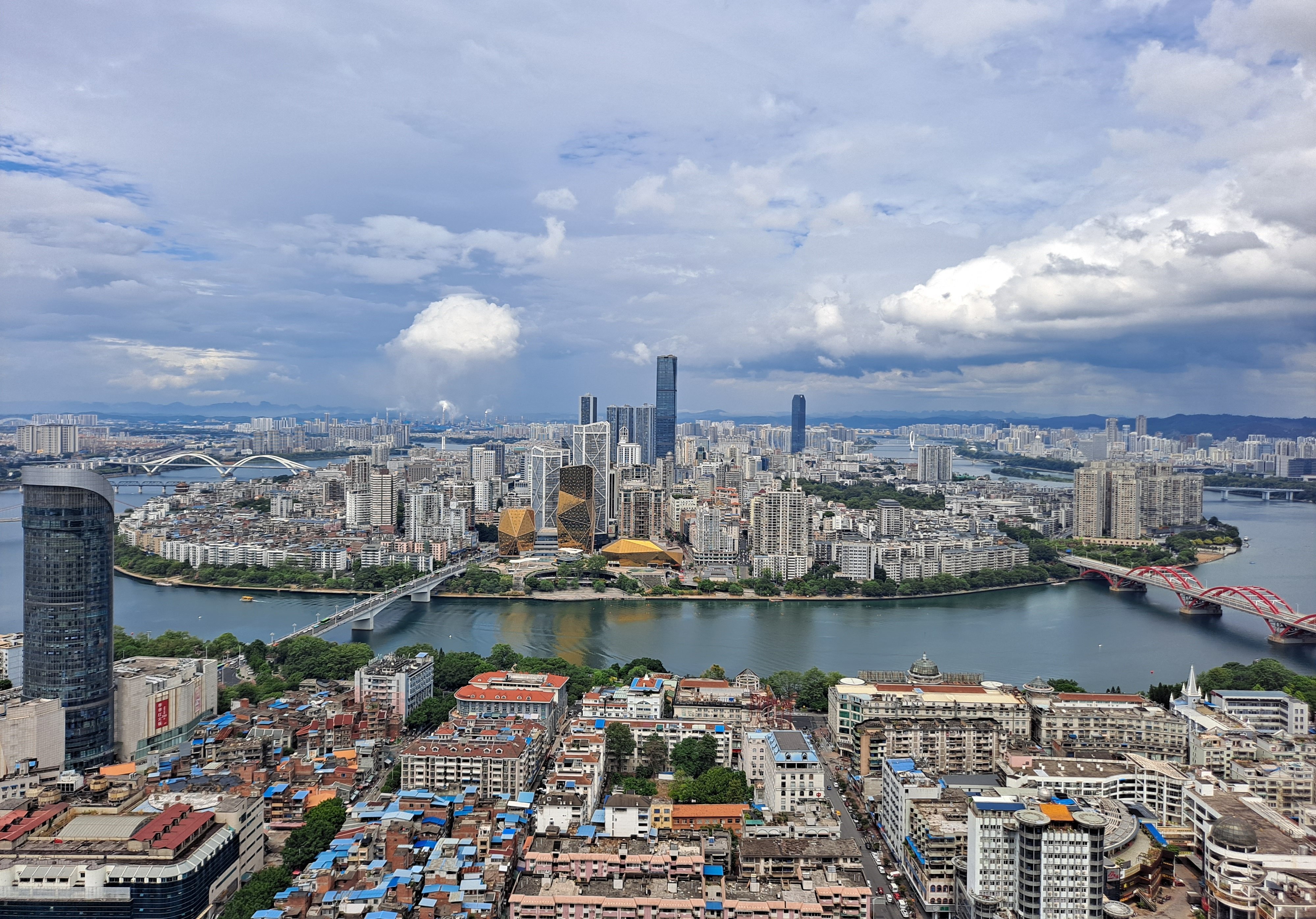
Liuzhou is Guangxi's second city and its industrial heart — a place that is easy to underestimate from the train window, where smokestacks and concrete blocks dominate, but which rewards a day or two of exploration. The Liu River loops through the city in a series of bends between karst peaks, providing the same dramatic limestone scenery as Guilin but without the crowds or the entrance fees. The city's most famous contribution to Chinese cuisine is luosifen, rice noodles in a sour-spicy broth made from river snails, a dish so pungent that the instant-noodle version comes with a smell warning on the packaging. Eating it in its hometown, at a street counter at 8am, is the correct introduction to Liuzhou.
The most interesting cultural site in the city is Ho Chi Minh's former residence — a reminder that Ho spent several periods in Guangxi in the 1940s while organizing Vietnamese resistance and that the border between revolutionary movements was more porous than the present-day nationalism of either country suggests. The Liuzhou Military Museum has a respectable collection of Flying Tigers aircraft from the Second World War, when Liuzhou was a significant American air base. The Liu Zongyuan memorial park commemorates the Tang dynasty poet-official who was exiled here and wrote some of his best work during what he experienced as punishment.
The surrounding countryside has karst scenery and ethnic minority villages that most visitors never reach precisely because Liuzhou has such an industrial reputation. Longtan Park at the edge of the city mixes the standard elements — caves, a cable car, scenic peaks — with enough local visitors to give it an authentic rather than touristic atmosphere. The historic Lequn Society building near the riverfront is a rare surviving fragment of the pre-industrial city.
Liuzhou sits on the main rail line between Guilin and Nanning and is an easy stop between the two. It is not a destination in the same sense as Guilin, but as an honest, working Chinese city with good food and undervisited karst scenery on its doorstep, it has more going for it than most guidebooks admit.