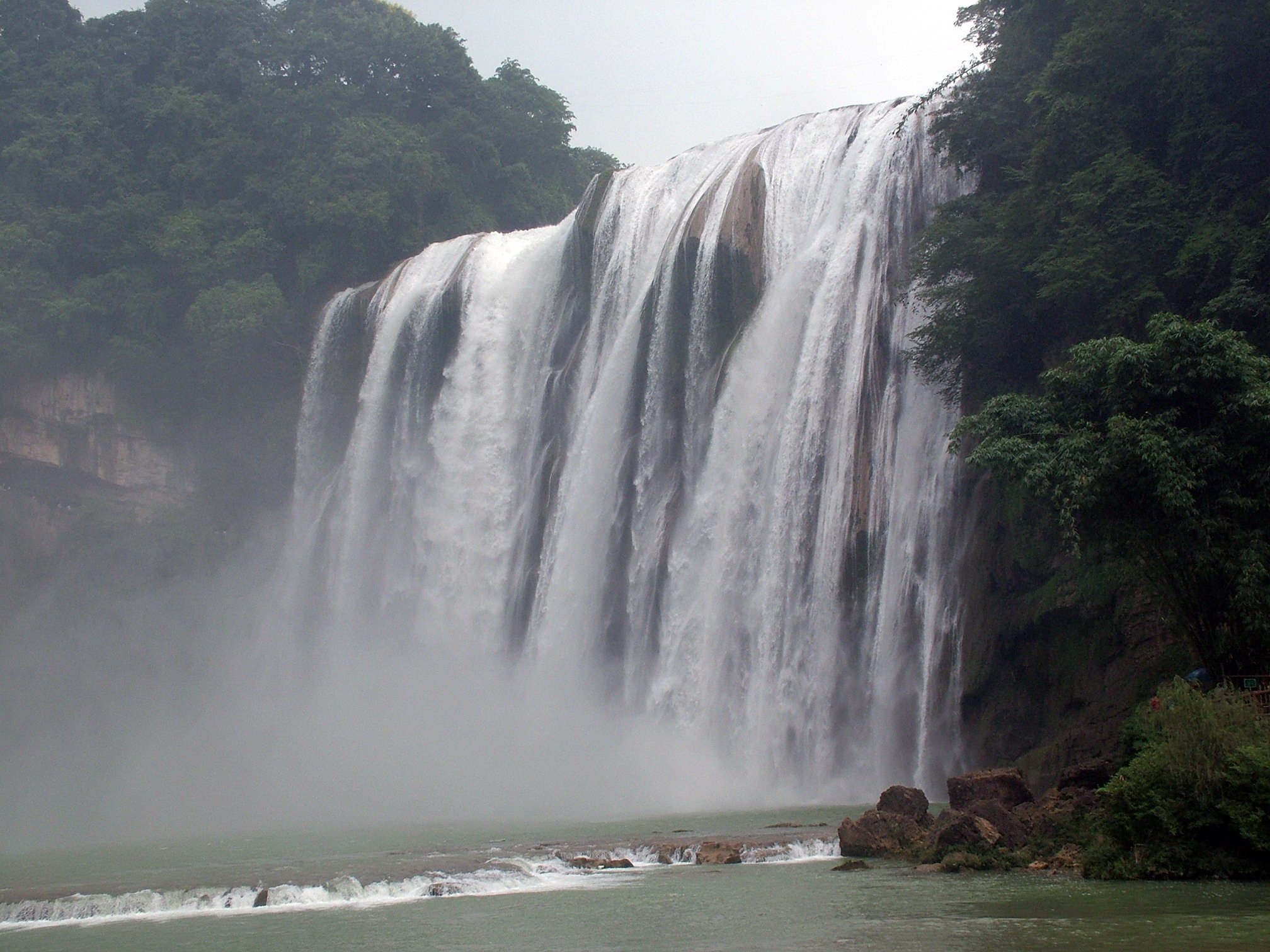
Huangguoshu is China's largest waterfall by volume and one of its most visited natural sites — 74 to 78 metres high (the height varies with seasonal flow) and 101 metres wide, plunging into the Rhinoceros Pool below in a roar that's audible a kilometre away. What makes it different from other very large waterfalls is the cave: Water Curtain Cave runs 134 metres behind the falls through naturally occurring chambers in the limestone cliff, and you can walk the entire passage behind the falling water. The view from inside — sheets of white water across a cave opening, with the gorge and the pool framed beyond — is one of the more unusual perspectives available in Chinese scenery.
The Huangguoshu Scenic Area covers a river corridor with several distinct waterfall systems, and the standard admission covers more than just the main falls. The Doupotang cascade, a few kilometres downstream, is lower but wider and set in a narrower gorge that frames it differently. The Tianxingqiao area, a karst landscape of natural rock bridges, stone formations, and shallow pools covered in aquatic plants, is 6 kilometres further along and justifies its own hour or two. The whole scenic area is large enough that most visitors leave having seen only a fraction of it.
The setting around Anshun contains a second major cave system: Longgong, the Dragon Palace Caves, 15 kilometres from the main falls. The Dragon Palace tour runs by boat through 15 kilometres of underground river, navigating chambers of stalactites and stalagmites in formations that would be the centrepiece of a lesser region. The two sites together make a full day, and most people stay a night in Anshun to cover them properly.
Huangguoshu is at its most impressive during the rainy season from June to September, when the water volume is highest and the falls are fully continuous across their width. In drier months, the falls narrow and lose some drama, though the cave walk remains viable year-round. The site is 45 kilometres southwest of Anshun, reachable by tourist buses from the city.