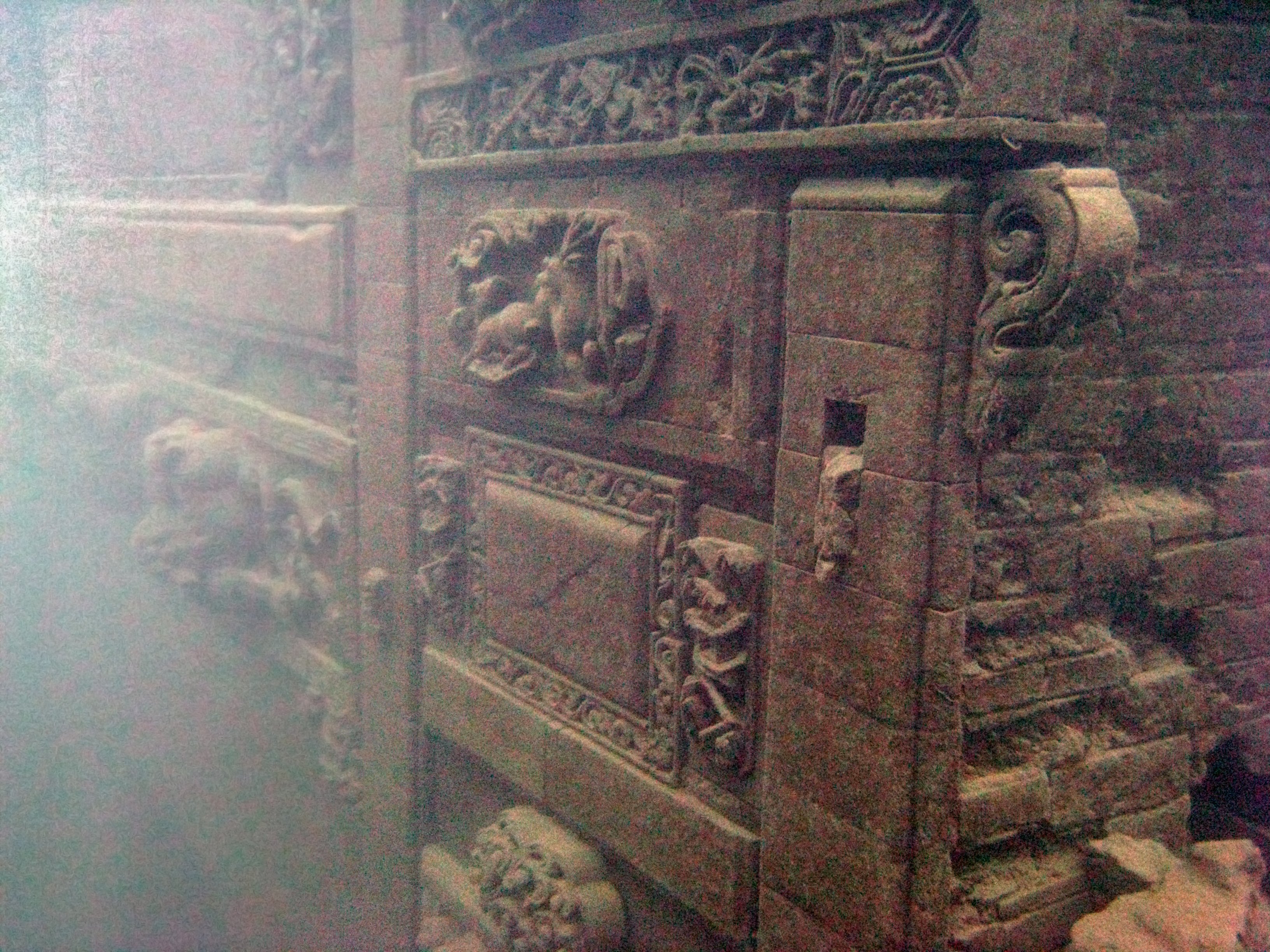
Qiandao Lake — the Thousand Islands Lake — is one of the more melancholy landscapes in China, though it does not immediately look it. The reservoir was created in 1959 when the Xin'an River valley was flooded for the first large dam built in the People's Republic, submerging two ancient county towns and several hundred villages in the process. What remains above water is an emerald expanse dotted with 1,078 forested islands, the drowned hilltops of what was once a densely populated valley. The water is startlingly clear — it supplies much of Hangzhou's drinking water — and the islands are almost entirely cloaked in green.
The submerged city of Shicheng, Lion City, was founded during the Eastern Han dynasty and lies intact at depths of twenty to forty metres, its gates and carved stone lions preserved by the cold, sediment-free water. Divers can visit with a licensed operator, making it one of the few sites in the world where you can swim through a complete ancient city. Above the waterline, tourist boats run circuits between the named islands — Monkey Island, Snake Island, Bird Island — which have been stocked with wildlife for visitor entertainment, a more cheerful but less profound experience.
The lake is about two hours from Hangzhou by road or a shorter hop on the high-speed rail spur that terminates here. The best way to see it is by hiring a small boat for a few hours rather than joining an organised tour, which tends to rush through the official highlights without time to find a quiet cove and swim in water that is, by Chinese standards, extraordinary.