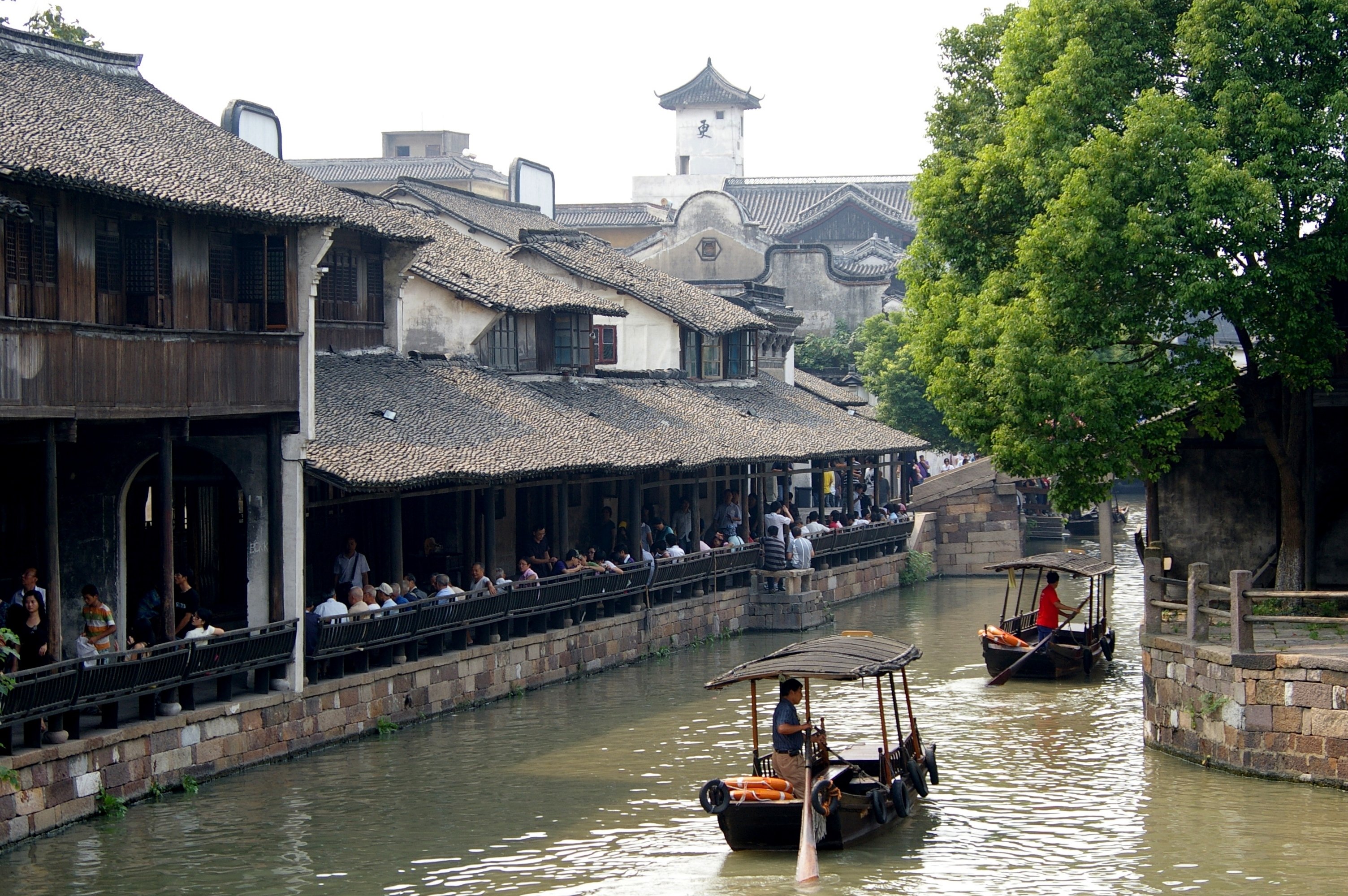
Zhejiang water town on the Grand Canal, with wooden houses, stone bridges, and ticketed quarters
Wuzhen is China's most famous water town, and it has paid a price for that fame: the canal-side wooden buildings are immaculate, the stone bridges are perfectly lit at night, and admission fees ensure that the crowds are manageable but the atmosphere is controlled. It is, in other words, a theme park of itself — but a very beautiful one. The town sits astride the Beijing-Hangzhou Grand Canal in northern Zhejiang, and the preserved streets along its smaller waterways give a reasonable impression of what this entire region looked like before concrete arrived.
The town is divided into two ticketed sections. The West Quarter (Xizha), developed more recently, is the more atmospheric of the two: you can stay in guesthouses built over the water, watch silk looms and winemaking demonstrations, and eat at canal-side restaurants under the eaves of buildings that have been here, in one form or another, for several centuries. The East Quarter (Dongzha) is older and more compact, with the main sights clustered close together. Both are best in the early morning or evening, when the day-trip crowds have thinned.
The writer Mao Dun was born in Wuzhen and is celebrated here with a small museum and restored residence. His novels documented the transformation of Jiangnan society in the early twentieth century — the very world that Wuzhen now recreates for tourist consumption. The coincidence is not without irony, and the museum is worth a visit for the perspective it adds.
Guide
Getting There
Wuzhen has no railway station of its own; the nearest high-speed rail stops are Tongxiang (20 minutes by taxi or bus) and Jiaxing (30 minutes). Direct buses run from Hangzhou East Bus Station and take about 90 minutes to reach the town's main entrance. From Shanghai, buses run from Hongqiao Bus Station and take about two hours.
The town's two ticketed sections, East Quarter and West Quarter, are about two kilometres apart — shuttle buses run between them and taxis are available. If you are staying overnight in the West Quarter, there is no need to arrange transport between the two: the walk along the canal path is pleasant in good weather.
Guide
When to Go
Wuzhen is at its best in spring (March to May) and autumn (September to November), when the weather is mild and the light on the canals is soft. Summers are hot and humid but manageable; the water town atmosphere means there is shade and there are breezes off the canals. Winter is cool but quiet — the Chinese tourist crowds thin considerably, and the town has a more authentic feel.
Chinese national holidays (particularly Golden Week in late September/early October and the Spring Festival in January/February) bring enormous domestic crowds to all the water towns. If possible, visit on weekdays. The Wuzhen Theatre Festival in late October brings international theatre companies to stages set up throughout the town, and is worth timing a visit around if you have any interest in contemporary performance.