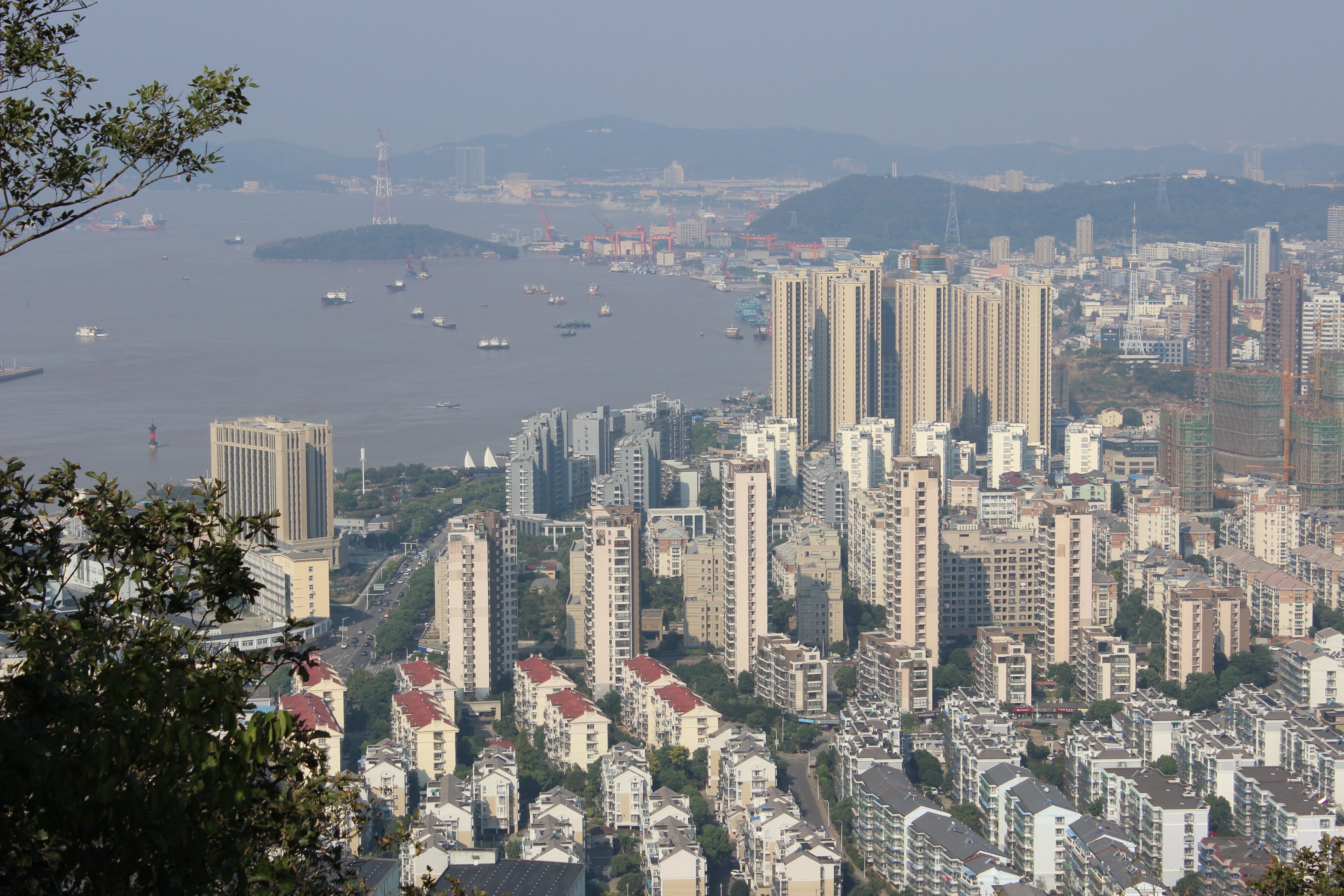
East China Sea archipelago city of fishing ports, seafood markets, and Buddhist Mount Putuo.
Zhoushan is an archipelago of over 1,300 islands scattered across the East China Sea north of Ningbo, and the only prefecture-level city in China made up entirely of islands. The city is the country's most important fishing port, and the Shenjiamen Fish Market on Putuo Island runs one of Asia's largest fish markets, busiest at dawn when the trawlers come in. A night market along the waterfront turns the catch into grilled skewers and clay-pot soups, and eating here — surrounded by fishermen and wholesale buyers — is as authentic as Chinese seafood dining gets.
The main draw for most visitors is Mount Putuo, the southernmost of China's four sacred Buddhist mountains and one of the most visited pilgrimage sites in East Asia. The mountain occupies a small island of forested trails and temple complexes dedicated to Guanyin, the bodhisattva of mercy. Three major monasteries and dozens of smaller shrines are spread across the island, connected by stone paths through bamboo groves. The crowds on festival days can be enormous, but the island has a genuine spiritual atmosphere that the tourism infrastructure has not entirely erased.
For those seeking something quieter, Zhujiajian Island to the south has some of the best beaches in Zhejiang, with fine sand and open sea views. The Shengsi Islands, at the outer edge of the archipelago near the mouth of the Yangtze, are the most remote and least visited, with slow boats, old fishing villages, and the sense of being genuinely away from the Chinese mainland.
Guide
Beaches
Zhoushan has the best beaches in Zhejiang, concentrated mainly on Zhujiajian Island and the outer islands of the southern archipelago. The sand is finer and the water cleaner than at most beaches on China's northeast coast, because the islands sit south of the main Yangtze outflow that muddies the sea closer to Shanghai.
Zhujiajian's Dongsha Beach is the most accessible and best-equipped, with a long arc of pale sand, rental facilities, and restaurants along the front. Daqingshan Island, a smaller island south of Zhujiajian, has quieter beaches reachable by short boat crossing from Shenjiamen. The Shengsi Islands at the outer archipelago have rocky coasts more than beaches, but the isolation compensates for the limited swimming.
Water temperatures are comfortable from late June through September; the sea is cold but swimmable in May and October. July and August bring the highest waves and the most domestic tourists; spring and autumn are uncrowded and the sea is still warm enough to swim in.
Guide
Eating Out
Zhoushan's food is built entirely around seafood, and the freshness of the catch makes it reliably excellent. The archipelago specialises in yellow croaker, cuttlefish, hairtail fish, and various shellfish, all pulled from the surrounding sea and appearing on menus within hours of landing. The night market along Shenjiamen's waterfront is the best and most atmospheric place to eat — fresh seafood grilled over charcoal, clay-pot preparations, and cold shellfish, all available from open stalls that run until midnight.
On Putuoshan Island, the restaurants near the ferry terminal serve fresh seafood at reasonable prices; the restaurants deeper in the island toward the temples tend to serve vegetarian Buddhist cuisine, which is done well but represents a different kind of meal. For raw oysters and fresh crab, the wholesale market area in Shenjiamen is the best value.
Guide
Getting There
Zhoushan is connected to the mainland by road via the Zhoushan Islands New Area bridge system, and by ferry from Ningbo and Shanghai. The Zhoushan Putuoshan Airport receives flights from major Chinese cities, including direct services from Beijing, Guangzhou, and Chengdu.
From Ningbo, both ferry and express bus services reach Shenjiamen in sixty to ninety minutes; the ferry journey across the water is the more pleasant approach. From Shanghai, direct ferries run to Shenjiamen in about four hours, and high-speed boats cut the journey to about two hours. The Zhoushan-Ningbo cross-sea bridge allows road travel from the mainland, and buses from Ningbo take about ninety minutes.
For Putuoshan Island, ferries run from Shenjiamen several times daily in under thirty minutes. There are also direct ferries to Putuoshan from Ningbo and Shanghai, which is the most efficient option if Mount Putuo is your primary destination.
Guide
When to Go
Spring (April to May) and autumn (September to October) are the best seasons for Zhoushan. The weather is mild, the sea is calm enough for comfortable island-hopping, and the light on the water has a quality that makes the archipelago particularly beautiful. Summer is hot and humid but the sea temperature rises to comfortable swimming levels, and the beaches on Zhujiajian are at their best through July and August.
Typhoon season runs from June to October and can disrupt ferry services with little warning — if island travel is central to your plans, have flexible tickets and build extra time into your schedule. The worst typhoons in recent history have struck in August and September.
Guanyin's birthday and other major Buddhist festivals bring enormous crowds to Putuoshan Island; the dates shift with the lunar calendar but generally fall in spring and late autumn. The pilgrimage atmosphere is worth experiencing once, but the crowds are intense — plan to arrive early and leave before noon if visiting on a festival day.