Mount Putuo is the smallest and most accessible of China's four sacred Buddhist mountains, an island of temples and forested paths rising from the East China Sea off the coast of Zhoushan. The mountain itself reaches only 297 metres, but the island is entirely devoted to Guanyin, the bodhisattva of mercy, and has been a pilgrimage site for over a thousand years. Ferries run from Ningbo and Zhoushan, and the island imposes itself immediately: the thirty-three-metre bronze Guanyin statue visible from the harbour is hard to miss.
Three major monasteries are the spiritual heart of the island. Puji Monastery, the oldest and most visited, stands at the centre surrounded by lotus ponds and ancient camphor trees. Fayu Monastery is quieter and more secluded, built into the hillside with courtyards rising in steps. Huiji Monastery sits near the summit, reachable by a cable car or a long climb up stone steps, and has views over the sea to the other islands of the Zhoushan archipelago. Between them, dozens of smaller shrines and meditation caves — including the atmospheric Chaoyin Cave — are scattered through the forest.
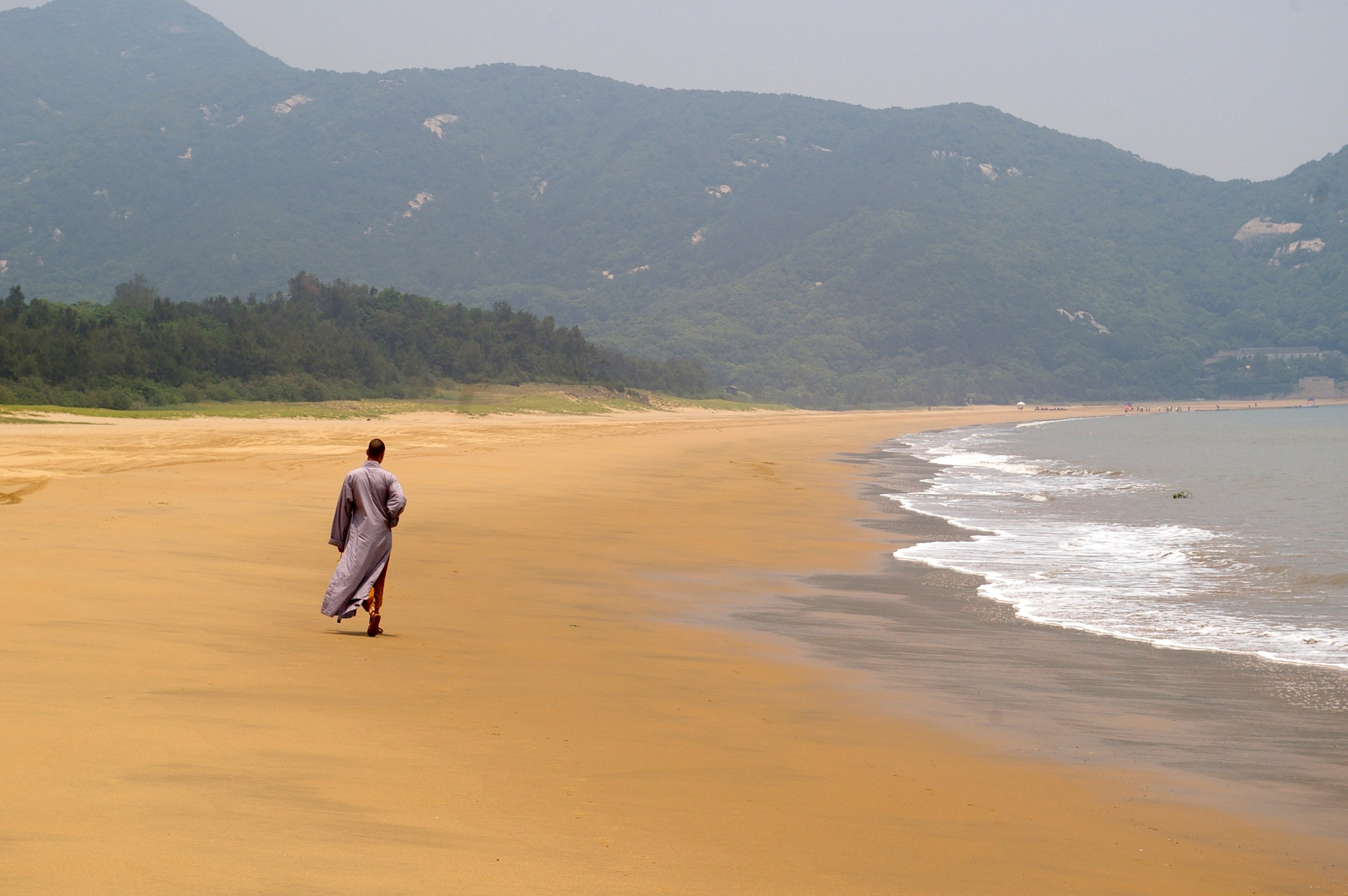
The island has two beaches — Hundred Step Beach and Thousand Step Beach — where Buddhist pilgrims and ordinary tourists mix in a combination that feels natural here. The Nanhai Guanyin statue at the island's southern tip, visible from the ferry, has become the defining image of Putuo. The whole island is a national park with a substantial entry fee, and accommodation is plentiful but tends to fill on major Buddhist festival days when the pilgrimage traffic peaks. Those not particularly drawn to Buddhism may find the island's most memorable quality is simply its combination of pine forests, sea air, and the soft percussion of monastery bells.