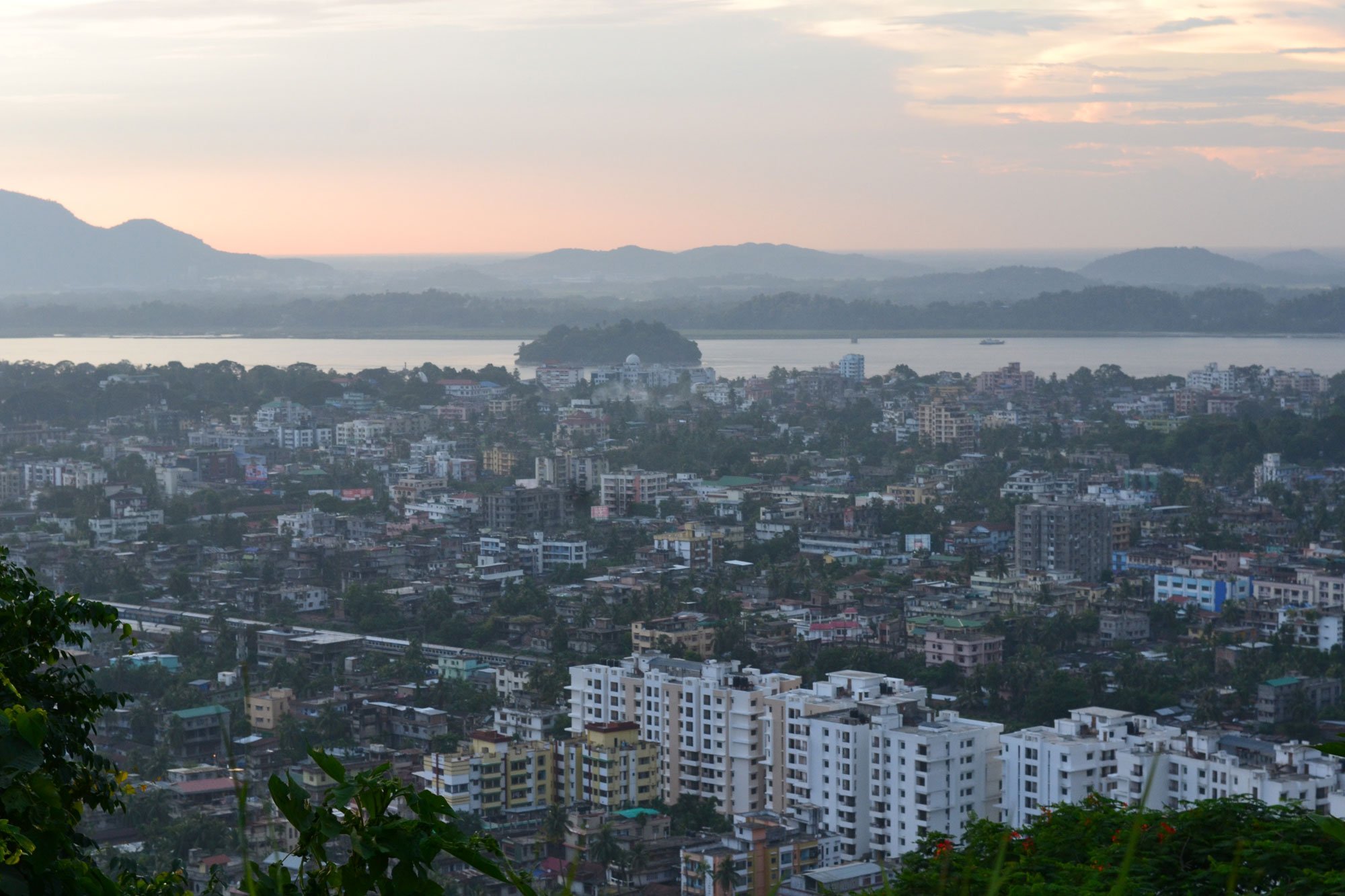
Guwahati sprawls along the southern bank of the Brahmaputra at the point where the great river narrows between the Khasi hills and the Himalayan foothills. It is the largest city in northeast India, the gateway through which nearly every traveller bound for Assam, Meghalaya, Arunachal Pradesh, Nagaland, Manipur or Mizoram has to pass — and a destination in its own right, with a Tantric pilgrimage shrine that draws several million people a year and a working river port still active with country boats.
The headline sight is Kamakhya Temple, eight kilometres west of the centre on the wooded slopes of Nilachal Hill. Sacred to the goddess Kamakhya — a form of the Mother Goddess associated with menstruation and fertility — it is one of the 51 Shakti Pithas, and a centre of Tantric Hinduism. The temple is busy year-round, mobbed during the Ambubachi festival in June. Plan for at least half a day if you want to actually get inside; the queue can be brutal, and the VIP queue is worth the few hundred rupees.
The rest of the city rewards a day or two. Umananda Temple sits on an island in the middle of the Brahmaputra, reached by a short ferry from the south bank — one of the smallest inhabited river islands in the world. The Navagraha Temple caps Chitrachal Hill in the east and is dedicated to the nine planets of Hindu astronomy. In the old centre, Dighalipukhuri is a half-kilometre long medieval tank with paddleboats, surrounded by the Assam State Museum, the high court, and the better restaurants. Sankardev Kalakshetra, the cultural complex on the south side, is the best one-stop introduction to Assamese culture in the region.
Practically: Guwahati is hot and humid most of the year, monsoonal from June to September, and unpredictable in terms of traffic. The riverfront promenade is pleasant at sunset; the Sunset Point above Maligaon offers a wider view. Eating is excellent — Assamese food is its own world of sour, fermented and fish-led dishes, very different from anything you have had elsewhere in India.
Use Guwahati as a base for day or overnight trips: Hajo for the syncretic temple-and-mosque complex, Sualkuchi for silk weaving, Pobitora Wildlife Sanctuary for one-horned rhinos, Shillong in Meghalaya, and the tea estates around Jorhat further east.