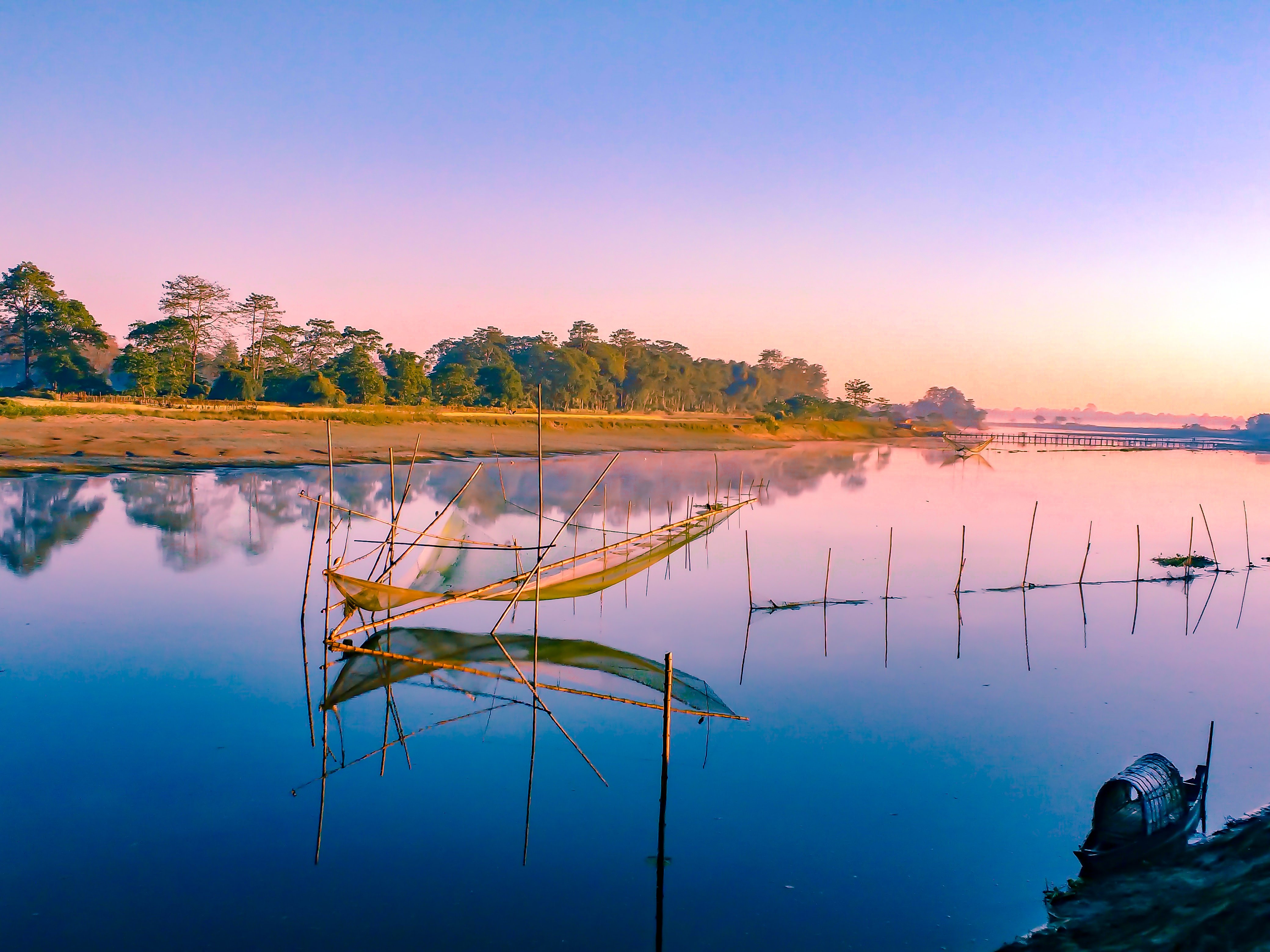
Majuli is the world's largest river island — an 880-square-kilometre slab of alluvial land sitting in the middle of the Brahmaputra in Assam, ringed by river channels and accessible only by ferry from Nimati Ghat near Jorhat. It is also, remarkably, the cultural heart of Assamese civilisation: the island is home to 22 surviving satras, the Vaishnavite monastery-communities that have preserved Assam's classical arts, drama, music, and dance for five centuries.
The satras were founded by the 15th-century saint Srimanta Sankaradeva and his disciples, who spread a devotional reform movement across the Brahmaputra valley. Each satra is a self-contained community led by a satradhikar — scholar, priest, choreographer, and craftsperson combined. At the Auniati Satra, one of the four historic royal satras, antique jewellery, utensils, and artefacts fill a small museum attached to the prayer hall. Samaguri Satra is the island's best-known satra for visitors: it has maintained the tradition of crafting the elaborate bamboo-and-cloth masks used in Bhaona, Assam's classical dramatic form, and you can watch the mask-makers at work. Kamalabari Satra and Dakhinpat Satra are the other major royal monasteries worth visiting, each with a different character and tradition.
Sattriya dance — one of India's eight classical dance forms, originating here — is performed at most satras during festivals and at occasional sessions for visitors. The Raas Leela festival in mid-November is the most spectacular time to visit, with all-night Bhaona performances in elaborate masks and costumes. Beyond the satras, Majuli has a gentler charm: Mishing tribal villages where bamboo stilt houses line the riverbank, rice fields that flood in the monsoon, and birdwatching that includes pelicans, Siberian cranes, and rare adjutants. The Brahmaputra riverbank at sunset is one of northeast India's better views. The island is slowly shrinking — erosion has consumed more than half its original area since the 1950s — which gives the place a certain urgency. Come while it is still here.
Getting to Majuli means taking the ferry from Nimati Ghat, about 14 km from Jorhat. The crossing takes roughly an hour. Cycle hire is the best way to move around the island; the distances are manageable, the roads quiet, and arriving at a satra at dawn, when the prayer drums begin, is worth the early start. Come between October and March when the monsoon has receded and the heat is bearable.