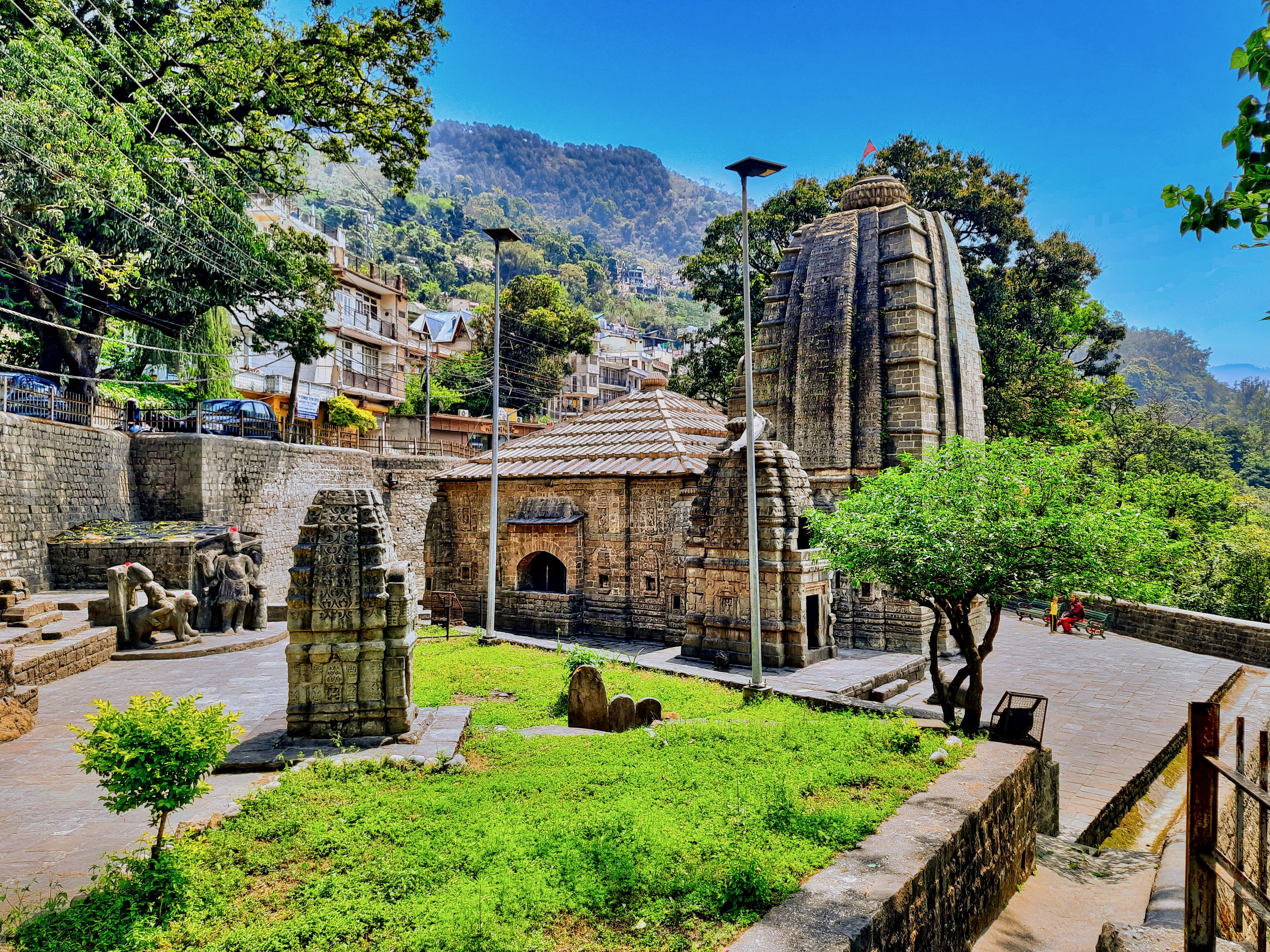
Mandi sits at around 800 metres on the banks of the river Beas, a historic trading town where the plains of Punjab once met the hill kingdoms. Often called the "Varanasi of the Hills," Mandi is said to have 81 old stone temples, many of them built in the Nagari style with intricate carvings depicting scenes from Hindu mythology. The most important is the Bhootnath Temple near the town centre, dedicated to Shiva.
The old town is compact and walkable, with narrow lanes winding past carved wooden balconies and the remains of the former royal palace. The Raj Mahal, now partly in ruins, overlooks the river. Colonial-era architecture from the British period adds another layer — there are handsome stone buildings near the main square that could be transplanted from a hill station further east. The Sunken Garden and the Victoria Bridge are worth a look.
Mandi comes alive during the Shivratri Fair in February or March, a week-long festival that draws crowds from across Himachal Pradesh and features processions of temple deities carried through the streets. The town is a major junction on the road network — routes branch off from here to Kullu and the Beas valley, to Dharamsala via Jogindernagar, and to Shimla via Sundernagar. If you are driving through, Mandi is worth a stop of a few hours to walk the old town and its temples.