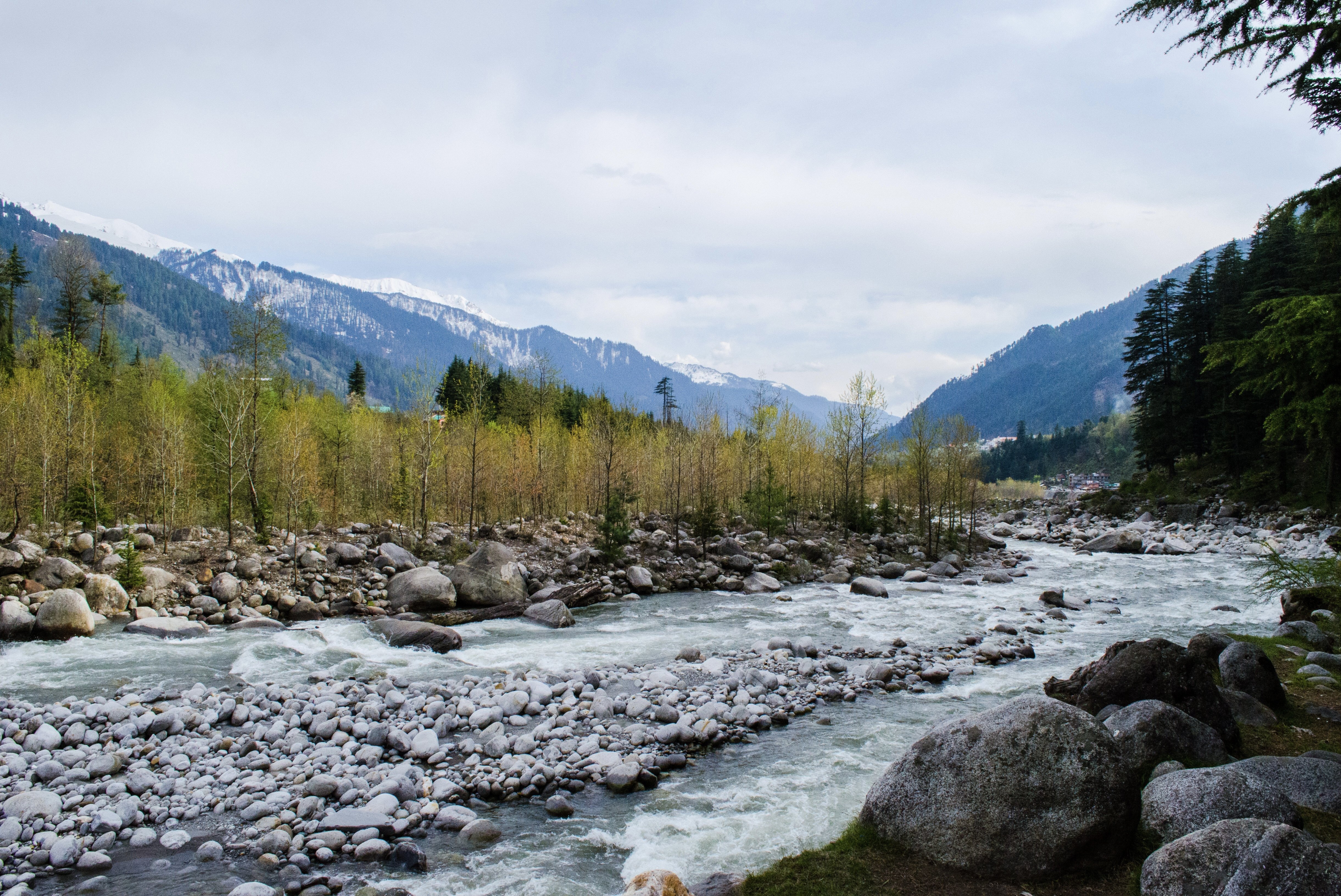
Manali sits at 2,050 metres in the Kullu Valley of Himachal Pradesh, where the Beas River cuts through pine and deodar forests backed by snow-capped peaks. It is one of the most popular hill stations in northern India — a gateway to the high Himalayas that draws trekkers, honeymooners, and backpackers in roughly equal measure.
The main attraction is the setting itself: the valley is green and lush in summer, snow-covered in winter, and the surrounding mountains offer everything from gentle day walks to serious high-altitude treks. The 450-year-old Hidimba Temple (Dhungri Temple) is the town's most distinctive landmark, a four-tiered wooden pagoda set in a cedar forest and dedicated to the goddess Hadimba. The Tibetan Monastery in the centre of town has good thangka paintings and a peaceful atmosphere.
Old Manali, a short walk uphill from the main bazaar, is where most backpackers settle — it has cheap guesthouses, cafes, and a more relaxed pace than the crowded town centre. The hot springs at Vashisht, about three kilometres north, are worth the walk. For a longer excursion, the trek to Bhrigu Lake (4,300 metres) is one of the best accessible high-altitude hikes in the region.
Manali is also the starting point for the road to Leh over Rohtang Pass — one of the great Himalayan drives, open roughly from June to October.