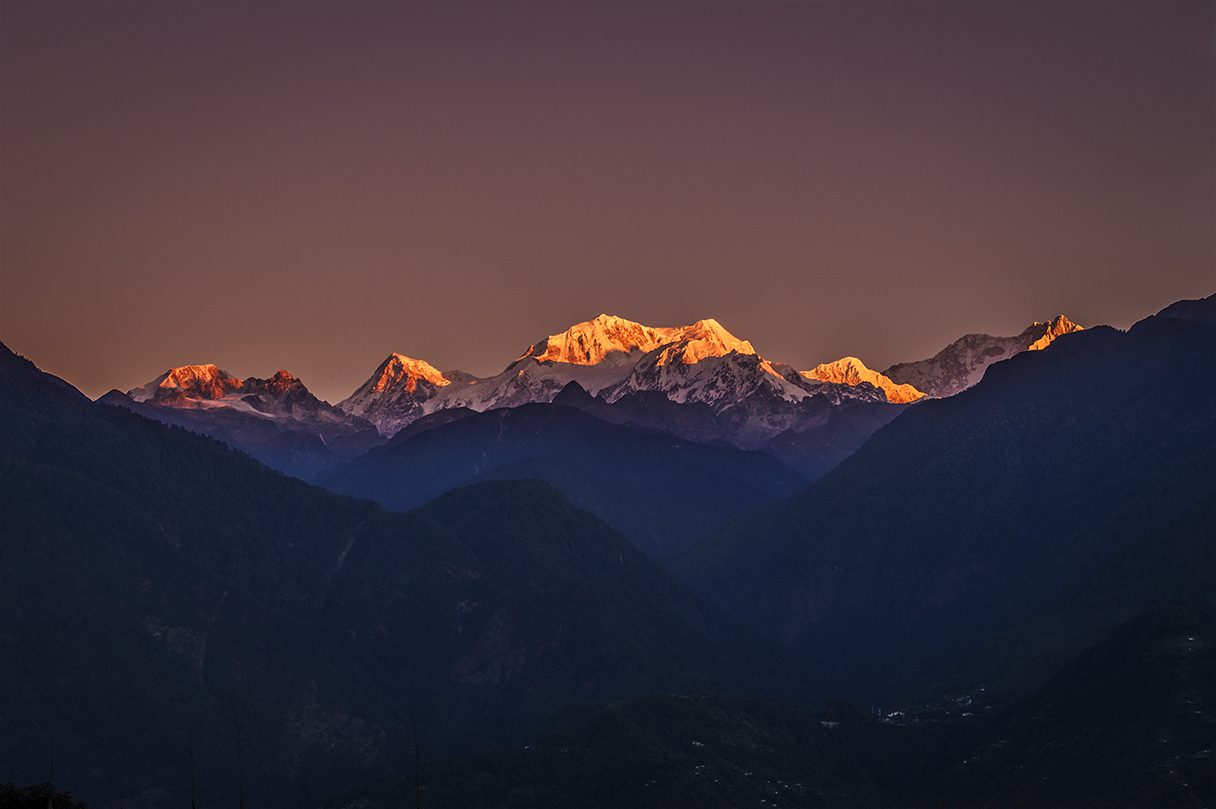
Pelling is a small hill town in western Sikkim that sits at around 2,150 metres and offers some of the most accessible views of Kanchenjunga, the world's third-highest mountain. It is the main base for trekking in this part of the state, including the popular four-day Local Trek through villages, cardamom farms and rhododendron forest.
The town is spread across upper and lower Pelling, with the upper section giving the better mountain views. On clear mornings — most common from October to December — the Kanchenjunga massif fills the horizon in extraordinary detail. Clouds tend to move in by mid-morning, so early risers are rewarded.
Several monasteries and historical sites are within reach. Pemayangtse Monastery, one of Sikkim's oldest and most important gompas, sits about two kilometres uphill and repays the walk. Just beyond it lie the ruins of Rabdentse, the former royal capital abandoned after the Gurkha invasion of 1814. The Chenrezig statue and skywalk is a more recent landmark — a 137-foot gilded figure with a glass-floored walkway around its base. The sacred Khecheopalri Lake, 45 minutes by road, is worth a half-day. Like the rest of Sikkim, Pelling is subject to frequent power cuts, so a torch is useful.