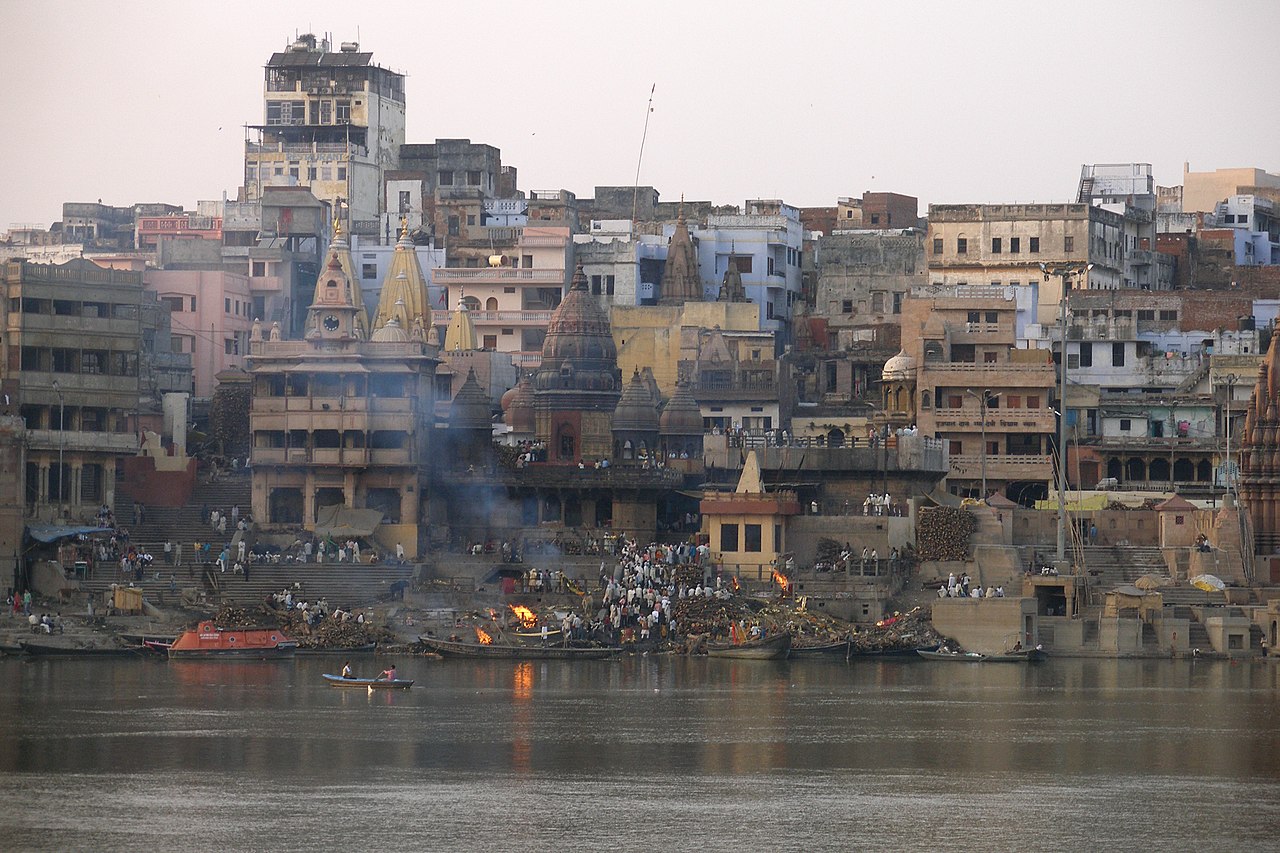
Varanasi is one of the oldest continually inhabited cities in the world and the spiritual heart of Hinduism. Situated on the west bank of the Ganges in Uttar Pradesh, it is a city where death and life exist side by side with a directness that can be overwhelming — cremation ghats burn day and night, pilgrims bathe at dawn, and sadhus sit in meditation while children fly kites overhead.
The ghats are everything. More than 80 stone stairways descend to the river along a five-kilometre stretch, and the best way to see them is from a boat at sunrise. Dashashwamedh Ghat is the most famous, host to the nightly Ganga Aarti ceremony — an elaborate ritual of fire, chanting, and incense that draws enormous crowds. Manikarnika Ghat is the principal cremation ground, sacred and intense. Scindia Ghat has a half-sunken temple leaning into the river, and Assi Ghat at the southern end is quieter and popular with long-term residents.
Away from the river, the old city is a maze of narrow lanes packed with temples, silk shops, and street food stalls. The Kashi Vishwanath Temple — the Golden Temple — is Varanasi's holiest Hindu shrine; the Gyanvapi Mosque immediately beside it carries four centuries of contested history. The Ratneshwar Mahadev Temple leans at nine degrees — more than Pisa. The Alamgir Mosque on the riverbank offers the best panoramic view of the ghats.
Sarnath, just 10 km north, is where the Buddha gave his first sermon and is a peaceful counterpoint to the intensity of the city. The Banaras Hindu University campus holds the Birla Temple (open to all) and a fine art museum. Across the river, Ramnagar Fort has an eccentric royal collection and a wide view back toward the ghats.
Varanasi is also known for its silk. Banarasi saris, woven with gold and silver thread, are among India's finest textiles, and the weavers' workshops in the old city are worth seeking out.