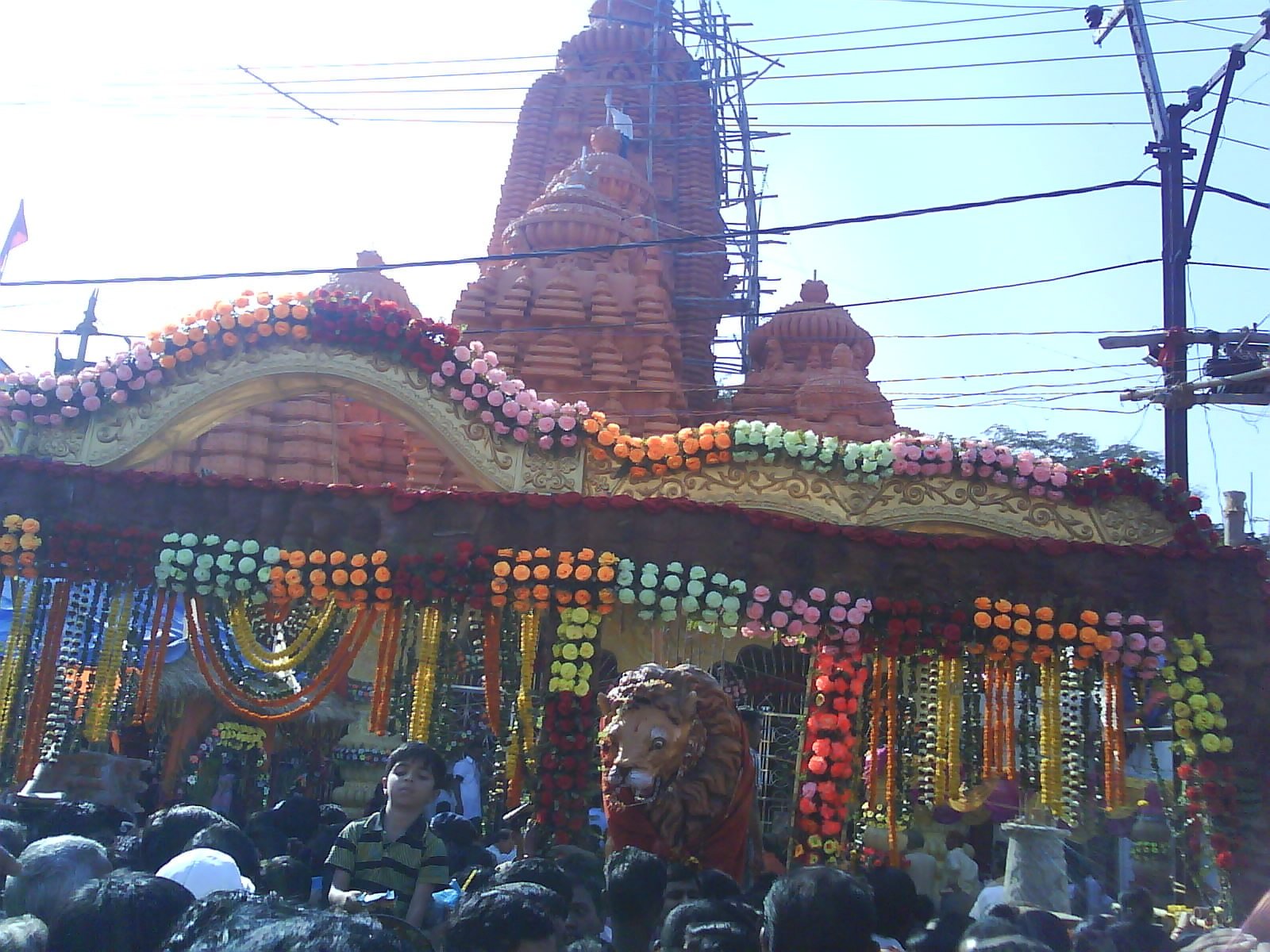
Bargarh is a small district town in western Odisha (Orissa), on the national highway between Mumbai and Kolkata, and almost no one visits it. Two things give the town a claim on travellers' attention. The first is the Sambalpuri handloom — the ikat-dyed cotton and silk fabrics woven in the villages around Bargarh have been produced here for centuries and are among the finest in India. The second is Dhanu Yatra, an eleven-day open-air theatre festival held every November or December that Guinness has recognised as the largest open-air theatrical performance in the world: the entire town becomes the set of a dramatisation of the life of Krishna and the defeat of the demon king Kansa, and the whole community takes part.
The surrounding country is fertile rice land, fed by irrigation from the Hirakud Dam on the Mahanadi river. The Barapahar ("twelve hills") range runs across the north of the district, with the Debrigarh Wildlife Sanctuary on its eastern flank — home to wild elephants, sambar, and leopards. To the south-west, the Gandhamardhan hills hold the 13th-century Nrusimhanath temple, tucked against the cliff at the head of a cool wooded valley with waterfalls (Kapildhar, Bhimdhar, Chaldhar) cascading down the hillside behind it. This is a rare temple to Vishnu in a feline incarnation, and it is the most atmospheric spot in the district — a quiet, much-loved local pilgrimage site.
Bargarh itself is a functional town: markets, a couple of colleges, a cement plant, and cheap local hotels. Come for the weaving villages (Barpali is the main centre), for the festival if you can time it, or as a break on a long drive between Mumbai and Kolkata.