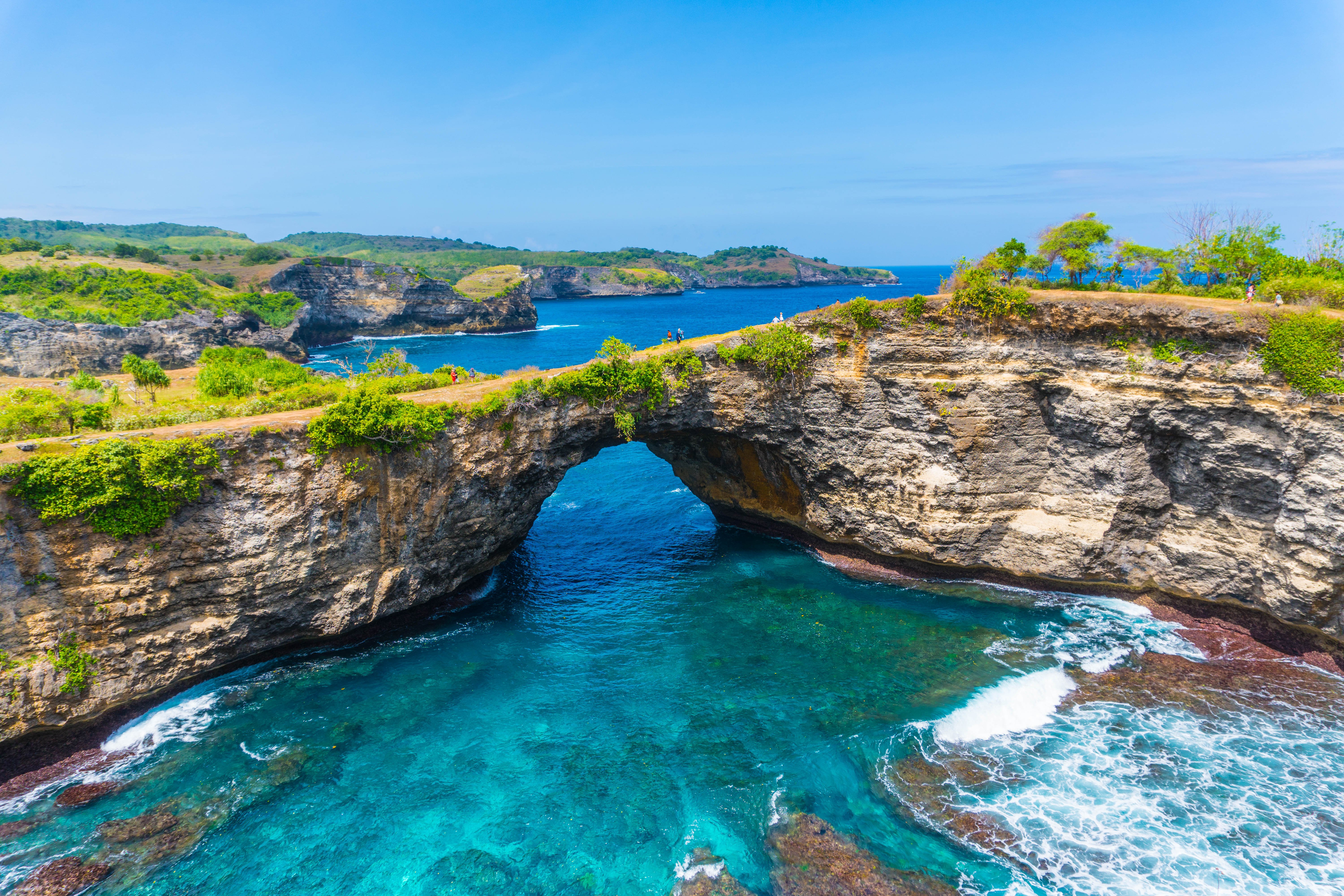
Limestone island southeast of Bali, known for steep roads, temple pilgrimages, and the cliffs of Kelingking Beach.
Nusa Penida is Bali's dramatic neighbour — a large limestone island rising from the sea southeast of the main island, reachable in 45 minutes by fast boat from Sanur. Until recently it was largely ignored by tourists, visited mainly by Balinese Hindus making pilgrimage to its temples. Then the Instagram age arrived, and images of Kelingking Beach — a T-rex-shaped cliff plunging to a white beach completely inaccessible by road — went around the world. The island has been overrun ever since.
The crowds are real, but so is the landscape. Nusa Penida is wilder and steeper than mainland Bali, with roads that are genuinely challenging and viewpoints that require significant hiking. Angel's Billabong, a natural rock pool at the island's western tip, and Broken Beach, an arch-enclosed lagoon next to it, are among the most photographed spots in all of Indonesia. The south coast cliffs run for miles, and the views across the Badung Strait to Bali's volcanoes on a clear morning are extraordinary.
The underwater world around Nusa Penida is what brought divers here long before the land-based tourism. The island lies at the intersection of warm and cold ocean currents, which creates the conditions for manta rays, ocean sunfish (mola mola), and an extraordinary density of reef life. Manta Point on the southwest coast is the mola mola capital of Bali's dive circuit; large mantas are also seen reliably at the cleaning station there. Crystal Bay, on the northwest, is the main dive hub and the best beach for swimming.
Most visitors come on a day trip from Sanur or the Gili Islands and see two or three viewpoints. To do the island justice you need at least two nights — one to recover from the roads, one to actually explore. Rent a scooter only if you are confident with seriously steep, rough terrain. Otherwise, hire a local driver for the day.
Guide
Getting Around
Getting around Nusa Penida is an adventure. The roads are narrow, often steep, and in places seriously degraded. Scooter hire is the most common approach but is not recommended for inexperienced riders — the descents to the south coast viewpoints involve hairpin bends and loose gravel. Several tourists have been injured badly enough to require evacuation.
The practical choice for most visitors is hiring a local driver for the day. Fixed rates are posted at the main harbour in Toyapakeh. A driver will know the roads, know when the viewpoints are less crowded, and get you back to the boat landing on time. For two or three people, the cost is very reasonable split between you.
The main landing point for boats from Bali is the harbour at Toyapakeh on the northwest coast, close to Crystal Bay. A second port at Buyuk serves the east side of the island.
Guide
Getting There
Fast boats to Nusa Penida depart regularly from Sanur Beach on Bali's southeast coast, with the crossing taking 45–60 minutes. Several companies operate the route and boats run throughout the day; early morning departures are preferable as conditions are calmer. Tickets should be booked in advance during peak season (July–August, Christmas).
Less frequent services also operate from Kusamba and Padangbai. Day-trip packages from Kuta or Ubud typically include boat transfer, transport around the island, and a driver-guide.
There is no airport on Nusa Penida. Return boats run until late afternoon; check departure times carefully as missing the last boat means an unplanned night on the island.
Guide
When to Go
The dry season (May to October) is the best time to visit. Roads are passable, the sea is calm enough for boat crossings, and visibility underwater is excellent. August and October are the peak months for mola mola sightings; manta rays are present year-round but more reliably encountered from April through October.
The wet season (November to March) brings rough seas and rain that can make the clifftop viewpoints slippery and dangerous. Crossings from Sanur are occasionally cancelled. The island sees far fewer tourists in this period — prices drop and the viewpoints are almost empty, but planning around the weather is essential.
Kelingking and the western viewpoints are best visited early in the morning, both to beat the crowds and to have the light behind you for photos.