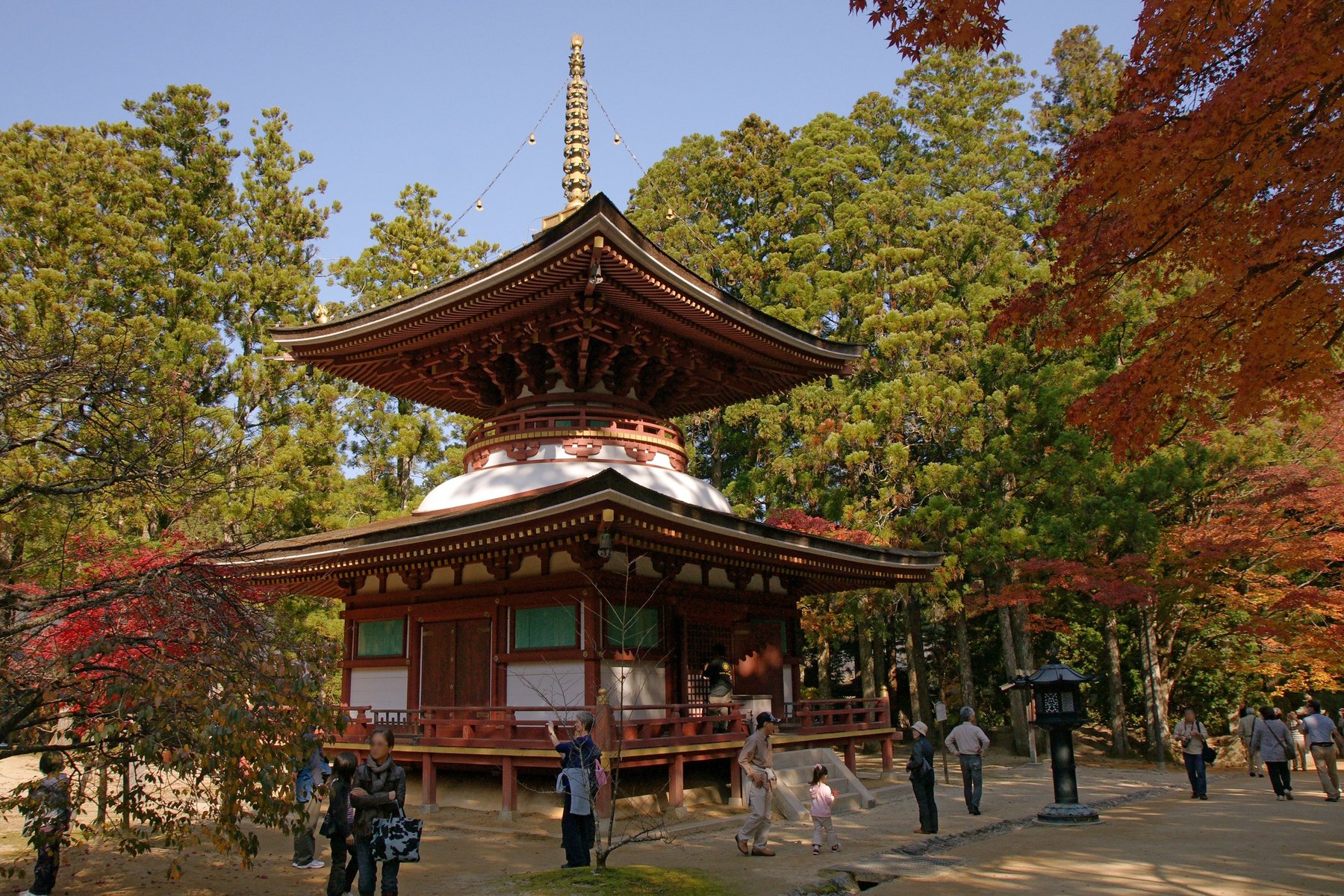
Koyasan — Mount Koya — is the headquarters of Shingon Buddhism and one of the most spiritually charged places in Japan. The monk Kukai, posthumously known as Kobo Daishi, founded a monastic settlement here in 816 after returning from training in Tang Dynasty China, and the mountain has been a pilgrimage destination ever since. Today around 50 temples remain active on the plateau, and it is possible to sleep inside them.
The town sits at about 900 metres in the Kii mountain range, accessible from Osaka via a combination of train and cable car. The air is different up here — cooler, cedar-scented, and noticeably quieter than the cities below. Mist threads through the trees in the early morning. It is the kind of place that rewards arriving the evening before and leaving the morning after, rather than as a day trip.
The main draw is Okunoin, a vast cemetery where some 200,000 graves and stone memorials line a two-kilometre moss-covered path through ancient cryptomeria cedars. At its end is the Torodo lantern hall, where 10,000 lanterns — some burning continuously for over 900 years — illuminate the mausoleum of Kukai, who is said to rest there in eternal meditation. The atmosphere at dusk, when priests walk the path and the lanterns glow, is unlike anything else in Japan.
The other major complex is the Garan, the original sacred precinct at the centre of town. Its main structure, the Konpon Daito pagoda, is an immense vermilion tower that dominates the mountain skyline. Kongobuji Temple serves as the administrative heart of the Shingon sect, with Japan's largest rock garden. A single-day pass covers entry to several of the main buildings.
The surrounding temples offer shukubo — Buddhist lodging — where guests eat shojin ryori vegetarian cuisine and may observe morning prayers. Kongo Sanmai-in and Muryokoin are quieter alternatives to the most-visited temples, and both are worth seeking out. The Koyasan Reihokan Museum holds twelve centuries of esoteric Buddhist art.