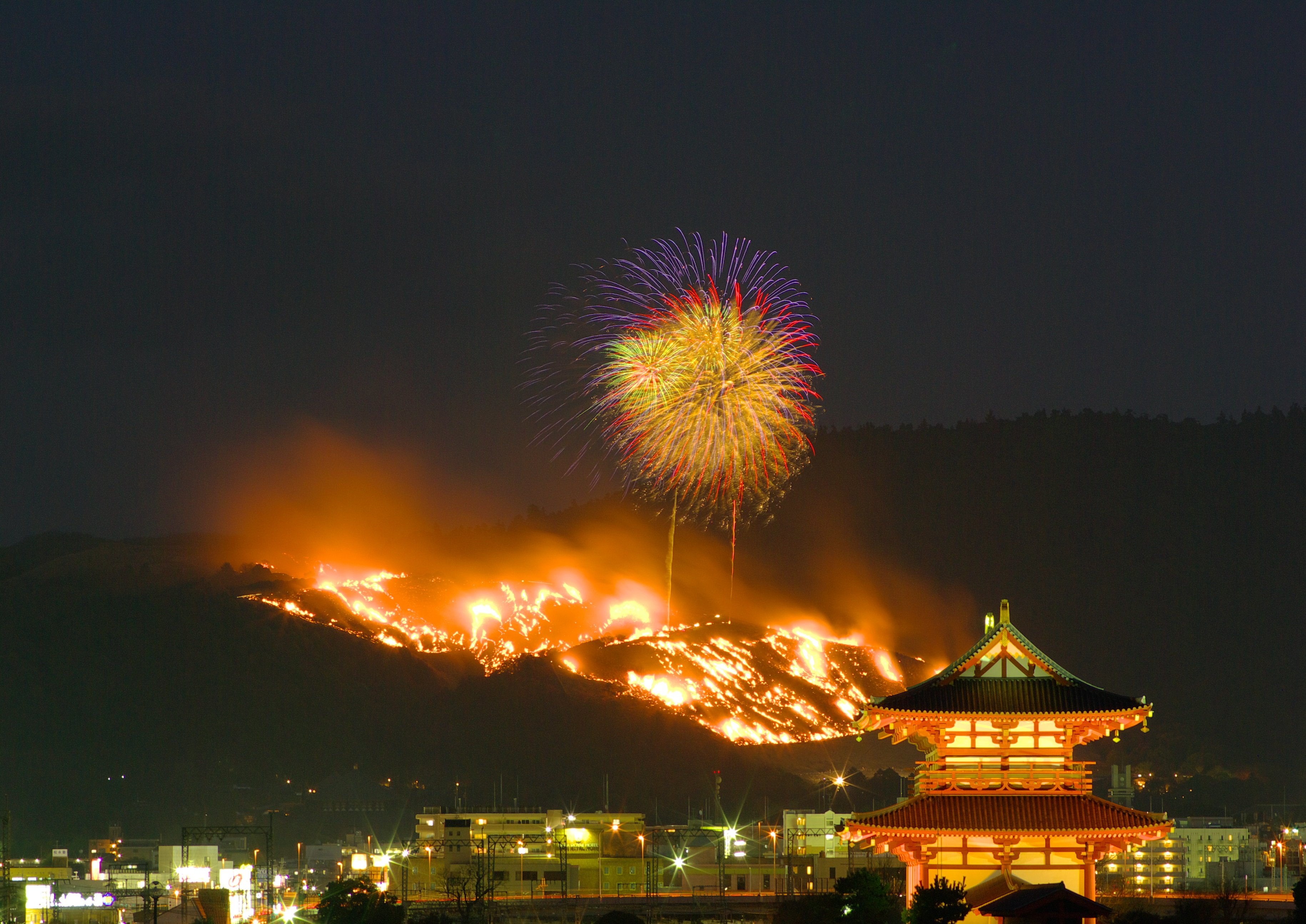
Nara was Japan's first permanent capital, founded in 710 and modelled on the Tang Chinese city of Chang'an. For barely seventy years it served as the seat of imperial power before the court moved to Kyoto — but those decades were enough to produce some of the greatest Buddhist monuments in the country. Today Nara is a compact, manageable city that rewards a day or two's wandering, and it is far less crowded than Kyoto.
The centrepiece is Todai-ji, a vast wooden temple hall that houses a sixteen-metre bronze Buddha — the largest in Japan, and one of the largest in the world. The hall itself is extraordinary: the biggest wooden structure on earth, though in fact smaller than the original eighth-century building it replaced. Nearby, Kasuga Grand Shrine is one of the most important Shinto shrines in Japan, its stone-paved paths lined with thousands of stone lanterns donated by worshippers over the centuries. The surrounding Kasugayama Primeval Forest has been protected for over a thousand years and feels genuinely ancient.
Wandering freely through all of this are around 1,200 sika deer, considered sacred messengers of the gods. They are accustomed to tourists and will approach without hesitation — vendors sell special rice crackers, shika senbei, for feeding them. The deer have right of way, and they know it. Nara Park ties the main sights together in a large green space.
Kofuku-ji at the park's western edge holds the remarkable Ashura statue in its National Treasure Museum, one of the finest pieces of Nara period sculpture. The Shosoin Imperial Repository behind Todai-ji has been called the eastern terminus of the Silk Road — 9,000 eighth-century objects from across Asia, preserved inside for over a millennium. The Heijo Palace site, the excavated remains of the original imperial capital, lies two kilometres west of the park. And the Naramachi district preserves the narrow streets and traditional machiya townhouses of the old merchant quarter — quieter than the park and worth an hour on foot.