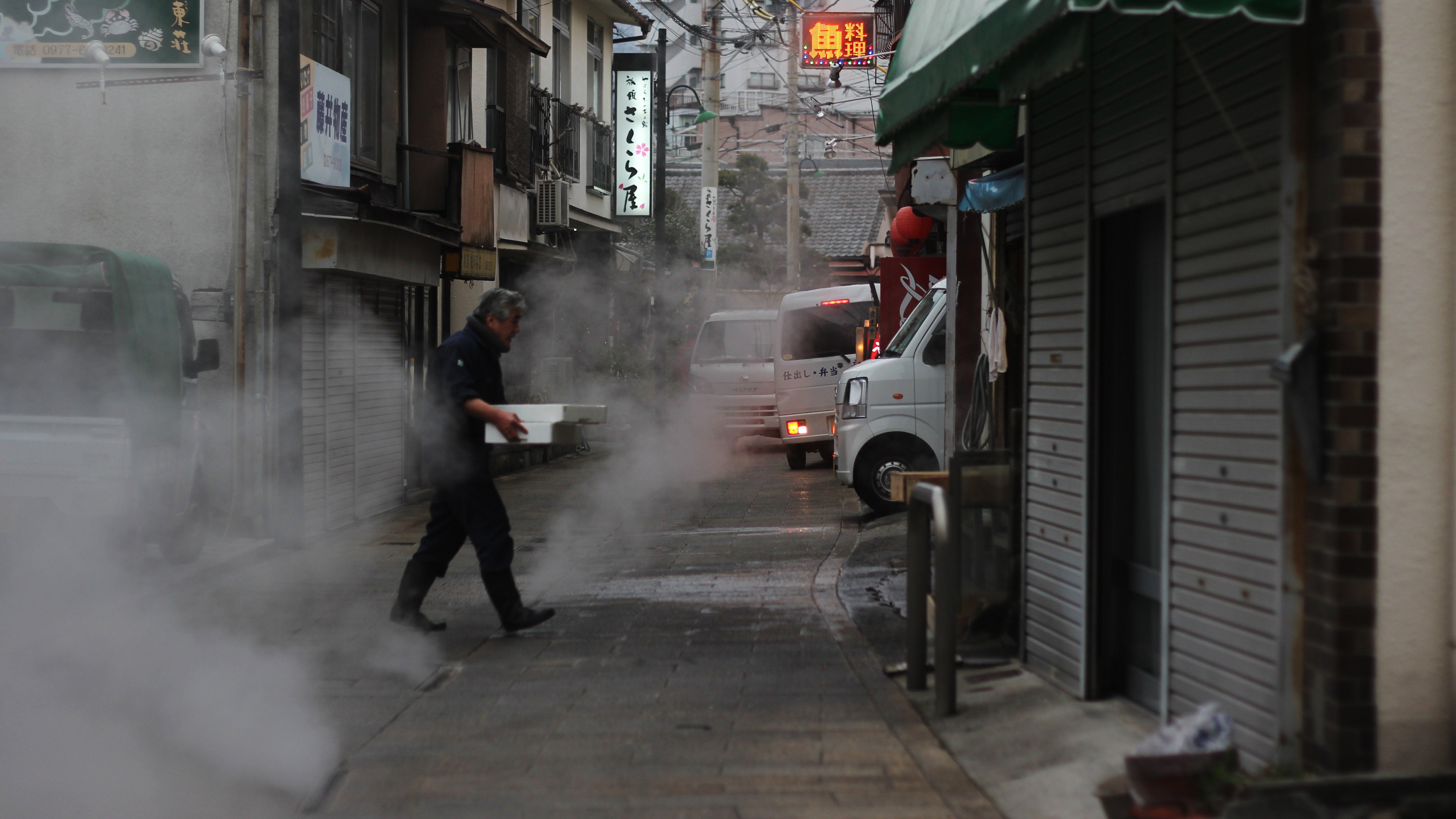
Beppu is Japan's most famous hot spring resort, a city of 120,000 people on the eastern coast of Kyushu that sits above one of the most geothermally active patches of earth on the planet. More hot spring water flows through Beppu than anywhere else in Japan — second only to Yellowstone in the world — and the city wears this identity completely. Steam rises from vents along the streets, the smell of sulphur is inescapable in the old spa districts, and the entire economy revolves around relaxation, bathing, and the pleasures of geothermal heat.
The most famous attractions are the nine jigoku, or "hells" — boiling springs not for bathing but for viewing. Umi Jigoku, the cobalt-blue Sea Hell, is the most photographed. Chinoike Jigoku is a vivid blood-red mud pool. Tatsumaki Jigoku erupts as a geyser every half-hour. A combined day pass covers eight of the nine and is the standard tourist circuit. The jigoku are concentrated in the Kannawa district, Beppu's most atmospheric spa town, where steam rises from pavement cracks and the streets smell perpetually of sulfur.
For actual bathing, the historic Takegawara Onsen offers the city's most famous sand bath in a Meiji-era wooden building from 1879. The Beppu Beach Sand Bath provides a more scenic version beside the bay. The Beppu Ropeway ascends Mount Tsurumi for panoramic views over the steaming city and Beppu Bay. The somewhat eccentric Kifune Castle on the eastern hill makes a good walk with views as reward.
Beppu is primarily a domestic resort destination — most visitors are Japanese and the town's character is shaped accordingly, with a density of ryokan, onsen facilities, and the slightly raucous atmosphere of a Japanese holiday town. Ritsumeikan Asia-Pacific University on the hill above the city brings an international student population that has diversified the dining and nightlife in the centre. For international travelers, Beppu is an excellent introduction to Japanese onsen culture in an accessible, English-friendly setting on the main Kyushu rail route.