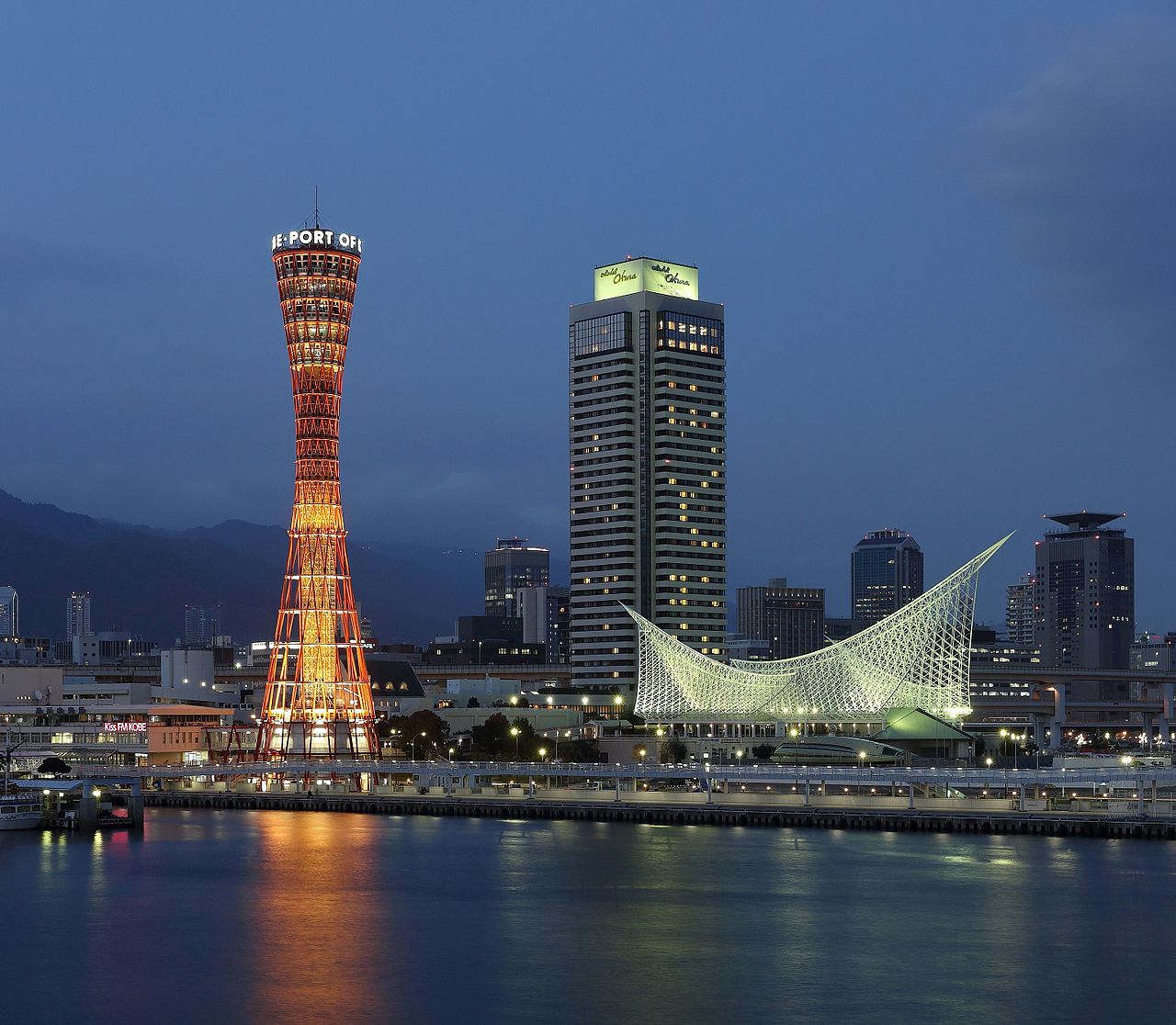
Kobe sits between the Rokko mountains and Osaka Bay, a port city that has been open to foreign influence longer than almost anywhere else in Japan. Together with Osaka and Kyoto it forms the heart of the Kansai region, and it is about three hours and twenty minutes from Tokyo by Shinkansen.
The Kitano-chō district is where foreign traders settled in the late 1800s, and their "ijinkan" — Western-style houses with Japanese touches — still line the hillside streets. Some are open to the public, others have been converted into boutiques and restaurants. The area has a pleasantly un-Japanese atmosphere, with wrought-iron balconies and bay windows looking out over the harbour. The Kobe Mosque, Japan's oldest, stands nearby.
The Nada sake breweries in the eastern part of the city make Kobe one of Japan's great sake-producing districts. The breweries use water from the Rokko mountains, and several are open to visitors for tours and tastings. Rokko Mountain itself can be reached by cable car and provides panoramic views over the city and Osaka Bay.
Arima Onsen, tucked into the mountains behind the city, is one of Japan's oldest spa resorts. Its mineral-rich waters come in two types: "gold" (iron-rich, rust-coloured) and "silver" (clear, carbonated). The town around the springs is compact and pleasant, with traditional ryokan and the Zuihoji Park where the warlord Hideyoshi Toyotomi once held tea ceremonies.
Kobe beef needs no introduction, but it is worth noting that the city is also excellent for Chinese food — Nankin-machi, the Chinatown, is one of Japan's three great Chinatowns — and for Indian and Southeast Asian cuisine brought by the port's long trading connections. The Kobe Luminarie light festival each December draws millions of visitors, and the Kobe City Museum holds the finest collection of Namban art in Japan.