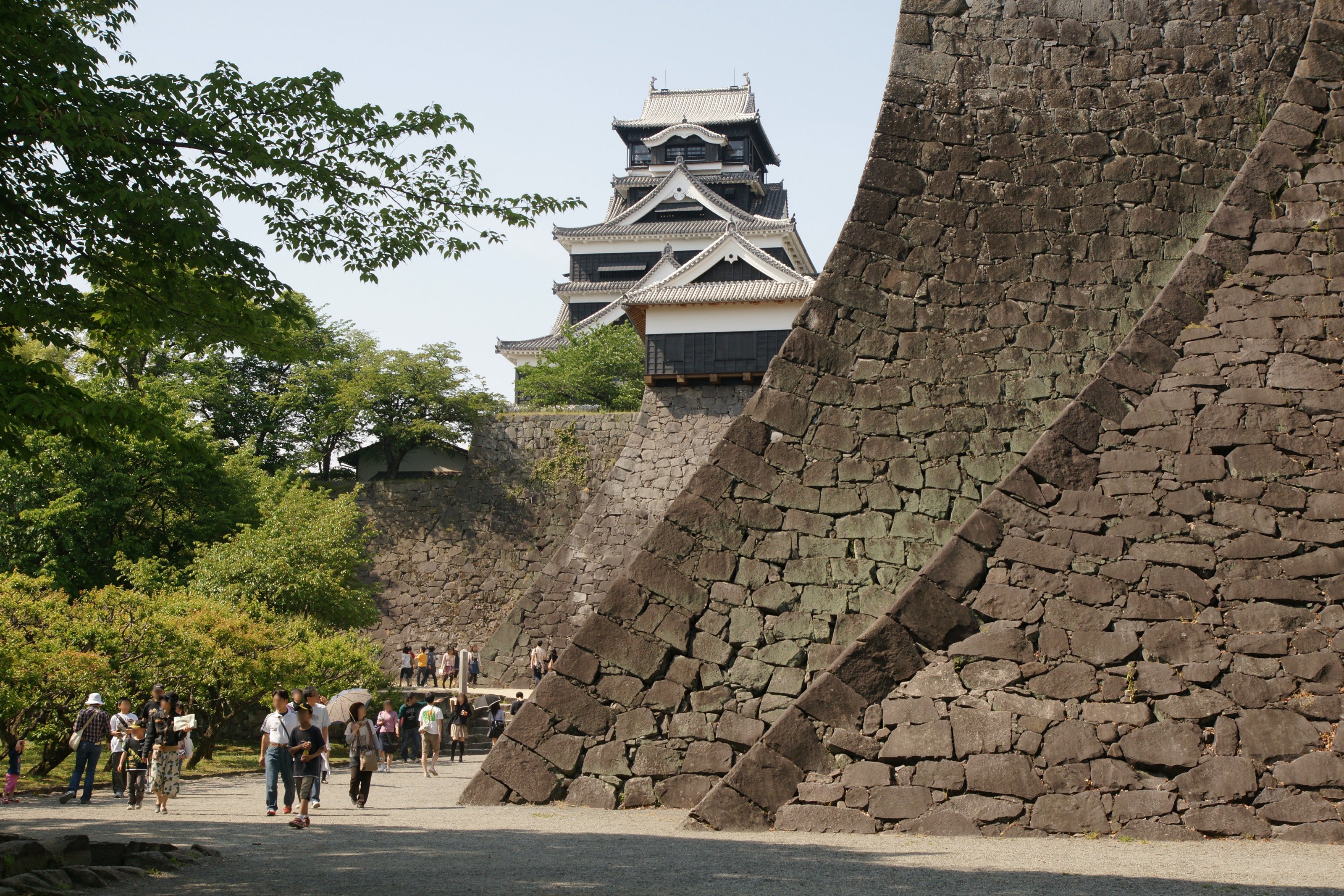
The third-largest city in Kyushu after Fukuoka and Kitakyushu, Kumamoto sits on the central plains of the island with the ancient volcanic plateau of Aso-san rising to the east. The city suffered devastating earthquakes in 2016, but has rebuilt with impressive determination — and the ongoing restoration of its great castle has become a symbol of that resilience.
Kumamoto's most famous landmark is Kumamoto-jō, one of Japan's three great castles. Destroyed by fire during the Satsuma Rebellion of 1877, the current keep is a 1960 reconstruction, but its predominantly black exterior remains striking and the hilltop setting commands the city. Within the same enclosure sit the Kato Shrine, the modernist Prefectural Museum of Art, and the reconstructed Edo-period street of Sakuranobaba Josaien. The castle district is pleasant to walk, even mid-restoration.
The second essential stop is Suizenji-jōju-en, a 17th-century strolling garden in the southeastern suburbs. Its miniature landscape recreates the 53 stages of the old Tōkaidō highway, with a small replica of Mount Fuji at its centre. The vermilion Izumi Shrine stands at the head of the pond. The garden ranks among Japan's finest. North of the centre, the hillside temple of Honmyō-ji holds the tomb of castle-builder Katō Kiyomasa, and the small wooden Lafcadio Hearn Residence and elegant Kyū-Hosokawa Gyobutei samurai residence are both worth a half hour each.
Devotees of Miyamoto Musashi can follow his trail to Musashizuka Park, where the swordsman is buried, and on to the cave at Reigandō where he wrote The Book of Five Rings. Central shopping and dining cluster along the long Shimotōri arcade and the alleys off it.
Kumamoto's most famous culinary speciality is basashi — raw horse meat served thin-sliced with ginger and garlic soy sauce. Most restaurants in the centre offer it, and it is worth trying at least once. Other Kumamoto staples are karashi renkon (deep-fried mustard-stuffed lotus root) and Kumamoto ramen.