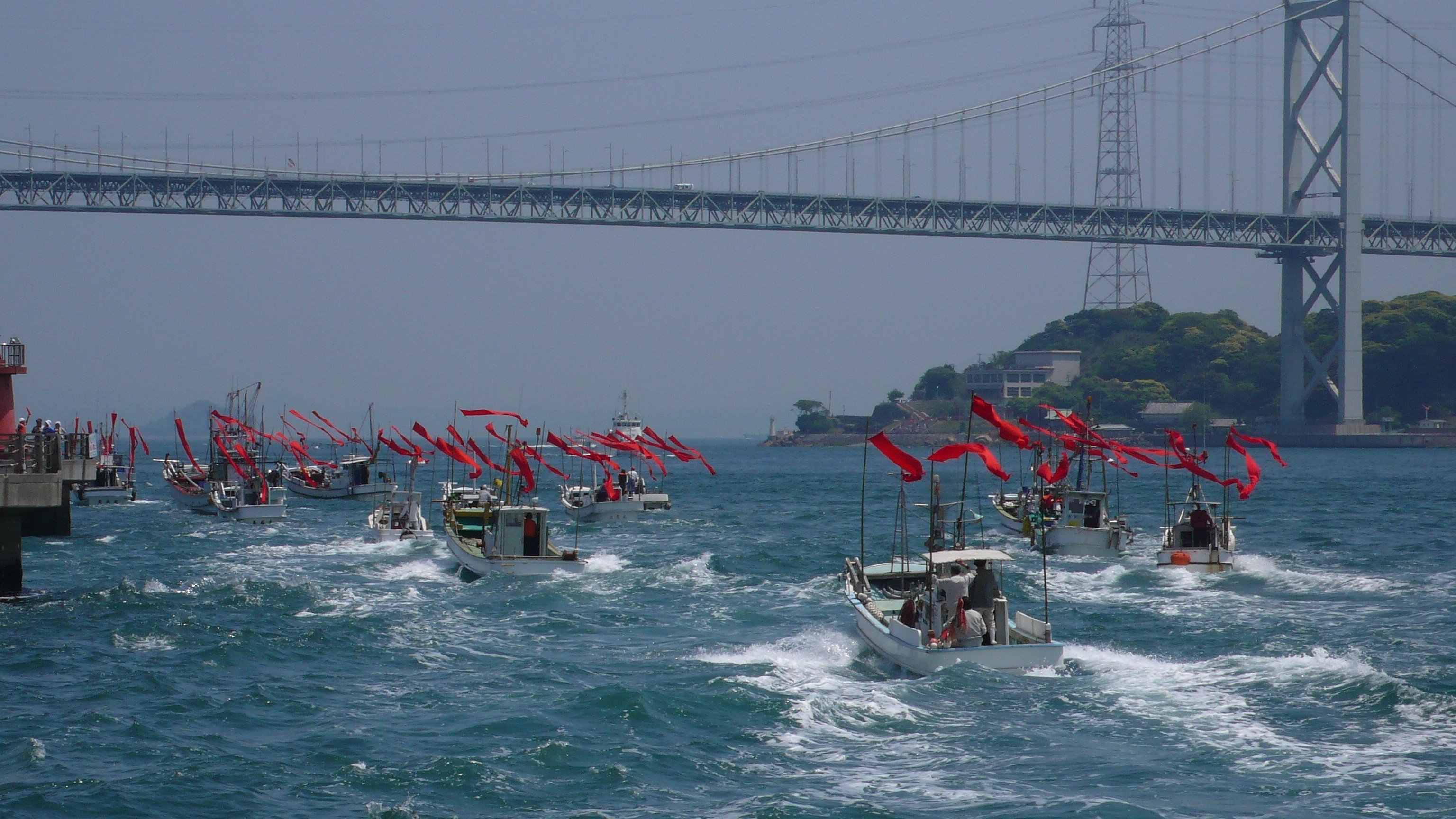
Shimonoseki sits at the far southwestern tip of Honshu, separated from Kyushu by the Kanmon Strait — one of the narrowest and busiest sea lanes in Japan. The city is defined by this water: the tides run fast, the fishing is exceptional, and the history is dramatic. The decisive naval battle of Dan-no-ura was fought here in 1185, ending the Genpei War and the Heike clan's claim to power. Today the strait is crossed by bridge, tunnel (you can walk under it to Kyushu), and ferry, and the waterfront Karato district still hums with the trade that has always sustained the city.
Shimonoseki is the undisputed capital of fugu. The pufferfish — whose liver contains a lethal toxin — has been prepared and eaten here for centuries, and the city handles by far the largest fugu catch in Japan. Local chefs are licensed specialists; the fish served in restaurants is perfectly safe. Try it as sashimi (thinly sliced, fanned across a platter so you can see through it) or in a hot pot.
Away from the waterfront, the old castle town of Chofu makes for a rewarding half-day. Eight kilometres inland, its Edo-period grid of samurai residences, white-walled lanes, and a stream-lined road survives largely intact. The Kozanji Temple here is a genuine National Treasure, and the Mori family residence — built for the clan that helped forge the Meiji Restoration — is one of the finest late-Meiji mansions open to the public in western Japan.
Shimonoseki is a natural overnight stop between Hiroshima and Fukuoka, and an easy day trip from either. It rewards more time than travellers typically give it.