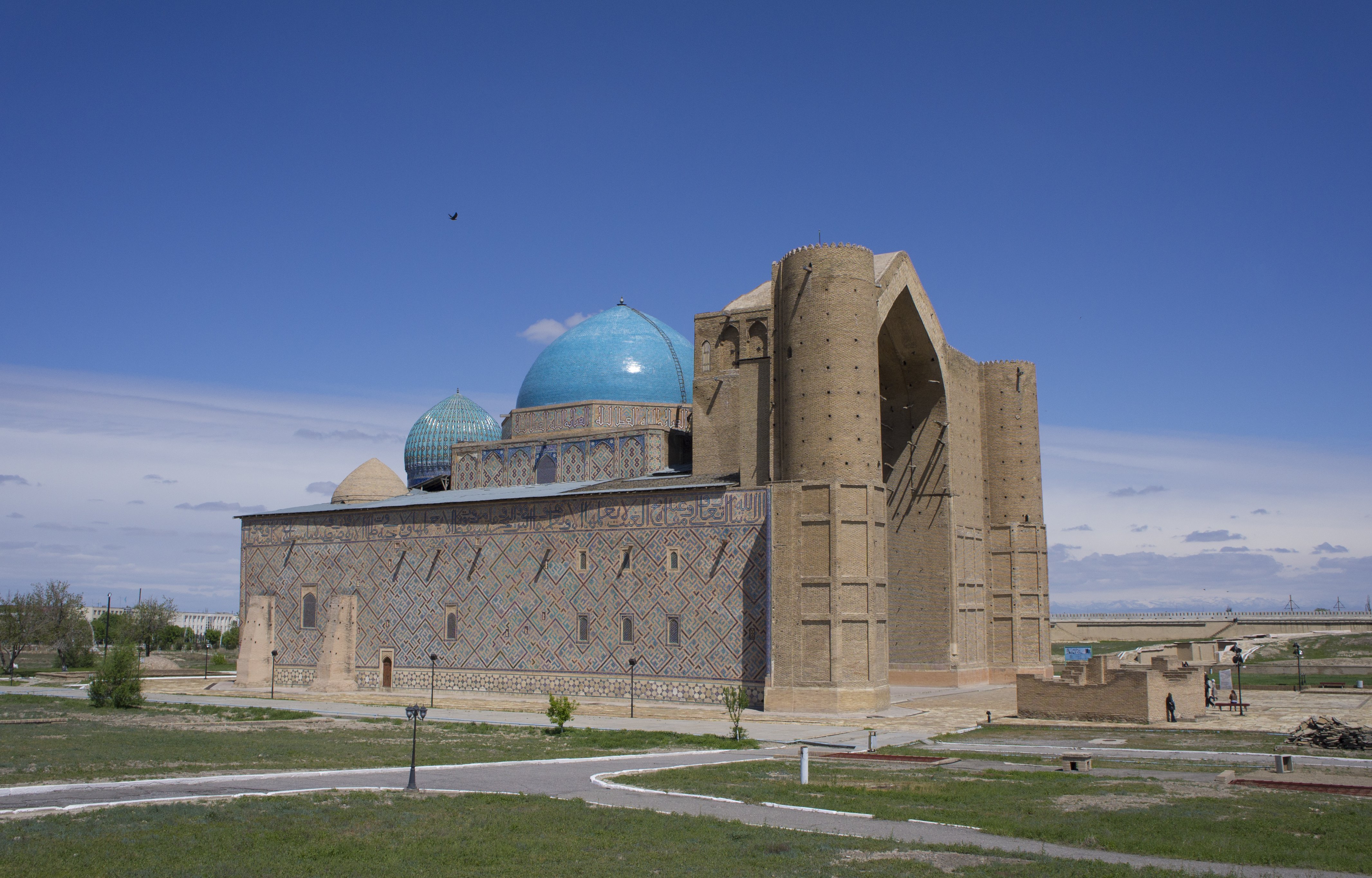
Southern Kazakh pilgrimage city anchored by Timur's unfinished Mausoleum of Khoja Ahmed Yasawi.
Turkestan is the spiritual heart of Kazakhstan and one of the most important pilgrimage sites in Central Asia. The city's centrepiece is the Mausoleum of Khoja Ahmed Yasawi, a massive, unfinished 14th-century structure commissioned by Timur himself. It is Kazakhstan's first UNESCO World Heritage Site and draws pilgrims from across the Turkic world — three visits here are said to equal one hajj to Mecca.
Beyond the mausoleum, the old town has been extensively rebuilt in recent years with a new amphitheatre, caravanserai complex, and museums. The results are mixed — impressive but sometimes theme-park-like — but the mausoleum itself remains genuinely awe-inspiring.
Turkestan sits in the dry steppe of southern Kazakhstan, about 3.5 hours' drive from Kyzylorda and reachable by train from Almaty or Shymkent.
Guide
Getting There
Turkestan is connected to Almaty and Shymkent by train. The journey from Almaty takes about 12–14 hours; from Shymkent, about 3.5 hours. There are also direct services from Astana. A high-speed rail line from Shymkent was under construction as of 2024 and will substantially cut journey times when complete.
By road, Turkestan is about 165 km from Shymkent on the M39 highway. Shared taxis from Shymkent's long-distance taxi stand are faster and more comfortable than the bus, taking about two hours. Driving from Almaty takes around seven hours.
Turkestan International Airport opened in 2021 and handles flights from Almaty and Astana; the schedule is limited, so check current availability. The city centre is about 5 km from the airport.
Guide
When to Go
The best time to visit Turkestan is spring (April–May) or autumn (September–October). Summers are extremely hot on the southern Kazakh steppe, with temperatures regularly exceeding 40°C. Winters are cold but not as brutal as in northern Kazakhstan, though the steppe wind can be punishing.
Pilgrimage traffic is heaviest around Nowruz (the spring equinox, around 21 March) and during major Islamic holidays. If you want the mausoleum to yourself — or as close to it as you'll get — arrive on a weekday morning in spring or autumn before the tour buses from Shymkent arrive.