Almaty is Kazakhstan's largest city and its cultural capital — the former capital of the Kazakh Soviet Socialist Republic and, after independence, of Kazakhstan itself until the government relocated to Astana in 1997. The city of over two million people sits in a broad bowl at the northern foothills of the Tien Shan mountains, with glaciated peaks visible from the city streets on any clear day. No other major city in the world has such spectacular mountain access from its centre.
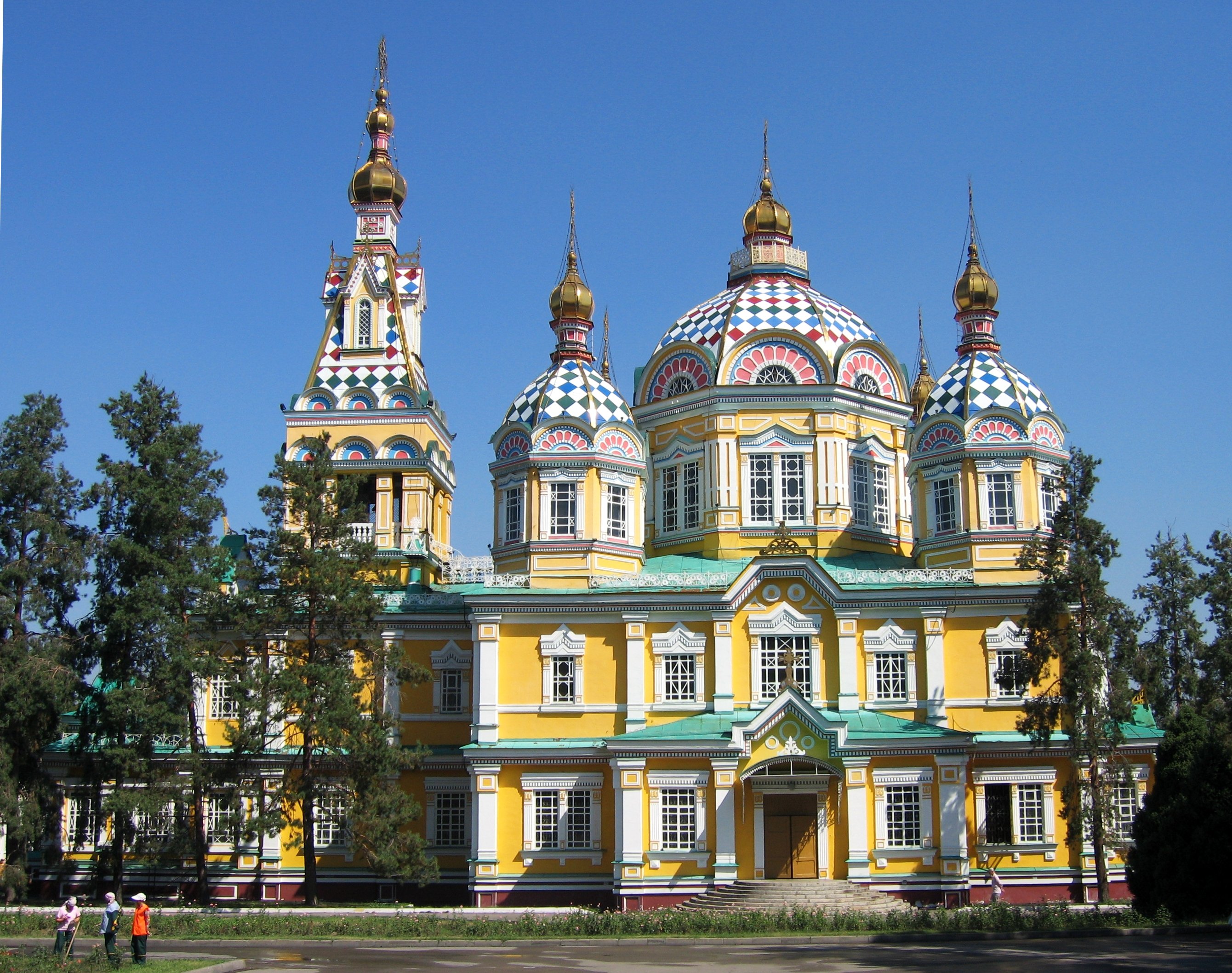
The city's history is comparatively short. It was founded as a Russian fort in 1854, rebuilt after a devastating earthquake in 1887, and rebuilt again after another in 1910. This explains why Almaty has little genuinely old architecture — most of the surviving historical buildings are from the Soviet period. The exceptions are the Zenkov Cathedral, a remarkable wooden Russian Orthodox church in Panfilov Park built in 1904 that survived both earthquakes, and a handful of late-19th century structures in the old town around Zhibek Zholy.
What Almaty does have is the best urban infrastructure in Central Asia, a cosmopolitan culture shaped by the Soviet mixing of nationalities, and a restaurant and nightlife scene that draws visitors from across the region. The Green Bazaar is one of the finest traditional markets in Central Asia. The Central State Museum on Republic Square gives the best single overview of Kazakhstan's history and the ancient nomadic cultures that preceded it.
Above the city, the mountains are the main attraction. Medeu — the world's highest ice rink — is 15 kilometres from the centre; Shymbulak ski resort is above it. The Ile-Alatau National Park begins at the city's edge, and its lower slopes are where the wild apple trees grow — the genetic ancestors of every apple sold in every supermarket in the world. Alma-Ata, the city's former name, means "Father of Apples" in Kazakh.
Day trips from Almaty reach Sharyn Canyon to the east and the UNESCO-listed Tamgaly petroglyphs to the northwest. The Arasan Baths near Panfilov Park offer an authentic Soviet-era bathing experience still very much in use. For views over the city, Kok Tobe hill is reached by cable car from Dostyk Avenue.