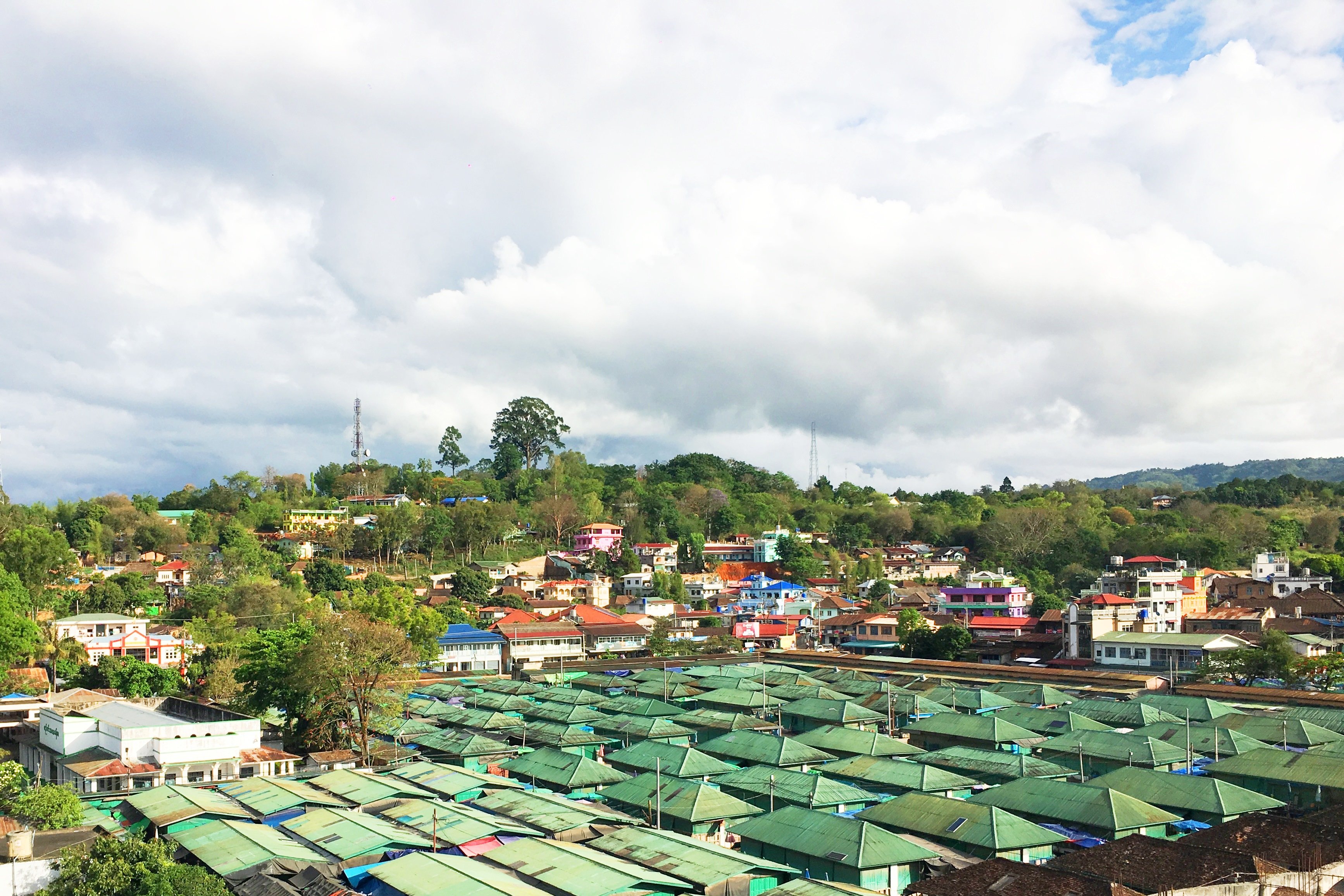
Highland Shan town in an isolated valley, culturally closer to the Thai borderlands than central Myanmar.
Kengtung (Chiang Tung in Shan) is a highland town in eastern Shan State, set in a broad valley surrounded by hills and accessible overland from the Thai border crossing at Tachilek. For years it was closed to foreigners, and it retains a feel of isolation — this is far from the main tourist circuits of Myanmar.
The town is a treasure trove of traditional Shan architecture, with old wooden houses featuring intricately carved balconies lining quiet lanes. The most sacred site is the Maha Myat Muni Temple, housing a Buddha image revered across the region. The 15th-century Wat Zom Khum is one of the finest examples of Tai Khun temple architecture in Myanmar. The ruined site of Kengtung Palace — demolished by the military in 1991 — is a sobering reminder of the region's troubled recent history. Naung Tung Lake on the western edge of the old town is a peaceful morning spot. The central market draws Akha, Lahu, and Ann hill tribe vendors from the surrounding mountains and is one of the most colourful in the Shan State.
Kengtung is a base for hill tribe trekking to Akha, Lahu, and Ann villages in the surrounding hills, though a licensed guide is required. The town is connected to Tachilek by a winding mountain road that takes several hours.
Guide
Eating Out
Kengtung's food reflects its position at the crossroads of Shan, Burmese, Tai Khun, and Yunnan Chinese culinary traditions. Shan noodle soup — rice noodles in a mild tomato-based broth with pork and peanuts — is the default breakfast. The central market has morning food stalls serving mohinga, Shan tofu salad, and steamed buns. For dinner, guesthouses often provide the most reliable meals; several teahouses in the old town serve Chinese-influenced dishes and stay open late.
Guide
When to Go
The best time to visit Kengtung is November to February, when the highland climate is cool and dry. Temperatures at this altitude — around 800 metres — drop noticeably at night, so a jacket is essential. Days are clear and the light is at its best for the old town's wooden architecture and temple compounds.
March and April are hot and hazy, with smoke from slash-and-burn agriculture in the surrounding hills sometimes reducing visibility. The monsoon runs from May through October, bringing heavy rain and turning the mountain roads — particularly the route from Tachilek — into mud. Hill tribe trekking is essentially impossible during the wet months. Kengtung itself becomes lush and green in the monsoon, but travel logistics are significantly more difficult.