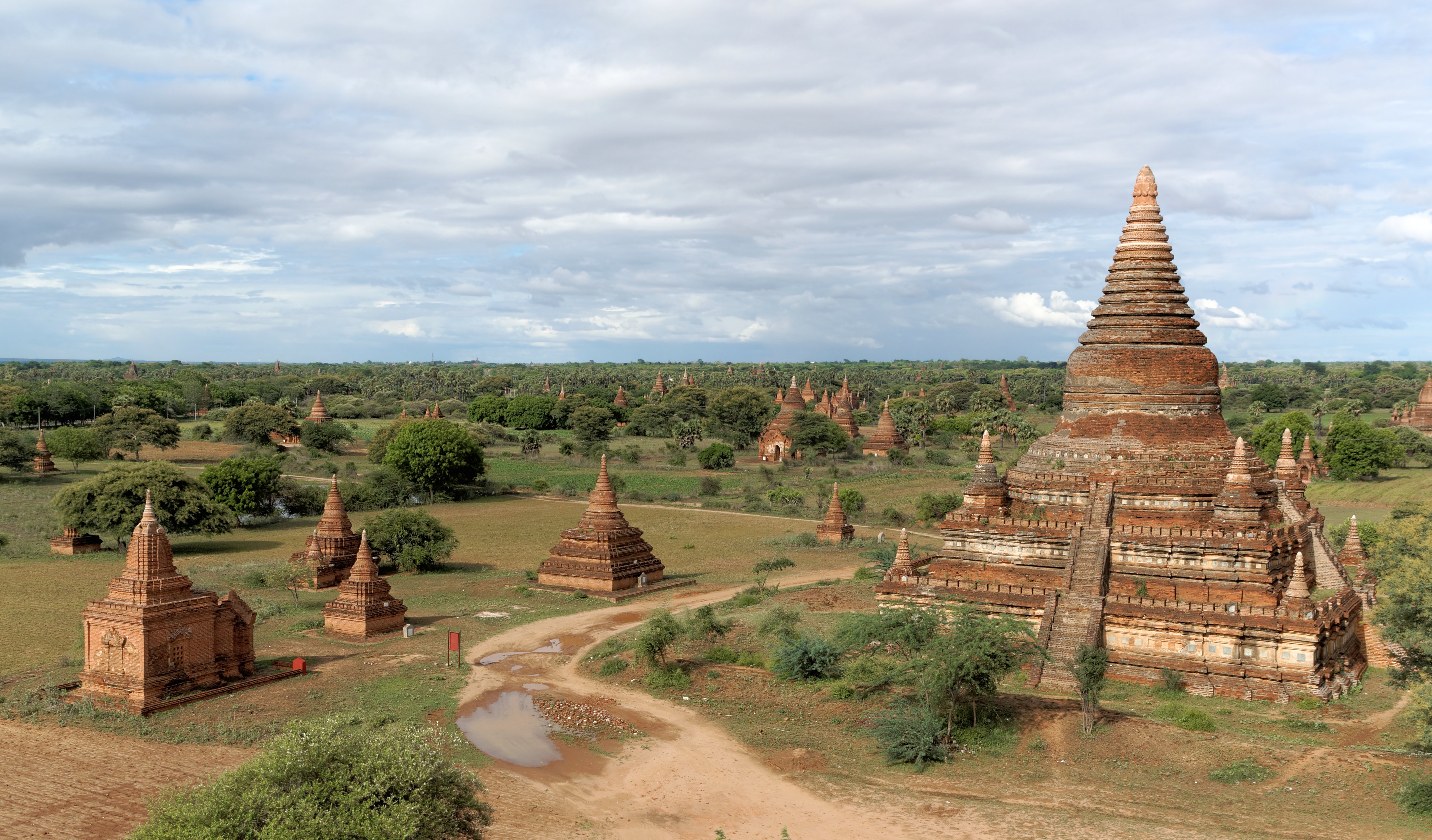
Few places in Asia stop you in your tracks the way Bagan does. Spread across a dusty plain beside the Ayeyarwady River, more than 2,000 temples, pagodas, and monasteries rise from the earth — the remains of a city that was once the capital of the first Burmese empire and one of the great cities of medieval Asia.
Bagan was founded in 849 AD and reached its peak under King Anawrahta, who ruled from 1044 to 1077 and introduced Theravada Buddhism as the state religion. Over the following two centuries, successive kings built obsessively — commissioning temples as acts of devotion, each one trying to outdo the last. At its height the plain held some 10,000 religious structures. In 1287, Kublai Khan's Mongol forces sacked the city and the building stopped. Bagan was never rebuilt as a capital, but the temples remained, slowly subsiding into the laterite soil.
What's left is extraordinary. The temples range from tiny overgrown shrines you stumble across in the scrub to massive whitewashed monuments visible for miles. The finest are the Ananda Temple, Dhammayangyi Temple, and Shwezigon Pagoda. For sunsets, everyone heads to Shwesandaw Pagoda. The most rewarding way to explore is by bicycle or e-bike, moving between structures at your own pace, stopping whenever something catches your eye. Early morning, when mist hangs over the plain and the light is soft, is the best time to be out.
The main settlement is Nyaung-U, a few kilometres northeast of the temple zone. Old Bagan — inside the old city walls, entered via the ancient Tharaba Gate — has a handful of restaurants and guesthouses. New Bagan, to the south, was built in the 1990s when the military government forcibly relocated residents from Old Bagan. Most travelers base themselves in Nyaung-U, which has the bus station, the market, and most of the budget accommodation.