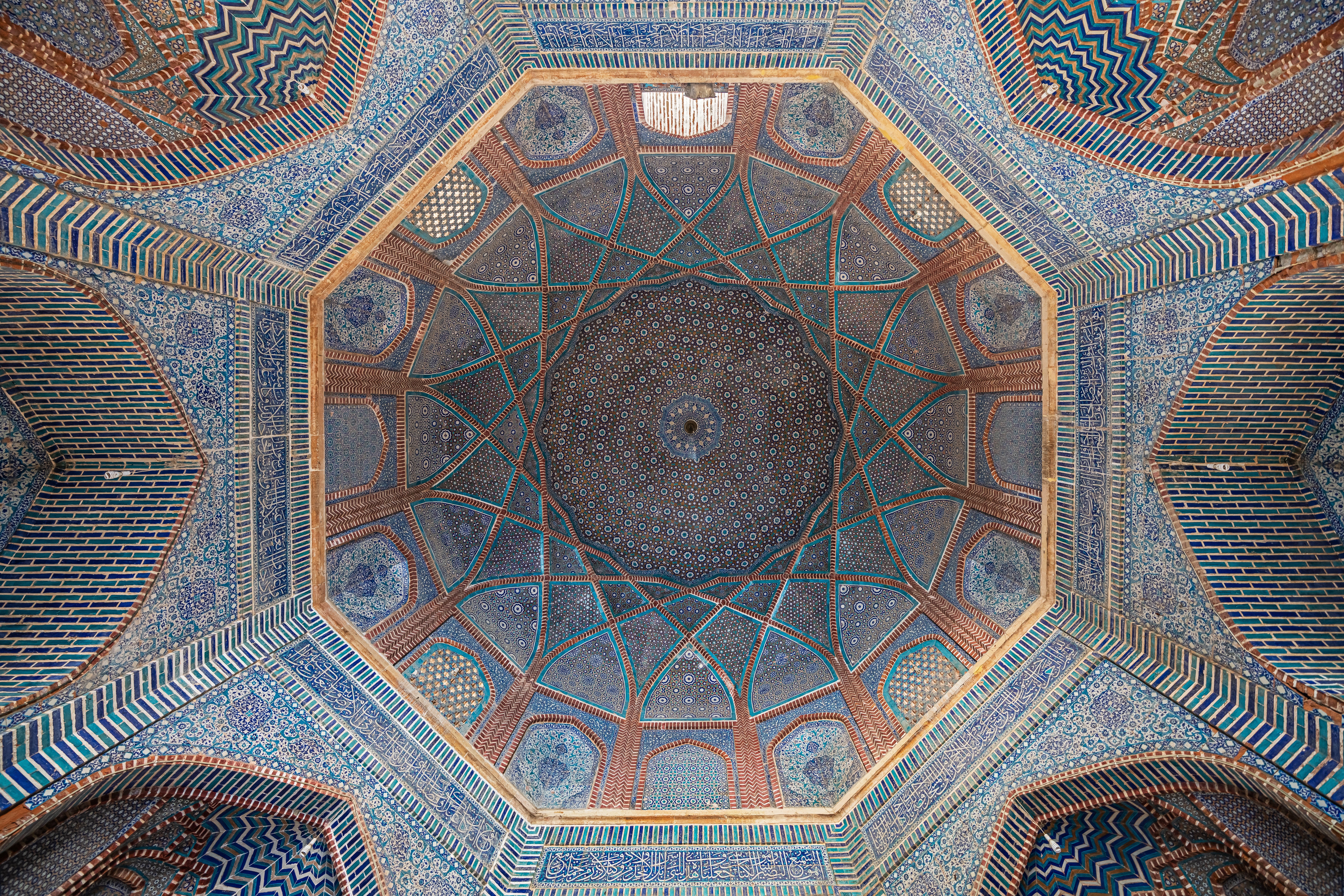
Thatta lies about 100 kilometres east of Karachi in the lower Indus plain, and for centuries it was the capital of Sindh. Four Muslim dynasties ruled from here between the 14th and 18th centuries, and the city was a centre of Islamic learning and arts long before it slipped into obscurity after the capital moved elsewhere in 1739.
The main draw is the Great Mosque, built by Mughal Emperor Shah Jahan. Its 93 domes — arranged to carry the imam's voice to every corner without amplification — are decorated in a range of blue tilework that ranks among the finest in South Asia. Nearby, the Makli Necropolis sprawls across a hillside with hundreds of elaborately carved sandstone and tile-decorated tombs from the 14th to 18th centuries, inscribed as a UNESCO World Heritage Site.
The town itself feels like a step back in time. Narrow lanes wind between multi-storey plaster-and-wood houses topped with badgirs — wind-catchers designed to funnel breezes into the rooms below. The bazaars sell hand-printed ajrak cloth, glass bangles, and Sindhi mirror embroidery.
Thatta is an easy day trip from Karachi, but worth lingering in if you want to explore Banbhore (an archaeological site 65 km southeast, where the first Arab conquerors landed in 711 AD) and the bird sanctuaries at Haleji and Keenjhar lakes.