Kamra
©
Kamra

Kamra

Punjab town near Attock, known for Pakistan Aeronautical Complex and its place on the Grand Trunk Road.

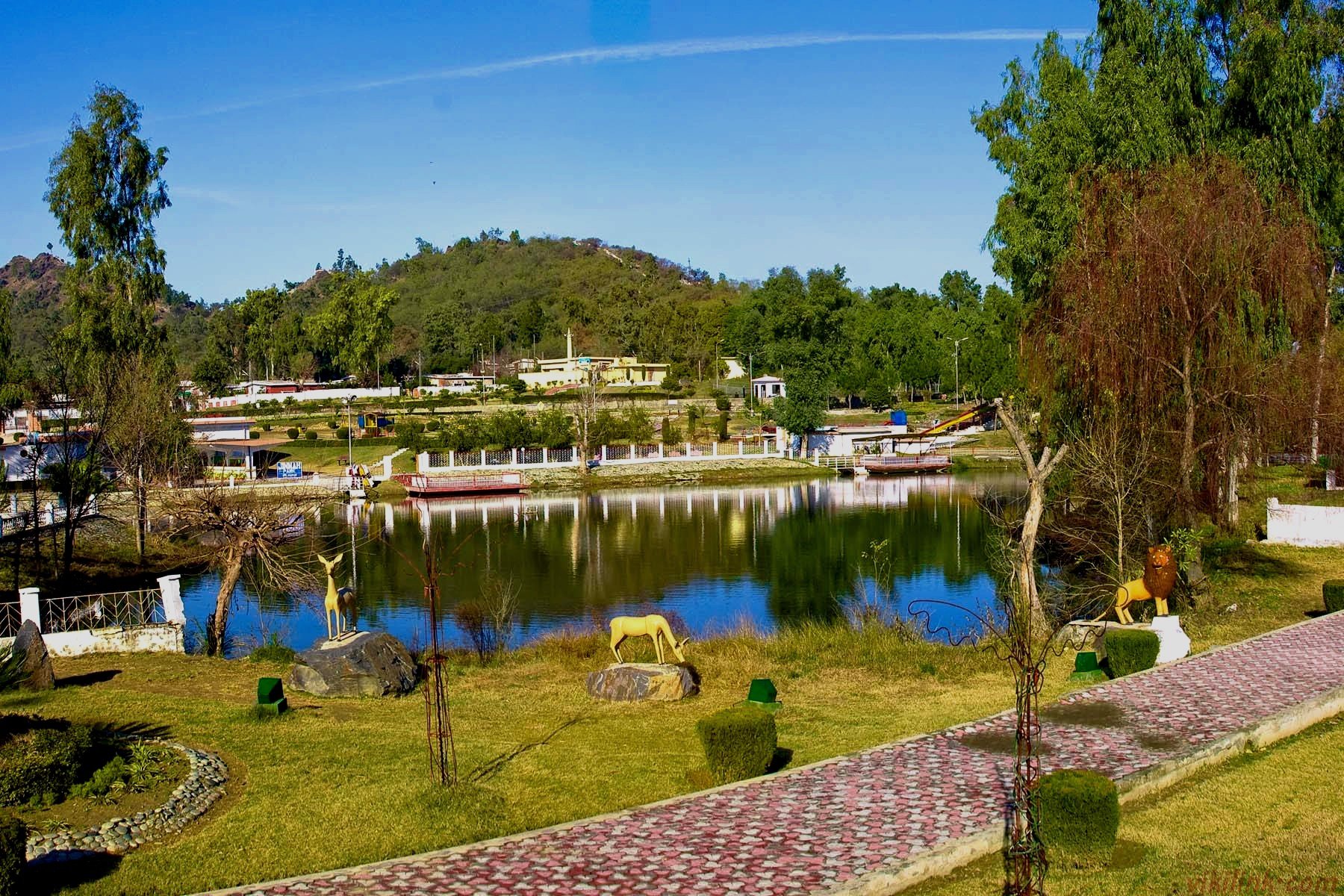
Kamra is a small town in Attock District of Punjab province, about 70 kilometres northwest of Islamabad along the Grand Trunk Road. The town is best known as the site of the Pakistan Aeronautical Complex (PAC), one of the country's main military aviation facilities, which means parts of the area are restricted and photography can attract unwanted attention.

For travellers, Kamra is a place you pass through rather than visit. The Grand Trunk Road runs right through it, and the town functions as a transit point between Islamabad and Peshawar. The old road here follows the same route that armies, traders, and travellers have used for centuries — Attock Fort, where the Indus River is crossed, is about 20 kilometres further west and worth a stop for its Mughal-era fortifications and the dramatic confluence of the Indus and Haro rivers.

The surrounding Attock District has a dry, rocky landscape that contrasts sharply with the green Pothohar Plateau to the east. Roadside dhabas (truck-stop restaurants) along the GT Road serve solid Punjabi food — daal, roti, and karahi — at low prices.

Guide

Bars and Cafes in Kamra

There are no bars in Kamra — Pakistan is a predominantly Muslim country and alcohol is not publicly available outside a small number of licensed establishments in major cities. Kamra has none of these.

For drinks, the options are chai (tea), soft drinks, and fresh juice. The roadside tea stalls along the GT Road serve what is probably the best version of Pakistani truck-stop chai: strong black tea brewed with milk and sugar, sometimes with a little cardamom, served in small glasses or cups. These tea stalls are sociable places where drivers and travellers stop to rest and talk.

A few small shops and stalls near the GT Road sell cold drinks and snacks during the warmer months.

Guide

Day Trips from Kamra

Kamra's real value is as a base or stopping point for the surrounding Attock District, which has a number of genuinely worthwhile sites within easy reach.

Attock Fort — 20 km west — The Mughal fortification built by Emperor Akbar in 1581 at the Indus crossing is the obvious first choice. The exterior and the views of the river gorge are accessible; the interior is military-restricted. Allow an hour for the visit including the drive.

Hasan Abdal — 30 km east toward Islamabad — A small town with a cluster of significant religious sites: the Sikh shrine of Panja Sahib (one of the most important Gurdwaras in Pakistan), the Mughal garden Chashma Shah Jamal, and the Wali-e-Asr mosque. Hasan Abdal is a genuinely interesting stop and considerably more welcoming to visitors than Kamra itself.

Taxila — 45 km east — One of the most important archaeological sites in South Asia, Taxila was a major Buddhist centre and Gandharan city from around the 5th century BC through the 6th century AD. The site contains multiple ruins spread across a wide area, plus a good museum with Gandharan sculpture. A full day is warranted if you have any interest in ancient history.

Islamabad and Rawalpindi — 70 km east — The twin cities are a straightforward drive down the GT Road. Rawalpindi's bazaars, particularly Raja Bazaar, are worth a browse; Islamabad has better restaurants and the Faisal Mosque.

Peshawar — 50 km west — The old city of Peshawar, with its Mughal-era bazaars, Qissa Khwani (Storytellers' Bazaar), and the Peshawar Museum, makes for a rewarding day trip in the opposite direction.

Guide

Eating Out in Kamra

Kamra's eating scene is entirely practical — this is truck-stop and transit food, not a culinary destination. The GT Road through town is lined with dhabas (roadside restaurants) that cater primarily to truck drivers and long-distance travellers. The food is simple, filling, and cheap: daal, roti, saag, karahi, and various meat dishes cooked over wood or gas fires.

Dhaba meals are typically ordered off no menu — you ask what is available and take it. Expect daal makhani, tarka daal, roti or naan baked in a clay tandoor, and karahi (a one-pot stew) with either chicken or mutton. Tea is always available and usually very good — strong, sweet, and made with full-fat milk.

Women travelling alone may feel more comfortable at the slightly more established roadside restaurants rather than the open-fronted dhabas, which are predominantly male spaces.

Guide

Getting Around Kamra

Kamra is a small town and most things are within reach on foot or by a short rickshaw ride. The GT Road is the spine of the town, and most activity is concentrated along it.

Rickshaws and chingchis: The standard short-distance transport is the three-wheeled auto-rickshaw or the chingchi (a motorcycle rickshaw adapted for multiple passengers). These circulate along the GT Road and can be hired for trips around town or to nearby points. Bargain the fare before you get in.

Local vans and minibuses: Shared vans run between Kamra and nearby towns including Attock City (for the railway station and Attock Fort). These leave when full from the main GT Road stop points.

On foot: The town centre along the GT Road is walkable. The PAC complex is not accessible on foot (or at all, as a civilian), and the military presence means wandering off the main road with a camera is not advisable.

Private car: If you are driving through on the GT Road, note that parts of the road near the PAC have security checkpoints and photography restrictions. Follow the signs and comply with any security personnel you encounter — this is standard procedure at military installations throughout Pakistan.

Guide

Getting to Kamra

Kamra sits on the Grand Trunk Road (N-5 national highway) about 70 kilometres northwest of Islamabad and roughly 50 kilometres southeast of Peshawar. It is easy to reach by road but has no dedicated rail or air service.

By road from Islamabad: Take the GT Road (National Highway N-5) northwest from Islamabad or Rawalpindi. The drive takes 1.5 to 2 hours depending on traffic, which can be heavy around Rawalpindi. Buses and minibuses on the Islamabad–Peshawar route stop at or near Kamra.

By road from Peshawar: Heading east on the GT Road, Kamra is about an hour's drive from Peshawar city. Buses on this route pass through regularly.

By bus: Coaches and local transport between Rawalpindi/Islamabad and Peshawar pass through Kamra on the GT Road. You can flag down or board these services at the main roadside stops in town. The Flying Coach services and DAEWOO express buses stop at Attock city, about 10 kilometres west of Kamra — from there, local transport runs back east.

By rail: The nearest major railway stations are at Attock City (Campbellpur) about 10 kilometres west, on the main Lahore–Peshawar line. Trains between Lahore and Peshawar stop there. From Attock station, a rickshaw or local van can cover the distance to Kamra.

There is no commercial airport near Kamra. The nearest airports are Islamabad International Airport (ISB) and Peshawar's Bacha Khan International Airport (PEW).

Guide

When to Go to Kamra

Kamra sits at about 450 metres elevation in Attock District, with a semi-arid climate typical of the Pothohar Plateau. Summers are hot and dry, winters are cold, and the brief monsoon season brings some rain between July and September.

October to March is the most comfortable period for travel through the area. Temperatures are mild to cool, the air is cleaner, and the rocky landscape around Attock takes on a pleasant quality in the low winter light. January can be cold, with temperatures occasionally dropping near freezing at night, but daytime is usually fine for travel.

April to June sees temperatures climb sharply — by May and June it can exceed 40°C during the day. Travelling the GT Road in this heat is unpleasant but manageable if you have air conditioning.

July to September is monsoon season. Rain is not heavy in this region compared to areas further east, but the humidity increases, roads can become slippery, and the Indus at Attock runs higher and faster. The landscape briefly greens up after the rains.

Since Kamra is a transit point rather than a destination, timing your visit is mainly a matter of what conditions you want for driving the GT Road and visiting Attock Fort.