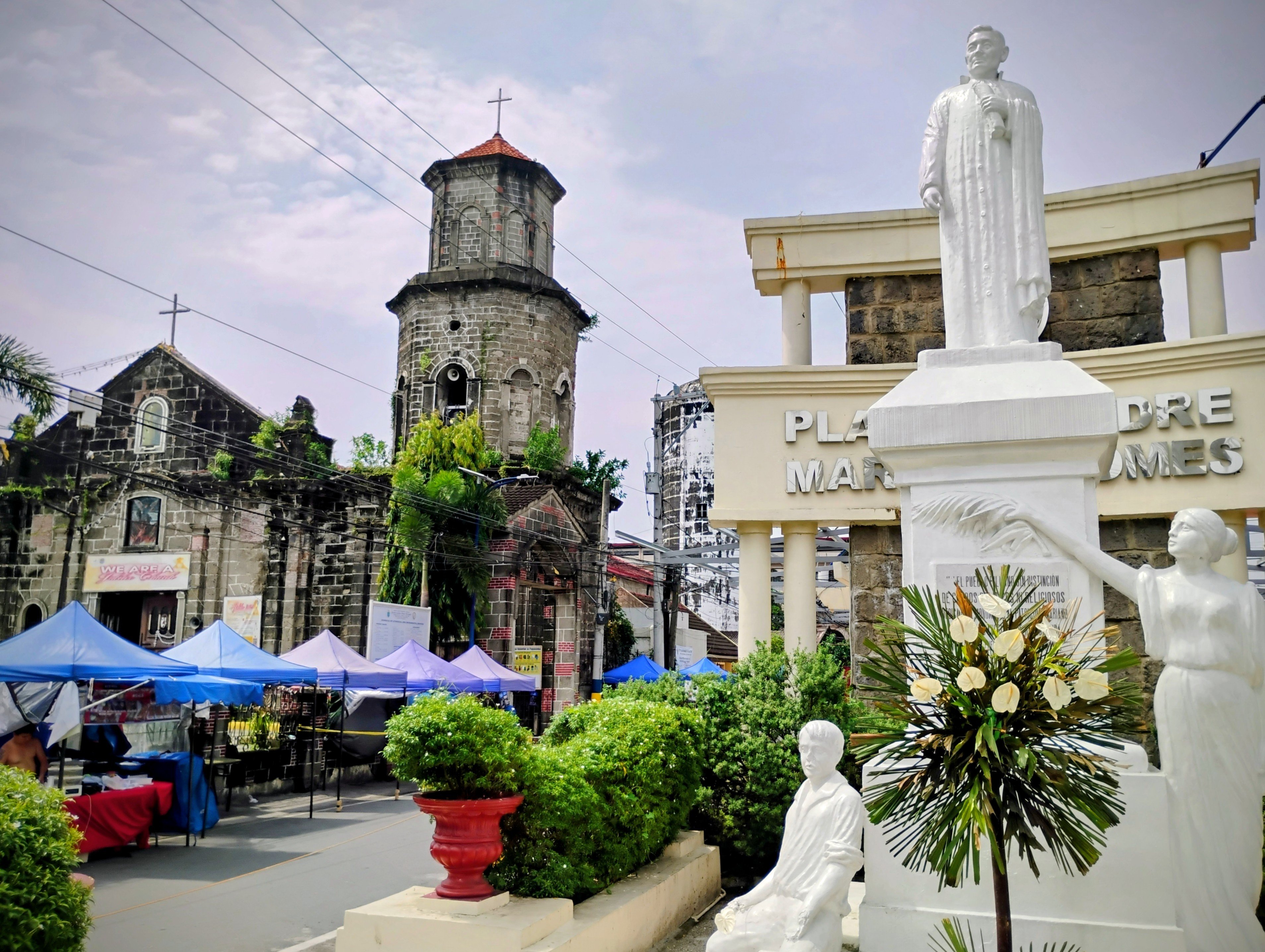
Bacoor sits at the northern edge of Cavite province, close enough to Manila that the city's gravitational pull is impossible to ignore. With over half a million residents, it functions largely as a bedroom community for the capital, connected by highways and a growing rail network. Yet Bacoor has its own story, rooted in the Philippine Revolution. The Tejeros Convention of 1897, a pivotal moment in the independence movement, took place in nearby territory, and Emilio Aguinaldo's forces moved through these lands during their campaigns against Spanish and later American rule.
The town center retains a handful of heritage churches and colonial-era structures, most notably the Bacoor Church (Our Lady of the Immaculate Conception), which dates to the Spanish period and anchors the old plaza. The Cuenca Ancestral House is one of the few surviving bahay na bato structures in the city. Along the border with Las Piñas, the historic Zapote Bridge was the site of a famous battle in 1899 during the Philippine-American War. If you find yourself here, the local food scene leans heavily on Cavite specialties — try the tamales and bibingka from market vendors.
Bacoor is best understood as a transit point rather than a destination in itself. It sits between Manila and the more touristic parts of Cavite, including Kawit (where Aguinaldo declared independence) and Tagaytay with its volcanic views. If you are passing through, a quick stop at the church and market area gives you a flavor of provincial life at Metro Manila's edge.