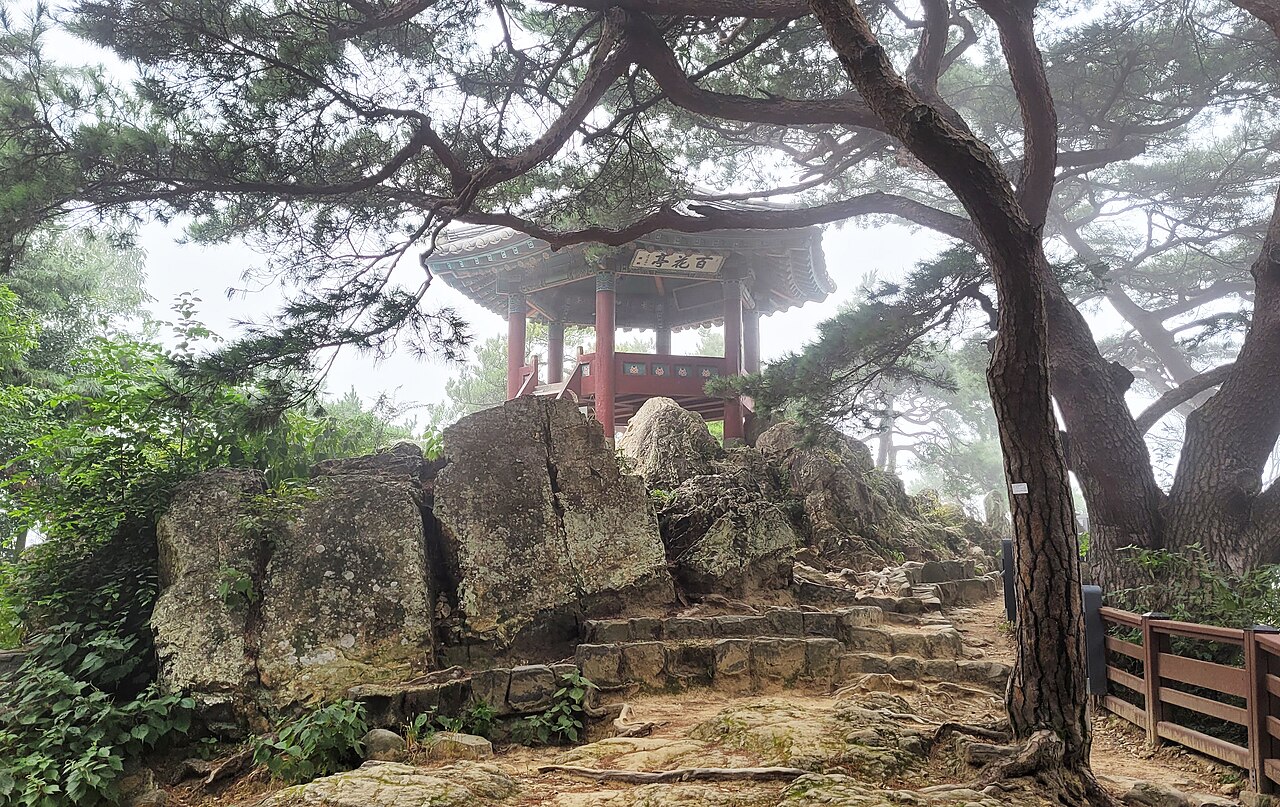
Buyeo is the quietest of Korea's old capitals, and that is a large part of its charm. Known as Sabi when it served as the Baekje capital from 538 until the kingdom fell in 660, it has none of Seoul's scale or Gyeongju's tourist machinery. What it does have is a compact set of Baekje ruins, museums, tombs, and river walks that still feel connected to the landscape.
Several of Buyeo's core sites belong to the UNESCO-listed Baekje Historic Areas. Busosanseong Fortress covers the wooded hill above the Baengma River, with pavilions, shrines, and the cliff-edge Nakhwaam legend attached to the kingdom's final days. Jeongnimsa Temple Site, in town, preserves one of Korea's great early stone pagodas.
The Buyeo National Museum is essential, especially for the extraordinary gilt-bronze Baekje incense burner found nearby in 1993. Gungnamji Pond adds a softer finish: lotus beds, paths, and a pavilion reflected in the water. Buyeo is not loud, but it is coherent, walkable, and unusually good at turning one spare day into a clear picture of Baekje Korea.