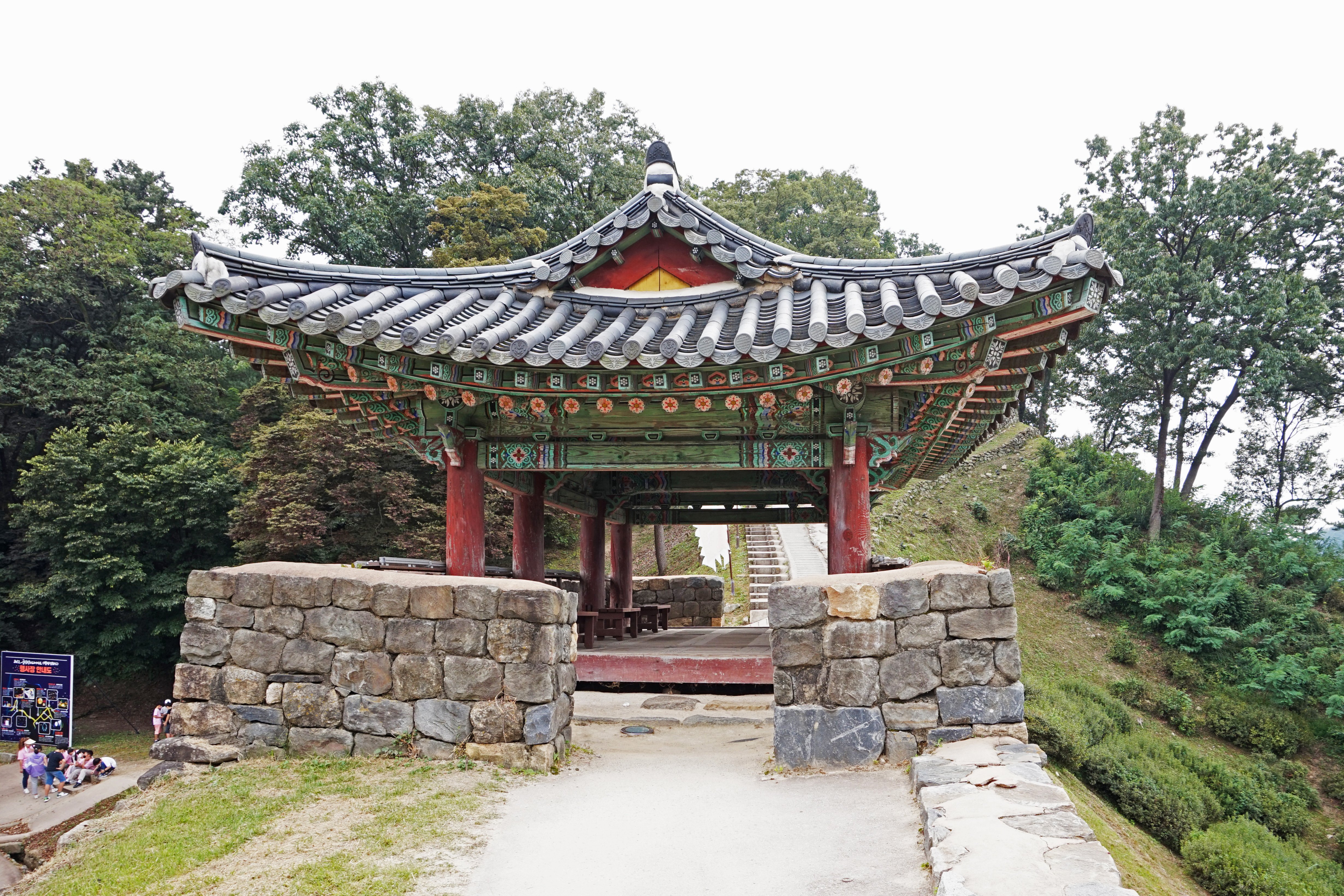
Gongju is one of the best places in Korea to understand Baekje, the southwestern kingdom that shaped early Korean culture and sent ideas, artists, and Buddhism across the water to Japan. It was the Baekje capital in the 5th and 6th centuries, before power moved south to Buyeo, and the old royal core still sits close enough together to explore on foot.
The city is built around the Geumgang River, with Gongsan Fortress rising above the south bank. A short walk away are the Songsan-ri Burial Mounds, where the tomb of King Muryeong was found intact in 1971, and the Gongju National Museum, which holds many of its treasures. Together they form part of the Baekje Historic Areas UNESCO World Heritage Site.
Gongju is quieter than Gyeongju and less polished than Seoul's palace district, which is part of its charm. You come for a compact, riverfront history town with real depth: fortress paths, royal tombs, metalwork, wooded hills, and enough local life around the markets and bus terminals to keep it from feeling like an open-air museum.