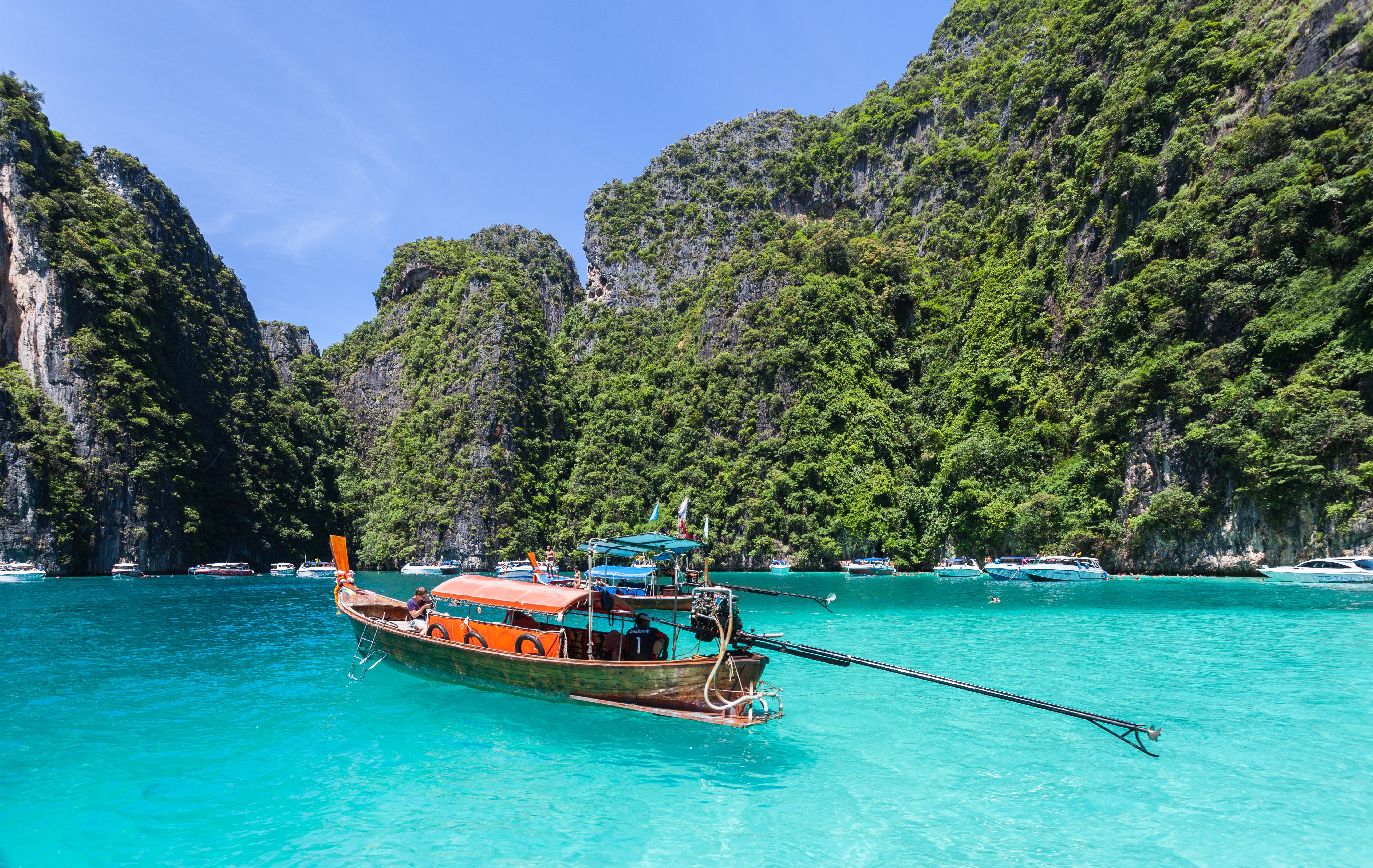
Koh Phi Phi
©
Koh Phi Phi

Koh Phi Phi

Andaman Sea island group between Phuket and Krabi, known for limestone cliffs and coral reefs.

The Phi Phi islands are the kind of place that looks too good to be real — sheer limestone cliffs rising from turquoise water, white sand beaches backed by palms, and coral reefs just offshore. Located in the Andaman Sea between Phuket and Krabi, the archipelago consists of two main islands: Phi Phi Don, where all the accommodation and nightlife is, and Phi Phi Leh, an uninhabited national park island famous as the filming location for The Beach.

Phi Phi Don is tiny enough to walk end to end in under an hour. The narrow isthmus connecting the island's two limestone hills concentrates Tonsai Village, with its dive shops, restaurants, bars, and guesthouses packed tightly together. The atmosphere is backpacker-friendly and loud after dark. Away from the village, quieter beaches like Long Beach offer a calmer side of island life.

The local population is a mix of Thai Muslims — descendants of the Urak Lawoi sea gypsies who have lived on these islands for generations — Thai Buddhists, and workers drawn from the mainland by tourism. The islands were devastated by the 2004 tsunami and have been substantially rebuilt, though the scars are still visible in places.

Snorkelling and diving are the main draws. The waters around Phi Phi are warm, clear, and full of marine life. Day trips to Bamboo Island (Ko Pai), about thirty minutes north of Phi Phi Don, are popular — it is one of the most pristine and unspoiled islands in the area. On Phi Phi Leh, Maya Bay, Viking Cave, and the enclosed Pi Leh Lagoon make for a classic half-day boat circuit. Back on Phi Phi Don, the hike to the Phi Phi Viewpoint rewards with one of the most photographed panoramas in Thai tourism.

Guide

Eating Out

Tonsai Village has dozens of restaurants serving everything from Thai staples to pizza and burgers. The quality varies sharply — the tourist-oriented places on the main drag are typically overpriced and mediocre, while the smaller Thai restaurants one or two lanes back from the pier are significantly better and cheaper.

Fresh seafood is the standout — grilled fish, tiger prawns, and squid are available at the market stalls along the beachfront and at the dedicated seafood restaurants. Massaman curry and pad thai are reliable choices at any of the better Thai places. For breakfast, the coffee shops near the pier open early and do good fruit shakes and toast before the boat rush. Prices island-wide are higher than the Thai mainland; expect to pay roughly double what you would in Krabi town for equivalent food.

Guide

Getting Around

Phi Phi Don is car-free — no tuk-tuks, no motorbike taxis, no buses. Everything in the village is within walking distance, and even the far end of the island is under an hour on foot.

For the more remote beaches (Long Beach, Laem Tong), you can hire a longtail boat taxi from the pier. Expect to haggle — prices are not fixed and go up after dark.

Guide

Getting There

The Phi Phi islands are located about 48 Km southeast from Phuket, 42 km south from Krabi Town and 40 km from Ao Nang Beach. They can be reached in between 1 1/2 to 3 hours depending on the type of boat you choose. Boats leave from Phuket, Ao Nang and the Chao Far Pier in Krabi Town on a daily basis.

Guide

Things to Do

The main attraction on Phi Phi is the water — snorkelling and diving, and island-hopping by longtail boat. On land, the hike up to the Phi Phi Viewpoint is the one must-do. It is a steep climb, but the panorama over the isthmus and both bays is spectacular. Bring mosquito repellent and go late afternoon for the best light.

Boat trips run to Phi Phi Leh, where Viking Cave shelters the nests of swiftlets harvested for bird's nest soup. Maya Bay on the same island — the Beach filming location — reopened to visitors with daily limits after years of closure for reef recovery. The enclosed Pi Leh Lagoon on the same island is one of the most beautiful spots in the Andaman. For a quieter day, Bamboo Island to the north has pristine snorkelling and far fewer visitors. Long Beach on Phi Phi Don itself is the best choice for a calm beach day without the village crowds.

Guide

When to Go

The best time to visit Phi Phi is November to April, when the northeast monsoon keeps the Andaman Sea calm and skies clear. Sea visibility for diving and snorkelling is at its best from January to March. The peak tourist period falls in December and January, when the islands are busiest and prices highest.

May to October brings the southwest monsoon, with rougher seas and some rain. Some guesthouses and restaurants close for the low season, boat services reduce, and diving at exposed sites becomes difficult. The islands are not impossible to visit in the low season — the rain is often intermittent, prices drop significantly, and crowds thin dramatically — but plan around the weather and check that services are running before you go.